Wednesday, February 04, 2009

AS LONG AS YOU ARE GLORIFIED

So Satan went out from the presence of the Lord and struck Job with loathsome sores from the sole of his foot to the crown of his head. And he took a piece of broken pottery with which to scrape himself while he sat in the ashes.

Then his wife said to him, “Do you still hold fast your integrity? Curse God and die.” But he said to her, “You speak as one of the foolish women would speak. Shall we receive good from God, and shall we not receive evil?” In all this Job did not sin with his lips. (Job 2.7-10)

Mark Altrogge @ http://www.theblazingcenter.com has created a new song. He notes the rationale:

It’s easy to praise God in prosperity. But what do we do when we’re suffering? Job shows us that we should trust God at all times, not just in good times. I recently tried to capture this in a song:

AS LONG AS YOU ARE GLORIFIED

SHALL I TAKE FROM YOUR HAND YOUR BLESSINGS
YET NOT WELCOME ANY PAIN?
SHALL I THANK YOU FOR DAYS OF SUNSHINE
YET GRUMBLE IN DAYS OF RAIN?
SHALL I LOVE YOU IN TIMES OF PLENTY
THEN LEAVE YOU IN DAYS OF DROUGHT?
SHALL I TRUST WHEN I REAP A HARVEST
BUT WHEN WINTER WINDS BLOW, THEN DOUBT?

O, LET YOUR WILL BE DONE IN ME
IN YOUR LOVE I WILL ABIDE
O, I LONG FOR NOTHING ELSE AS LONG
AS YOU ARE GLORIFIED

ARE YOU GOOD ONLY WHEN I PROSPER?
AND TRUE ONLY WHEN I’M FILLED?
ARE YOU KING ONLY WHEN I’M CAREFREE?
AND GOD ONLY WHEN I’M WELL?
YOU ARE GOOD WHEN I’M POOR AND NEEDY
YOU’RE TRUE WHEN I’M PARCHED AND DRY
YOU STILL REIGN IN THE DEEPEST VALLEY
YOU’RE STILL GOD IN THE DARKEST NIGHT

O, LET YOUR WILL BE DONE IN ME
IN YOUR LOVE I WILL ABIDE
O, I LONG FOR NOTHING ELSE AS LONG
AS YOU ARE GLORIFIED

SO QUIET MY RESTLESS HEART, QUIET MY RESTLESS HEART
QUIET MY RESTLESS HEART, IN YOU.

From his conclusion:

Isn’t it amazing how the gospel so changes us that what matters most is the glory of Jesus, and not our own comfort? Let us be a people who overflow with praise and thanks, not only when we receive blessing from his hand, but when we receive hardship from his hand, trusting that even then he is working for our good and his glory.

NOTE: Sovereign Grace Music has graciously agreed to give away this song for free. DOWNLOAD IT HERE.

(Lyrics from the CD “Come Weary Saints”, copyright Sovereign Grace Music)

Fireproof


Fireproof, which came out on DVD this week. It is a wholesome movie with a $500,000 budget that has already grossed about $33.5 million!

One of the best lines illustrates how counter-cultural this film is: “Don’t just follow your heart. You gotta lead your heart.” So many other films (starting with Disney “classics”!) promote exactly the wrong message (i.e., a self-serving, follow-your-heart, do-whatever-you-think-will-gratify-you approach).

About

  1. official site (includes more videos, pics, resources)
  2. Wikipedia
  3. Kirk Cameron: “I’ll only kiss my wife”
  4. trailer:

Reviews

  1. Phil Johnson (read this one first)
  2. Baptist Press
  3. Tim Challies
  4. Alex Chediak
  5. Christian Spotlight
  6. Christianity Today
  7. Joy McCarnan
  8. Plugged In
  9. James White

Tuesday, February 03, 2009

Differences in the Five Leading Bible Translations

The fine folks @ Crossway have posted a helpful chart on Bible Translations:

People often ask how the ESV Bible differs from other Bible translations. We thought this little chart might be helpful in providing a quick comparison of a few of the main differences between the five leading Bible translations.

Glenn Brooke put together a video tour of the online version of the ESV Study Bible.

You can tour the Online Study Bible yourself here.


5 Leading Bible Translations

Free Audiobook of the Month -

Not for Sale

Each month christianaudio gives away a premium audiobook download for free. The way it works? We give away one audiobook download each month totally free, available only during that month, only once - ever.

Use the coupon code FEB2009 to redeem this month's free download.


Not for Sale (Unabridged) by David Batstone

Award-winning journalist David Batstone reveals the story of a new generation of 21st century abolitionists and their heroic campaign to put an end to human bondage. In his accessible and inspiring book, Batstone carefully weaves the narratives of activists and those in bondage in a way that not only raises awareness of the modern-day slave trade, but also serves as a call to action.

$24.98
$26.98
Add to My Wish List

Monday, February 02, 2009

The Good Recession


Dealing with the anxiousness caused by what some are calling “The Great Recession,” Joshua Harris recently preached a pair of messages at Covenant Life Church (Gaithersburg, MD). Entitled “The Good Recession,” from Luke 12:13-34. Both messages addressed the proper Christian response to this season of economic uncertainty and targeted the themes of greed and covetousness (week 1) and worry (part 2).

In the opening message, Harris said:

“God is doing something. He is shaking the financial security of the entire world. That’s not easy, that’s not something we want. But could we be a people who believe that God can use even something that looks very bad, for our good? Could we be trained by this, and on the other side of it, know the ‘peaceful fruit of righteousness’ (Heb. 12:11, ESV)? That is my prayer for myself, my family, and for this spiritual family. We could mope our way, complain our way, worry our way, grow bitter, through all of this. Or we can humbly ask God to use an economic downturn for our spiritual renewal, for our spiritual upturn.”

Tony Reinke@http://spurgeon.wordpress.com provided an outline of the two messages, a handful of transcribed excerpts, and links to the audio recordings. The messages are worth your time.

OUTLINES (with audio linkage):

Part 1: The Folly of Greed (Luke 12:13-21)

  1. This recession can be good if we allow it to open our eyes to folly of greed and covetousness.

Part 2: Don’t Worry…Seek the Kingdom (Luke 12:22-34)

  1. This recession can be good if it helps reset our definition of ‘need.’
  2. This recession can be good if it makes us more aware of our helplessness and God’s faithful provision.
  3. This recession can be good if it helps us see that only King Jesus and His kingdom are worth living for.
  4. This recession can be good if it encourages us to lay up treasure in heaven.

EXCERPTS:

Sovereign God and Baffled Economists

“There is a broad spectrum of experience represented in our church. Some of you have been relatively untouched by this downturn. Others of you are really struggling to stay afloat, and maybe you have been struggling for a longer time than this story has dominated the headlines. I think it’s safe to say that we have all been touched by the unease that hangs over the economy right now. If we are not struggling financially personally, we know someone who is. If we have not lost our job, we know someone who has lost a job. If our company isn’t struggling to stay afloat, we know another company that is in that situation. And I think what compounds the temptation to worry is the uncertainty. Nobody really knows what is going to happen in the days to come. Even the brightest economists and people who would be considered experts are really just guessing when it comes to what will take place and the fix. The question I want us to consider is how should Christians who believe in a sovereign God think and live during a time like this? How should people who call Jesus Lord and Savior view an economic downturn that some have dubbed ‘The Great Recession’?”

PG

“I want to speak in particular to parents: Dads and moms who are here, I know you love your kids. I know you care about their future, and want the best for them. But is it possible for us to think something is the best for our kids, and we are just discipling them in covetousness? Could God use this season of recession to teach our children things that will guard their souls for the rest of their lives? I pray so. … When it comes to our own hearts, I think we should pray: Lord use this recession to teach me that you are my only hope. Lord, use this recession to open my eyes to the dangers of covetousness and greed. Lord, use this recession to teach me that my life does not consist in the abundance of my possessions.”

Sober Hearts or Bigger Barns?

“This recession will not necessarily make you a more spiritual and godly person. God can use this recession for our spiritual good if we let it awaken us to the folly of greed and covetousness. There is a very big IF in this statement and I want you to be aware of this. This recession will not necessarily do you or me any spiritual good. In fact if we don’t guard our hearts it might be an opportunity for us to grow more greedy and more obsessed with money and financial security if we are constantly checking the markets and make the lesson of this downturn that we need bigger barns. That is not the lesson God wants to teach us in this. If we begin to hoard our possessions and harden our hearts and our first thought when it comes to seeing someone in need, and giving, is that we cannot give, we are not going to grow in the ways I believe God would have us grow.”

Covetousness Anonymous

“When you think about the last year of your life, when you think about the areas you are trying to grow in and sins you are working on, is greed at the top of this list. I’ll speak for the pastors, we don’t get a lot of phone calls of people saying ‘I’m greedy! Please, I need counseling.’ It just doesn’t happen that much. I’ll be honest with you: Our schedule is not booked up with people who are awake at night aware of how greedy and covetous they are. Now, if you’ve ever been in that place—God bless you—that is a good thing. But doesn’t that make you a little suspicious of us, that we live in the richest country in the world and have more stuff in our families than a lot of people in history had in their entire lives? We spend a lot of our time at the malls, like they are temples, we are always aware of the new stuff that we ‘need’—and we are not greedy at all? Isn’t that a little suspicious. Doesn’t that make you say, ‘Hmm. Wait a second here. Is this right?’ Or could it be that we are just blind? Could it be that we have been lulled to sleep by a culture that is built on the lie that your life consists in the abundance of your possessions?”

Sumo-Sized Wants and Salad-Sized Needs

“I read about Japanese sumo wrestlers, touching base with my heritage a little bit. If you are familiar with sumo wrestlers, they gain hundreds of pounds. These men are huge. And they do this by eating tons of food and literally train their bodies not to feel full. They literally stretch their stomachs, massaging their intestines to make room for food. Isn’t that gross? And they do this to reset their definition of a normal meal so they can gain hundreds of pounds. In a similar way, our definition of need, when it comes to possessions, is completely out of proportion. We’re like those sumo wresters that have redefined their needs so that we can take in more and more. Our definition of need has been super-sized by our culture of consumption. So we think that we need not only to eat, but to eat food that we love, and preferably to eat out. We think that we not only need to be clothed, but to wear the latest fashion and have five of everything. We think we need more than just a roof over our heads. We want a bigger house, with a big yard. And the list could go on and on. We think we need multiple cars, four-wheel drive vehicles to drive on paved roads. We need all these things. Right?! …And I’ll be honest with you, when I read Jesus’ promise to provide for my needs by feeding me like a raven and clothing me like a flower, my heart doesn’t leap for joy…I feel like a sumo wrestler who has been given a salad for dinner…You see my heart and my values need to be adjusted by God’s Word. My definition of need needs to come into line with Jesus’s definition…One of the spiritual benefits, potentially, if we seize it, we can gain during an economic recession is that as we tighten our budgets as we change our lifestyle, we can actually begin getting a clearer picture of what we actually need…Seize this as an opportunity to have your need-o-meter reset.”

Sunday, February 01, 2009

PAMIC: People Against Massages In Church

Tony Reinke @ http://spurgeon.wordpress.com describes what not to do this morning in worship:

One of the first churches my wife and I attended was also home to a publicly cuddly wify type (a PCW). Right during the sermon—and often for the duration of the message!—this woman’s red fingernails were busy scratching away at the back of her husband’s neck, eventually twirling his hair, and then rubbing his shoulders, and then back to the scalp scratching. It became a one-handed, unending cycle of scratching, twirling, and rubbing.

I’m sure the husband enjoyed the sermon. But the public massage fest was distracting for the 20 rows of unfortunate spectators behind the couple. It is almost impossible not to notice this activity (red fingernail polish didn’t help). And following the sermon became an almost impossible task. I can imagine a letter from Screwtape to Wormwood on the importance of encouraging wives to massage at church.

All this to say, I have been personally effected by the spiritual distraction caused by massages in church. Today I sign the manifesto to join People Against Massages In Church (PAMIC). Join me, and together we can put an end to this disruptive practice.

Saturday, January 31, 2009

Sermon Outline: Galatians 5:7–12. The Character of False Teachers

False Teachers:

1) Hinder the Truth: Galatians 5:7

2) are Not of God: Galatians 5:8

· 2 Thessalonians 2:13-14

3) They Contaminate the Church: Galatians 5:9

· 1 Corinthians 3:17

4) They Will Be Judged: Galatians 5:10

· Philippians 1:6-7

· John 10:28-29

· Matthew 18:5-6

· 2 Peter 2:1-19

5) They Persecute True Teachers: Galatians 5:11

6) They Should Be Cut Off: Galatians 5:12

· 1 Peter 3:15

Why Pray if God Is Sovereign?

If God Is Sovereign, Why Pray? Matt Waymeyer from Community Bible Church in Vista, California, has a series of posts on prayer. He notes:
God Is Sovereign

Isaiah 46:9-11:

Remember the former things long past, for I am God, and there is no other; I am God, and there is no one like Me, declaring the end from the beginning and from ancient times things which have not been done, saying, “My purpose will be established, and I will accomplish all My good pleasure”; calling a bird of prey from the east, the man of My purpose from a far country. Truly I have spoken; truly I will bring it to pass. I have planned it, surely I will do it.

Why Pray?

1. God has commanded us to pray.

2. Jesus modeled a life of prayer.

Child Praying

3. God is able to respond to our prayers.

4. God actually does respond to prayer.

In the words of Richard Pratt, then, “Prayer is a powerful human effort that can significantly affect not only the lives of individuals but the very course of world history” (Pray with Your Eyes Open, 112). This truth, no doubt, should be a powerful motive for the children of God to pray. As Grudem writes,

If we were really convinced that prayer changes the way God acts, and that God does bring about remarkable changes in the world in response to prayer,…then we would pray much more than we do. If we pray little, it is probably because we do not really believe that prayer accomplishes much at all (Systematic Theology, 377).

Praying Hands

5. God has ordained prayer as a means by which He accomplishes His eternal purposes.

At this point, some may wonder how it is that Scripture can teach both that God providentially brings all things to pass in conformity with His eternal purpose and that the prayers of men can have a significant affect in the unfolding of world history. The seeming contradiction between these two truths vanishes, however, when one realizes that “the same God who has decreed the end has also decreed that His end shall be reached through His appointed means, and one of these is prayer” (The Sovereignty of God, 167). In other words, God in His infinite wisdom was pleased to ordain prayer to be a means through which He accomplishes His good pleasure in and through His creation.


Friday, January 30, 2009

Antony Flew and Atheism

Ian @ http://ruminationsbythelake.blogspot.com reviews the interesting life of Anthony Flew. He notes:
Antony Flew was a very influential atheist philosopher who dominated the scene in the twentieth century. In 2004 he publically announced that he was no longer an atheist. His story is recounted in his very well written book There Is A God: How the World's Most Notorious Atheist Changes His Mind that I just finished reading last week - I highly recommend it. The appendices, especially the one by Tom Wright on Jesus and the resurrection are excellent.

The New York Times has an article on Flew that they ran in 2007. It's worth checking out. I really hope that he moves from being merely a deist (a belief in an impersonal Creator) to converting fully to Christ. It looks like he is on the way!

Thursday, January 29, 2009

Ministry where everywhere is "Sin City"

Excuses For Not Praying

Check out the excerpt @ http://www.monergism.com from A Call to Spiritual Reformation: Priorities from Paul and His Prayers by D.A. Carson on excuses for not praying. He lists:

I Am Too Busy

I Feel Too Dry Spiritually To Pray

I Feel No Need To Pray

I Am Too Bitter To Pray

I Am Too Ashamed To Pray

I Am Content With Mediocrity

-----------------------------------

Excerpt from A Call to Spiritual Reformation: Priorities from Paul and His Prayers by D.A. Carson

God doesn't demand hectic church programs and frenetic schedules; he only wants his people to know him more intimately, says D. A. Carson. The apostle Paul found that spiritual closeness in his own fellowship with the Father. A Call to Spiritual Reformation investigates the Epistles to see what lessons Paul taught in his "school of prayer." Christians today can still achieve the confidence Paul enjoyed by following his life-shaping principles and searching for a deeper devotional experience.

Author Information: D. A. Carson is Research Professor of New Testament at Trinity Evangelical Divinity School, Deerfield, Illinois. He is the author of How Long, O Lord? Teach Us to Pray and Right with God.

How NOT to give counsel: The ongoing Ted Haggard saga

Dan Gilgoff has a two part interview with Ted Haggard.

Counseling is significant in that it presents counsel to the vulnerable. Often those who receive counsel do not think clearly, and there is a tremendous responsibility on the counselor to accurately represent God's standards and encourage Biblical repentance and godly thinking. From the response that Ted Haggard gave, it seems like his counselor greatly failed him:
When I started in counseling, I thought I was a spiritual disaster and a complete idiot for what I'd done. And the counselor started out by saying "You're spiritually OK." He asked, "Have you repented?" Yes. "Have you memorized scripture?" Yes. "Have you been through inner healing?" Yes. He said, "According to the Bible, you are in fine relationship with the Lord Jesus." And I said I think I am. I love Him. I've never rebelled against him willingly. This has been a wrestling in my life, never an acceptance thing.

And then he said, "You are rationale—have you read books on the subject?" Yes. And he said "Ted, if you could pray about this and be OK, you would have done it. If you could think about this and rationalize your own life, you would have done it. This is not spiritual nor reasonable. It is physiological." And he started to teach me how the brain works. And in that process, over two years, I've grown in eliminating the incongruities in my life. I've learned physiologically how the brain works and how that related to sexuality.

Wednesday, January 28, 2009

Clarifying Calvinism (Conclusion)

TULIP Phil Johnson @ http://www.sfpulpit.com finished a series on calvinism)

Part VIII: To sum up. . .

* The perverseness of our fallen state—that’s the doctrine of Total Depravity.

* The priority of God’s electing choice—that is the doctrine of Unconditional Election

* The particularity of His saving work—that, as we saw, entails the doctrine that is often called Limited Atonement.

* The power of His loving deliverance—that, once more, is the doctrine of Irresistible Grace.

* The perfection of His redemptive plan—that is nothing other than the doctrine of Perseverance.

From His conclusion:

You might be one of those people who doesn’t want to be referred to as a Calvinist or an Arminian. But the fact is, if you are a Christian at all, you do already affirm the fundamental principle in every one of those truths. You already know in your heart of hearts that you weren’t born again because you were morally superior to your unbelieving neighbors. You were worthy of God’s wrath just like them (Eph. 2:1 3). According to Ephesians 2:4-6, it was God who quickened you and showed you a special mercy—and that is why you are a believer. You already know that in your heart. You don’t really believe you summoned faith and came to Christ in your own power and by your own unaided free will. You don’t actually believe you are morally superior to people who don’t believe. You therefore must see, somewhere in your soul, that God has given you special grace that He has not necessarily shown everyone.

You also believe God is absolutely sovereign over all things. I know you do, because you lean on the promise of Romans 8:28. And that promise would mean nothing if God were not in control of every detail of everything that happens. If He is not in control of all things, how could He work all things together for good?

QuoteFurthermore, you pray for the lost, which means in your heart, you believe God is sovereign over their salvation. If you didn’t really believe He was sovereign in saving sinners, you’d quit praying for the lost and start doing everything you could to buttonhole people into the kingdom by hook or by crook, instead. But you know that would be folly. And you pray about other things, too, don’t you? You pray that God will change this person’s heart, or alter the circumstances of that problem. That’s pure Calvinism. When we go to God in prayer, we’re expressing faith in His sovereignty over the circumstances of our lives.
You even believe God operates sovereignly in the administration of all His providence. You say things like, “If the Lord will, we shall live, and do this, or that” (James 4:15)—because in your heart you believe that God works all things after the counsel of His own will (Eph. 1:11), and nothing happens apart from His will.

Nothing is more biblical than these doctrines that are commonly labeled Calvinism. In a way, it is a shame they have been given an extrabiblical name, because these truths are the very essence of what Scripture teaches. The very gist of Calvinism is nowhere more clearly stated than in the simple words of our verse: “We love Him, because He first loved us.”

Alternative Medicine and Christian Healing:

“But false prophets also arose among the people, just as there will be false teachers among you, who will secretly bring in destructive heresies, even denying the Master who bought them, bringing upon themselves swift destruction. And many will follow their sensuality, and because of them the way of truth will be blasphemed. And in their greed they will exploit you with false words. Their condemnation from long ago is not idle, and their destruction is not asleep.”

2 Peter 2:1-3

John Catanzaro @ http://theresurgence.com deals with the Christian approach to healing and alternative medicine. In Part 1 he covers:

Professional Observation

Christianity Is Not Dominant In Alternative Medicine

pagan practices break the very first command that God gave to humankind, “You shall have no other gods before me” (Exodus 20:3). On the other hand, I have heard Christians slam alternative medicine practices without having any idea why they should reject it.

Many References Are Not Clear Enough

Part 2

Reliable Authoritative Reference Is Needed

Evaluating Alternative Medicine

Here is how we will approach alternative medicine and its many practices. I will use a simple “four R” plan. Simply, can we receive the practice? Are there any redeeming points of the practice? What aspects of the practice need to be rejected? And what relation does the practice have to Christian faith and theological practice?
  • Receive: Can I receive this practice in its entirety or parts of it?
  • Redeem: What can I safely accept as a safe healing practice?
  • Reject: What do I need to reject and on what basis?
  • Relate: Does the practice completely counter Christian faith and theology?

Christian Worldview of Alternative Medicine

Saturday, January 24, 2009

Sermon Outline: Galatians 5:1-6 “Free at Last”

1) Liberty Defined (Galatians 5:1)
Romans 6:17-19

2) Liberty Defended (Galatians 5:2-4)
Romans 9:30-32

James 2:10

Deuteronomy 27:26

Romans 8:30

Hebrews 6:4-6

3) Liberty Described (Galatians 5:5-6)

Colossians 1:10-11

Tuesday, January 13, 2009

Fasting

What is fasting?

  • 1 Corinthians 7:5

Should Christians fast?

  • Matthew 6:16-18
  • Acts 13:1-3; 14:23
  • Matthew 9:14-17
  • Luke 2:36-38

What is the purpose of fasting?

1. To seek guidance from God: Acts 13:1-3

2. To seek satisfaction in God: Matthew 6

Using a hunger for food to cultivate a hunger for God
  1. Food as refuge
  2. Food as distraction:
  • Luke 8:14
  • 1 Corinthians 6:12
  • Matthew 4:4

Rediscovering the goodness of food

Using a hunger for food to combat sexual temptation

How should we fast?

1 Timothy 4:1-5

Danger:

The second danger is to think we can earn merit with God through abstinence. Fasting does not earn God’s approval or blessing. It is not the Pharisee who fasts who goes home justified in the parable Jesus tells in Luke 18:12-14, but the sinner who cries out for mercy. ‘It’s true that we can’t win God’s approval by what we eat. We don’t miss out on anything if we don’t eat, and we don’t gain anything if we do.’ (1 Corinthians 8:8). Fasting, like other ascetic practices, cannot of itself restrain indulgence (Colossians 2:20-23). And fasting done for selfish gain which disregards other people is an abomination in God’s sight (Jeremiah 14:12; Zechariah 2:5; Isaiah 58:3).

You could consider one of the following:

– a regular 24 hours fast - eat an evening meal one night and then break your fast with a light supper the following evening

– a regular day fast - eat an evening meal and break your fast with breakfast the day after next

– a fast for guidance - fast for a period leading up to a significant meeting or throughout a significant time together

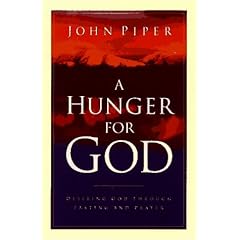
See: John Piper’s book, A Hunger for God: Desiring God Through Fasting and Prayer

Monday, January 12, 2009

D.A. Carson: "The Center of the Whole Bible"

In the first weekend of December 2008, D. A. Carson preached five sermons in Seattle:

  1. “The Center of the Whole Bible” (Romans 3:21-26): audio | video
  2. “The Strange Triumph of a Slaughtered Lamb” (Revelation 12): audio | video
  3. “A Miracle Full of Surprises” (John 11): audio | video
  4. “Why Doubt the Resurrection of Jesus” (John 20:24-31): audio | video
  5. “The Ironies of the Cross” (Matthew 27:27-51): audio | video


Sermon Outline:“The Crescent, the Star & the Cross”. Galatians 4:21-31


1) The Historical Background:

Galatians 4:21-23

· John 8:33-44

· Genesis 21:1-10


· Romans 9:6-18

2) The Divine Interpretation:

Galatians 4:24-27

· Hebrews 12:18-23

3) The Personal Application:

Galatians 4:28-31

· Romans 2:28-29

· Matthew 7:22-23

Thursday, January 08, 2009

Palestine 101

Ted Slater @ http://www.boundlessline.org has a helpful article on Palestine that helps come up to speed in dealing with the background to the present conflict. He notes:

"Palestine" (a term imposed by the 1st century Romans) is, and has been for millennia, a "region"; it's never been an independent state.

You'll find "Palestinians" who are Christian and Muslim ... and Jewish. "Palestinians" should not be conflated with "Muslims" or "Arabs"; the "Palestinians" that we hear so much about are merely Arabs who have come to live in the region of Palestine.

And how did Gaza come to be inhabited by so many Arab Palestinians? Did Israel sequester them there? No, they chose to gather there in 1948 at the request of the Prime Minister of Iraq, who warned them to flee the rest of Israel because Iraq, along with other neighboring Arab countries, was going to "smash the country with our guns and obliterate every place the Jews seek shelter. The Arabs should conduct their wives and children to safe areas until the fighting has died down." Yes, these Palestinian refugees are victims -- they are fundamentally victims of Arab aggression against Israel.

Jews have consequently lived in the region for over 3,000 years. They are not "occupying" the country; they are living in their homeland.

If you're interested, and want to learn more, check out this site. Here is another great primer on the region.

List of Denominations and Their Beliefs

According to Gordon-Conwell Theological Seminary, there exist roughly 39,000 Christian denominations worldwide in 2008. That is up from 500 Christian denominations in 1800, and the number is expected to grow to 55,000 by 2025.

Currently, Gordon-Conwell Theological Seminary estimates that a new Christian denomination is formed every 12 hours.

Wikipedia does a great job listing the largest denominations. Religion Facts compares the major denominations. And the Hartford Institute for Religion Research has links to hundreds of official denominational websites.

Here is a mashup of some their data. Since Church Relevance focuses primarily on Protestantism, I will elaborate on that data.

Catholicism - (1,200,000,000 adherents) Click for beliefs.

Protestantism - (699,000,000 adherents) Click for beliefs.

Eastern Orthodoxy - (260,000,000 adherents) Click for beliefs.

Oriental Orthodox Church - (81,000,000 adherents) Click for beliefs.

Anglicanism - (77,000,000 adherents) Click for beliefs.

Nontrinitarianism - (36,000,000 adherents) Click for beliefs.

Nestorianism - (1,000,000 adherents) Click for beliefs.

Wednesday, January 07, 2009

New Year

As read by Max McLean:


O Lord,
Length of days does not profit me except the days are passed
in thy presence,
in thy service,
to thy glory.

Give me a grace that
precedes,
follows,
guides,
sustains,
sanctifies,
aids every hour,
that I may not be one moment apart from thee,
but may rely on thy Spirit
to supply every thought,
speak in every word,
direct every step,
prosper every work,
build up every mote of faith,
and give me a desire
to show forth thy praise,
testify thy love,
advance thy kingdom.

I launch my bark on the unknown waters of this year,
with thee, O Father, as my harbour,
thee, O Son, at my helm,
thee, O Holy Spirit, filling my sails.

Guide me to heaven with my loins girt,
my lamp burning,
my ear open to thy calls,
my heart full of love,
my soul free.

Give me thy grace to sanctify me,
thy comforts to cheer,
thy wisdom to teach,
thy right hand to guide,
thy counsel to instruct,
thy law to judge,
thy presence to stabilize.

May thy fear be my awe,
thy triumphs my joy.

-Valley of Vision (Banner of Truth) p. 112.

Tuesday, January 06, 2009

New Year's Resolutions - Kid Edition

ESV Reading Plans

From http://www.esv.org

The daily reading plan found in the back of the ESV Study Bible is now available for download.

As Justin Taylor recently cataloged, there are several ways to access the ESV Reading Plans:

  • web (a new reading each day appears online at the same link)
  • RSS (subscribe to receive by RSS)
  • email (subscribe to receive by email)
  • iCal (download an iCalendar file)
  • mobile (view a new reading each day on your mobile device)
  • print (download a PDF of the whole plan)

There are currently 10 plans available in each of the options above.

The ESV: Every Day in the Word and ESV: Chronological Reading Guide are also available as audio podcasts in iTunes.

Resolved: Tabletalk 2009

Columns from Tabletalk Magazine, January 2009

january2009.jpgThe January edition of Tabletalk is out. This month's theme is "Resolved to Press on Toward the Goal." The issue looks at the importance of resolving in this new year to honor God in all we do and say. Contributors include R.C. Sproul, Burk Parsons, C. FitzSimons Allison, Sinclair Ferguson, Simon Kistemaker and Stephen Nichols.

Coram Deo (Living Before the Face of God):
"Resolved to Live and Die" by Burk Parsons

Right Now Counts Forever:
"Principle vs. Pragmatism" by R.C. Sproul

Pastor's Perspective:
"Speed with God" by Sinclair Ferguson

Pro Ecclesia (For the Church):
"The Prevailing Church (pt. 2)" by Simon Kistemaker

Generation to Generation
"The Lie We Believe" by C. FitzSimons Allison

Tolle Lege (Take Up and Read):
"Christ and Culture" by Keith A. Mathison

Seek Ye First:
"The Best-Laid Plans" by R.C. Sproul Jr.

Truth and Consequences:
"The Resolution Solution" by Gene Edward Veith

McCheyne One Year Bible Reading Plan PDF

From http://www.puritanfellowship.com:

Here is a PDF of an excellent one year Bible reading plan by Robert Murray McCheyne. Basically you go through the Bible in a year, by reading around four chapters per day, and it is arranged in such a way that, instead of getting bogged down when you come across long genealogies like in 1 or 2 Chronicles, you're only reading 1 chapter of it that day.

Download and print:
Robert Murray M’Cheyne Bible Reading Calender PDF.

Tabletalk Magazine's Bible reading schedule

At this link you can download a 600k PDF that features a calendar approach to daily Bible reading. We hope it is a helpful aid as you study God's Word in 2009.

It's free and we encourage you to share it with as many people as possible.

Ten Questions to Ask at the Start of a New Year

From Don Whitney @ http://www.biblicalspirituality.org:

Here’s a list of questions designed for self-reflection at the start of the new year, or on your birthday. They are also useful for family conversations, accountability partners, and small groups.
Read it online or download it as a bulletin insert (.doc, .pdf, A4.)

Monday, January 05, 2009

3D Renderings of the Temple in Jerusalem in Jesus' Time

Leen Ritmeyer (the architect-archaeologist who did the research for the ESV Study Bible illustrations) is partnering with a firm to produce computer visuals of the Temple in Jesus' time.


Themelios 33:3


The latest issue of Themelios (It is available as a 129-page PDF or in HTML.)
  1. Editorial | D. A. Carson
  2. Minority Report: The Way of the Christian Academic | Carl Trueman
  3. The Gospel and the Poor | Tim Keller
  4. Shared Intentions? Reflections on Inspiration and Interpretation in Light of Scripture’s Dual Authorship | Jared M. Compton
  5. The Center of Biblical Theology in Acts: Deliverance and Damnation Display the Divine | James M. Hamilton Jr.
  6. Salvation History, Chronology, and Crisis: A Problem with Inclusivist Theology of Religions, Part 2 of 2 | Adam Sparks
  7. Ezra, According to the Gospel: Ezra 7:10 | Philip Graham Ryken
  8. Book Reviews | 32 reviews
    1. Old Testament | 4 reviews
    2. New Testament | 6 reviews
    3. history and historical theology | 3 reviews
    4. systematic theology and bioethics | 15 reviews, 2 book notes
    5. ethics and pastoralia | 1 review
    6. missions and culture | 2 reviews

Saturday, January 03, 2009

Sermon Outline: Galatians 4:12–20. “A Fresh Start for a New Year”

1) The Godly Example. Galatians 4:12a.

  • Philippians 3:4-8

2) The Godly Focus. Galatians 4:12-16

  • Hosea 14:1-2

  • 2 Timothy 4:2-4

3) The Deadly Distraction. Galatians 4:17-18

  • Isaiah 55:1-3a

  • Philippians 1:15, 17-18

4) The Godly Objective: Galatians 4:19-20

  • 2 Corinthians 5:17

  • 2 Corinthians 3:17-18

Friday, January 02, 2009

John Piper - Motivation for Christian Obedience


Battling Unbelief DVD - 'Battling Unbelief: Session 4: Is it Biblical? (Part 2)'

Thursday, January 01, 2009

His Year


No one but God knows what this year will hold for any of us. It could be the best year of our lives, or it could be a year filled with trials and hardships. This video reminds us that no matter what happens this year our God will never leave us; he is always here