Friday, July 22, 2011
Is Fasting a Command? (Matthew 6:16) John MacArthur


Monday, October 26, 2009
More thoughts on fasting
1. Fasting better enables to enjoy food with gratitude
2. Medicating on sugar, salt and fat – or the living God
Tuesday, January 13, 2009
Fasting
 Tim Chester@ http://timchester.wordpress.com has put some interesting comments together on fasting. He covers:
What is fasting?
- 1 Corinthians 7:5
Should Christians fast?
- Matthew 6:16-18
- Acts 13:1-3; 14:23
- Matthew 9:14-17
- Luke 2:36-38
What is the purpose of fasting?
1. To seek guidance from God: Acts 13:1-3
2. To seek satisfaction in God: Matthew 6
Using a hunger for food to cultivate a hunger for God- Food as refuge
- Food as distraction:
Rediscovering the goodness of food
Using a hunger for food to combat sexual temptation
How should we fast?
1 Timothy 4:1-5
Danger:
The second danger is to think we can earn merit with God through abstinence. Fasting does not earn God’s approval or blessing. It is not the Pharisee who fasts who goes home justified in the parable Jesus tells in Luke 18:12-14, but the sinner who cries out for mercy. ‘It’s true that we can’t win God’s approval by what we eat. We don’t miss out on anything if we don’t eat, and we don’t gain anything if we do.’ (1 Corinthians 8:8). Fasting, like other ascetic practices, cannot of itself restrain indulgence (Colossians 2:20-23). And fasting done for selfish gain which disregards other people is an abomination in God’s sight (Jeremiah 14:12; Zechariah 2:5; Isaiah 58:3).
You could consider one of the following:
– a regular 24 hours fast - eat an evening meal one night and then break your fast with a light supper the following evening
– a regular day fast - eat an evening meal and break your fast with breakfast the day after next
– a fast for guidance - fast for a period leading up to a significant meeting or throughout a significant time together
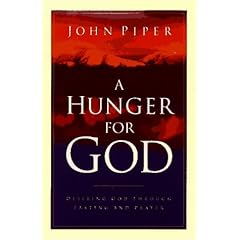
See: John Piper’s book, A Hunger for God: Desiring God Through Fasting and Prayer
Tuesday, February 12, 2008
Biblical Fasting

By Fred Sanders @ http://www.scriptoriumdaily.com
Fasting is a biblical practice, but it’s biblical in a peculiar way.
It’s presupposed on page after page, but never explained. “When you fast” is a typical beginning for a biblical sentence on the subject, and it leads modern readers to wonder if we missed a page somewhere back in the Old Testament –maybe in Leviticus?– that established the whole idea of fasting to begin with. But no, Kent Berghuis did a dissertation that studied every biblical reference to abstaining from food, and from the very first reference to fasting in the Old Testament, it just presupposes that the practice is well known and that we’ll understand what it’s for. Fasting is, after all, pretty much universal in world religions. Just about anywhere you find religion, you find fasting. Perhaps that’s why the authors of the Bible take it for granted.
As a result, what we have in fasting is a practice presupposed by the Bible but not directly established. “When you fast” –not if you fast, or “here’s an idea you never thought of: fast.” It’s a kind of biblical extra-biblical religious practice.
And then, to make matters weirder, the most detailed passages about fasting are negative, corrective, and even sarcastic. God’s best lecture on fasting comes in Isaiah 58:3-6 when the Israelites complain “Why have we fasted, and you see it not?” God responds, “Because you’re fasting wrong!” He’s not upset with their ascetical technique or their liturgical schedule, but with their lack of justice and their self-righteousness:
Is not this the fast that I choose:
to loose the bonds of wickedness,
to undo the straps of the yoke,
to let the oppressed go free,
and to break every yoke?
The basic idea of the passage is something like, “You call that a fast? I’ve got an idea: why don’t you try fasting from wickedness?”
And in the New Testament (Matthew 6:16-18), Jesus gives some clear directions about fasting in a similarly negative mode:
And when you fast, do not look gloomy like the hypocrites, for they disfigure their faces that their fasting may be seen by others. Truly, I say to you, they have received their reward. But when you fast, anoint your head and wash your face, that your fasting may not be seen by others but by your Father who is in secret. And your Father who sees in secret will reward you.
Taken together with Paul’s warnings about the dangers of cultic scrupulosity over food and ritual practices (Col. 2:16-19), it’s enough to make you think that the Bible’s main interest in fasting is to warn us about its spiritual danger! And church history provides its share of abuses of the practice, perhaps the most striking being the arrest of Swiss printers for eating sausage during Lent in 1522 so they could have strength to print Bibles. That was a situation that needed some Reforming, and Zwingli provided it.
But abuses don’t rule out proper uses, and throwing out fasting altogether would be a big mistake –an unbiblical move. While it’s true that the most detailed information about fasting comes obliquely and ironically through warning passages, we should also pay attention to how widespread the casual references to it are. If you dig into those and think about the presuppositions behind them, you can catch a glimpse of the purposes and results of fasting. Wayne Grudem summarizes some of the obvious ones handily in Chapter 18 of his Systematic Theology: An Introduction to Biblical Doctrine:
1. It increases our sense of humility and dependence on God.
2. It allows us to give more attention to prayer.
3. It reminds us that we need to sacrifice all of ourselves to God.
4. It is good exercise in self-discipline and restraint.
5. It heightens spiritual and mental awareness and a sense of God’s presence.
6. It expresses earnestness and urgency in our prayers.
John Calvin’s summary statement of the goals of fasting is helpful: “A holy and lawful fast has three ends in view. We use it either to mortify and subdue the flesh, that it may not wanton, or to prepare the better for prayer and holy meditation; or to give evidence of humbling ourselves before God, when we would confess our guilt before him.” (from his Institutes, Book IV, Chapter 12, section 15)
There is an ancient Christian tradition of fasting in preparation for Easter. Whether you’re among The Liturgically Correct who started the observance of Lent with Ash Wednesday last week, or whether your church is less engaged with a traditional church seasonal calendar, the basic idea of doing some deep preparation for Good Friday and Easter comes from a solid Christian instinct: the death and resurrection of Christ are, together, the one main event of Christianity. That makes the weeks before Easter a good time to consider the biblical practice of fasting. John Piper has a Piper-perfect book on it that you can read for free, and bible.org has some great background information.
Andrew Murray’s chapter on the subject in With Christ in the School of Prayer includes this wise observation:
And prayer needs fasting for its full growth… Prayer is the one hand with which we grasp the invisible; fasting, the other, with which we let loose and cast away the visible. […] Prayer is the reaching out after God and the unseen; fasting, the letting go of all that is of the seen and temporal. While ordinary Christians imagine that all that is not positively forbidden and sinful is lawful to them, and seek to retain as much as possible of this world, with its property, its literature, its enjoyments, the truly consecrated soul is as the soldier who carries only what he needs for the warfare. Laying aside every weight, as well as the easily besetting sin, afraid of entangling himself with the affairs of this life, he seeks to lead a Nazarite life, as one specially set apart for the Lord and His service. Without such voluntary separation, even from what is lawful, no one will attain power in prayer: this kind goeth not out but by fasting and prayer.
Disciples of Jesus! who have asked the Master to teach you to pray, come now and accept His lessons. He tells you that prayer is the path to faith, strong faith, that can cast out devils. He tells you: ‘If ye have faith, nothing shall be impossible to you;’ let this glorious promise encourage you to pray much. Is the prize not worth the price? Shall we not give up all to follow Jesus in the path He opens to us here; shall we not, if need be, fast? Shall we not do anything that neither the body nor the world around hinder us in our great life-work,—having intercourse with our God in prayer, that we may become men of faith, whom He can use in His work of saving the world.
Monday, March 19, 2007
Reflections on Fasting in Lent
 How Lent Can Make a Difference in Your Relationship with God
By Mark Roberts @http://www.markdroberts.com
I grew up hearing about Catholics fasting during the season of Lent. This always seemed to me to be one more good reason to be a Protestant. But, in the past fifteen years or so, I've sometimes decided to join my Catholic sisters and brothers in giving up something during the 40 days (46, including the Sundays) prior to Easter.
People in my theological tradition (the Reformed tradition, pioneered by John Calvin) tend not to emphasize Lenten fasting. Partly this had to do with the conscious rejection of Roman Catholic practices that were not clearly based on Scripture. Many Reformed folk, and other Protestants, chose instead to add some spiritual discipline to their lives as a way of preparing for Easter. It's quite common today for churches that don't have midweek Bible studies, for example, to offer a Lenten Wednesday Evening Study or something like this. Special Lenten spiritual retreats are also increasingly common in Protestant and Roman Catholic circles.
Throughout church history there have been different kinds of Lenten fasts. Nobody, to my knowledge, expected anyone to give up all food for the whole season. In the Middle Ages it was common for Christians to give up certain sorts of food, like meat and/or dairy products, for example. Many Catholics still refrain from eating meat on the Fridays of Lent. In the Easter Orthodox Church, the Lenten fast is taken even more seriously than in the Roman Catholic church, with many Orthodox folk eating vegetarian meals during the season.
During the past fifteen years I have sometimes given up something in Lent, perhaps chocolate or watching television. The latter was particularly hard because I enjoy college basketball, and March Madness (the NCAA bastketball tournament) always falls in the middle of Lent. This year I decided to give up something I enjoy. It don't think it would be appropriate for me to speak in detail about what I'm doing at this time. But I would like to share some reflections on what I'm learning by my version of a Lenten fast.
First, giving up something allows me to make a tangible sacrifice to the Lord. Although certain sacrifices are already present in my life, I don't often experience giving up something for God on a daily basis. The act of sacrifice reminds me of my commitment to God and my desire to make Him first in my life.
Second, by giving up something I usually enjoy on a daily basis, I have sometimes found myself yearning for that thing. Frankly, I've been tempted to give up my Lenten fast at times. I could easily argue that it's unnecessary (it is optional, in my opinion) and certainly not taught in Scripture. But, though I don't think my effort at fasting makes God love or bless me more, I do think it raises my awareness of how much I depend on other things in life rather than the Lord. I see how easy it is for me to set up all sorts of little idols in my life. Fasting, in some way, helps me to surrender my idols to God.
Third, when I give up something I like and then feel an unquenched desire for it, I'm reminded of my neediness as a person. And neediness, I believe, is at the heart of true spirituality. Jesus said:
"Blessed are the poor in spirit, for theirs is the kingdom of heaven. . . .
Blessed are those who hunger and thirst for righteousness, for they will be filled." (Matthew 5:3, 6)
Of course feeling hungry for one of life's pleasures isn't quite the same as hungering and thirsting for righteousness. But when I feel my hunger, when I sense my neediness for some other thing, I can use this to get in touch with my hunger and need for God.
Fourth, now that I'm half way through Lent, I'm finding myself less eager for the thing I've given up. Ironically, this makes my fast easier. It's almost something I can take for granted at this point, thus dulling the spiritual impact of the fast. But I'm also gratified to know that one of my little "idols" is being set aside in my heart, as I learn to depend more upon God. I'm experiencing a bit of freedom that makes me gladly thankful for God's grace at work in me.
So, as we cross the midway point of Lent, I am grateful for the saints who have gone before me, who discovered the blessings of giving up something in Lent. And I continue to pray that God will use this season to draw me closer to Him, and to prepare me for a fresh experience of Good Friday and Easter. May God's peace be with You!