Showing posts with label Events-Christmas. Show all posts

Monday, December 25, 2006

Christmas


Wise Men visiting Jesus on Twelfth
Night after his birth on Christmas
Christmas (literally, the Mass of Christ) is a traditional holiday commonly observed on 25 December. In most Eastern Orthodox Churches, even where the civil calendar used is the Gregorian, the event is observed according to the Julian calendar, which coincides with the predominant reckoning of 7 January. It is celebrated by most Christians to mark the birth of Jesus, which is believed to have occurred in Bethlehem in the Roman Province of Judea between 6 BC and AD 6. Christ's birth, or nativity, was said by his followers to fulfill the prophecies of Judaism that a messiah would come, from the house of David, to redeem the world from sin. Efforts to decide upon a date on which to celebrate his birth began some centuries later.

The word Christmas is a contraction of Christ's Mass, derived from the Old English Cristes mæsse.

It is sometimes abbreviated Xmas, probably because X resembles the Greek letter Χ (chi) which has often historically been used as an abbreviation for Christ (Χριστός in Greek).

Christmas has acquired many secular aspects, which are sometimes celebrated as often—or more—than the birth of Jesus. Many Christmas traditions originated with pre-Christian observances that were syncretised into Christianity. Examples of this process are the northern European Yule, and the Winter Solstice celebration found in many older as well as recent pagan celebrations.

In Western countries, Christmas has become the most economically significant holiday of the year. It is largely characterized by gifts being exchanged between friends and family members, and the appearance of Santa Claus. Various local and regional Christmas traditions are still practised, despite the widespread influence of American and British Christmas motifs disseminated by globalization, popular literature, television, and other media.

The story of Christ's birth has been handed down for centuries, based mainly on the Christian gospels of Matthew and Luke. The gospels of Mark and John do not address the childhood of Jesus, and those of Matthew and Luke highlight different events.

According to Luke, Mary learns from the angel Gabriel that the Holy Spirit has caused her to be with child.

The Birth of Jesus Foretold

26In the sixth month, God sent the angel Gabriel to Nazareth, a town in Galilee, 27to a virgin pledged to be married to a man named Joseph, a descendant of David. The virgin's name was Mary. 28The angel went to her and said, "Greetings, you who are highly favored! The Lord is with you."

29Mary was greatly troubled at his words and wondered what kind of greeting this might be. 30But the angel said to her, "Do not be afraid, Mary, you have found favor with God. 31You will be with child and give birth to a son, and you are to give him the name Jesus. 32He will be great and will be called the Son of the Most High. The Lord God will give him the throne of his father David, 33and he will reign over the house of Jacob forever; his kingdom will never end."

34"How will this be," Mary asked the angel, "since I am a virgin?"

35The angel answered, "The Holy Spirit will come upon you, and the power of the Most High will overshadow you. So the holy one to be born will be called the Son of God. -Luke 1:26-35

Shortly thereafter, she and her husband Joseph leave their home in Nazareth to travel about 150 kilometres (90 miles) to Joseph's ancestral home, Bethlehem, to enroll in the census ordered by the Roman emperor, Augustus. Finding no room in inns in the town, they set up lodgings in a stable in Bethlehem in Judea. There Mary gives birth to Jesus. Jesus' being born in Bethlehem fulfills the prophecy of the Book of Micah.
Prophecy
2"But you, Bethlehem Ephrathah, though you are small among the clans of Judah, out of you will come for me one who will be ruler over Israel, whose origins are from of old, from ancient times." -Micah 5:2

Fulfillment
1After Jesus was born in Bethlehem in Judea, during the time of King Herod, Magi from the east came to Jerusalem -Matthew 2:1

Luke's Gospel has some references to historic events at this time, saying "In those days Caesar Augustus issued a decree that a census should be taken of the entire Roman world" (Luke 2:1), but the only known census was in the year AD 6.

Matthew's gospel begins by telling the genealogy and birth of Jesus, and then moves to the coming of the Wise Men from the East (see the Magi) to Bethlehem. Matthew mentions no trek to Bethlehem from Nazareth. The wise men, or Magi, first arrive in Jerusalem and report to the king of Judea, Herod the Great, that they have seen a star, now called the Star of Bethlehem, heralding the birth of a king. Further inquiry leads them to Bethlehem of Judea and the home of Mary and Joseph. They present Jesus with treasures of "gold, frankincense, and myrrh". While staying the night, the wise men have a dream that contains a divine warning that King Herod has murderous designs on the child. Resolving to hinder the ruler, they go home without telling Herod of the success of their mission. Matthew then reports that the family next flees to Egypt to escape the murderous rampage of Herod, who has decided to have all children of Bethlehem under the age of two killed in order to eliminate any local rivals to his power. After Herod's death, Jesus and his family return from Egypt, but fearing the hostility of the new Judean king (Herod's son Archelaus) they go instead to Galilee and settle in Nazareth.

Another aspect of Christ's birth which has passed from the gospels into popular lore is the announcement by angels to nearby shepherds of Jesus's birth. Some Christmas carols refer to the shepherds observing a bright star directly over Bethlehem, and following it to the birthplace. The Magi, who Matthew also reports seeing a giant star, have been variously interpreted as wise men or as kings. They are supposed to have come from Arabia or Persia, where they might have obtained their particular gifts. Through the years astronomers and historians have offered conflicting explanations of what combination of traceable celestial events might explain the appearance of a giant star that had never before been seen.

Many different dates have been suggested for the celebration of Christmas. The theories for the reason Christmas is celebrated on December 25 are many and varied; none are universally accepted.

From early antiquity, the days following the winter solstice on December 21 were of particular significance to cultures who worshipped sun gods. These cultures believed that their sun god was born on December 21st, the shortest day of the year, and that the days grew longer as their god aged. Other cultures believed that their deity died on this day, only to return for another cycle.

It is alleged that, according to Celtic Mythology, the sun god was crucified on the winter solstice, and three days later, as the days grew longer again, he rose from the dead. It is said that this was the origin of the Celtic cross, symbolising the crucified sun god, thus making it a few thousand years older than Christianity. Nevertheless, there is no record of the Celts actually ever practicing crucifixion or stories of any crucifixion of a "Celtic Sun God" before 19th century source. Crosses and circles are found worldwide as solar symbol, whether or not a particular culture practiced crucifixion.

The context in which Christianity, and thus Christmas, formed was during the Roman Empire. The Romans honored Saturn, the ancient god of agriculture, each year beginning on December 17. In a festival called Saturnalia, they glorified past days when the god Saturn ruled. This festival lasted for seven days and included the winter solstice, which according to the Julian calendar, fell on December 25. During Saturnalia the Romans feasted, postponed all business and warfare, exchanged gifts, and temporarily freed their slaves. Such traditions resemble those of Christmas and are used to establish a link between the two holidays. These and other winter festivities continued through January 1, the festival of Kalends, when Romans marked the day of the new moon and the first day of the month as well as the beginning of the religious year. As Isaac Asimov comments in his Guide to the Bible, "[C]onverts could join Christianity without giving up their Saturnalian happiness. It was only necessary for them to joyfully greet the birth of the Son rather than the Sun."

According to the Catholic Encyclopedia, Christmas is not included in Irenaeus's nor Tertullian's list of Christian feasts, the earliest known lists of Christian feasts. The earliest evidence of celebration is from Alexandria, in about 200, when Clement of Alexandria says that certain Egyptian theologians "over curiously" assign not just the year but also the actual day of Christ's birth as 25 Pachon (May 20) in the twenty-eighth year of Augustus. By the time of the Council of Nicaea in 325, the Alexandrian church had fixed a dies Nativitatis et Epiphaniae. The December feast reached Egypt in the fifth century. In Jerusalem, the fourth century pilgrim Egeria from Bordeaux witnessed the Feast of the Presentation, forty days after January 6, which must have been the date of the Nativity there. At Antioch, probably in 386, St. John Chrysostom urged the community to unite in celebrating Christ's birth on December 25, a part of the community having already kept it on that day for at least ten years.

In The Roman Empire, the celebrations of Saturn during the week of the solstice, with their climax on December 25th, were the main social event. In order to make it easier for the Romans to convert to Christianity without missing out on their festivities, Pope Julius I ordered in 350 that the birth of Christ be celebrated on the same date.

Some scholars maintain that December 25 was only adopted in the 4th century as a Christian holiday after Roman Emperor Constantine converted to Christianity to encourage a common religious festival for both Christians and pagans. Perusal of historical records indicates that the first mention of such a feast in Constantinople was not until 379, under Gregory Nazianzus. In Rome, it can only be confirmed as being mentioned in a document from approximately 350 but without any mention of sanction by Emperor Constantine.

An alternative theory asserts that the date of Christmas is based on the date of Good Friday, the day Jesus died. Since the exact date of Jesus' death is not stated in the Gospels, early Christians sought to calculate it, and arrived at either March 25 or April 6. To then calculate the date of Jesus' birth, they followed the ancient idea that Old Testament prophets died at an "integral age" — either an anniversary of their birth or of their conception. They reasoned that Jesus died on an anniversary of the Incarnation (his conception), so the date of his birth would have been nine months after the date of Good Friday — either December 25 or January 6. Thus, rather than the date of Christmas being appropriated from pagans by Christians, the opposite is held to have occurred.

Another extremely popular cult of Persian origin, in those days was that of Mithras. The similarities between Jesus and Mithras are many. Mithras was born on December 25th of virgin birth, the son of the primary Persian deity, Ahura-Mazda. His birth was witnessed by shepherds and magi. He was reputed to have raised the dead, healed the sick and cast out demons. He had a Lord's Supper. His day of worship was Sunday. He was killed and resurrected, returned to heaven on the spring equinox after a last meal with his 12 disciples (representing the signs of the zodiac), eating "mizd" - a piece of bread marked with a cross (an almost universal symbol of the sun). The Mithraic cult peaked around the year 300 AD when it became the official religion of the empire. At that time, in every town and city, in every military garrison and outpost from Syria to the Scottish frontier, was to be found a Mithraeum and officiating priests of the cult. This is not to suggest that the Mithraic cult was the only factor in this syncretization, many pagan gods had similar aspects of mythology (e.g. resurrection, virgin mother etc).

Early Christians chiefly celebrated the Epiphany, when the baby Jesus was visited by the Magi (and this is still a primary time for celebration in Argentina, Spain and Armenia). Historians are unsure exactly when Christians first began celebrating the Nativity of Christ. At times it was forbidden by Protestant churches until after the 1800s because of its association with Catholicism.

Some Christmas traditions, particularly those in Scandinavia, have their origin in the Germanic Yule celebration. Christmas is still known as Yule (or: Jul) in Scandinavian countries.

According to one tradition, Jesus was born during Hanukkah (25 Kislev into the beginning of Tevet). Under the old Julian calendar, the popular choice of 5 BC for the year of Jesus' birth would place 25 Kislev at November 25.

Early Christians sought to calculate the date of Christ's birth based on the idea that Old Testament prophets died either on an anniversary of their birth or of their conception. They reasoned that Jesus died on an anniversary of his conception, so the date of his birth was nine months after the date of Good Friday, either December 25 or January 6.

St. Hippolytus, who was already knowledgeably defending the faith in writing at the start of the third century, said that Christ was born Wednesday, December 25, in the 42nd year of Augustus' reign (see his Commentary on Daniel, circa 204, Bk. 4, Ch. 23).

Additional calculations are made based on the six-year almanac of priestly rotations, found among the Dead Sea Scrolls. Some believe that this almanac lists the week when John the Baptist's father served as a high priest. As it is implied that John the Baptist could only have been conceived during that particular week, and as his conception is believed to be tied to that of Jesus, it is claimed that an approximate date of December 25 can be arrived at for the birth of Jesus. However, most scholars (e.g. Catholic Encyclopedia in sources) believe this calculation to be unreliable as it is based on a string of assumptions.

The apparition of the angel Gabriel to Zechariah, announcing that he was to be the father of John the Baptist, was believed to have occurred on Yom Kippur. This was due to a belief (not included in the Gospel account) that Zechariah was a high priest and that his vision occurred during the high priest's annual entry into the Holy of Holies. If John's conception occurred on Yom Kippur in late September, then his birth would have been in late June. If John's birth was on the date ascribed by tradition, June 24, then the Annunciation to the Blessed Virgin Mary, said by the Gospel account to have occurred three month's before John's birth, would have been in late March. (Tradition fixed it on March 25.) The birth of Jesus would then have been on December 25, nine months after his conception. As with the previous theory, proponents of this theory hold that Christmas was a date of significance to Christians before it was a date of significance to pagans.

Christmas is now celebrated on December 25 in Roman Catholic, Protestant, and some Eastern Orthodox churches, such as the Greek, Bulgarian and Romanian Orthodox Church. The majority of Eastern Orthodox churches celebrate Christmas on January 7. This date results from their having accepted neither the reforms of the Gregorian calendar nor the Revised Julian calendar, with their ecclesiastic December 25 thus falling on the secular date of January 7 from 1900 to 2099. This calendrical difference has led to confusion on the part of those unfamiliar with the older calendar. The Orthodox churches begin preparing for Christmas with a fast that begins 40 days before Christmas and ends with Christmas, dubbed the "Feast of the Nativity of our Lord, God, and Saviour Jesus Christ." In the U.S. and Canada, some Orthodox dioceses allow the parish priest or parish to decide which of the two calendars (i.e., Gregorian versus old Julian) to follow at the parish level and hence the timing of Christmas Day. Armenian Christians celebrate Christmas on January 6th except those in Jerusalem, who still use the old calendar and celebrate Christmas on January 18th.

Dates for the more secular aspects of the Christmas celebration are similarly varied. In the United Kingdom, the Christmas season traditionally runs for twelve days beginning on Christmas Day. These twelve days of Christmas, a period of feasting and merrymaking, end on Twelfth Night, the eve of the Feast of the Epiphany. This period corresponds with the liturgical season of Christmas. Medieval laws in Sweden declared a Christmas peace (julefrid) to be twenty days, during which fines for robbery and manslaughter were doubled. Swedish children still celebrate a party, throwing out the Christmas tree (julgransplundring), on the 20th day of Christmas (January 13, Knut's Day).

In practice, the Christmas festive period has grown longer in some countries, including the United States and the United Kingdom, and now begins many weeks before Christmas, allowing more time for shopping and get-togethers. It often extends beyond Christmas Day up to New Year's Day, this later holiday having its own parties. In the Philippines, radio stations usually start playing Christmas music (see also Christian Music) during what is called the "-ber months" (September, October, etc.); this usually marks the start of the Christmas season.

Countries that celebrate Christmas on December 25 recognize the previous day as Christmas Eve, and vary on the naming of December 26. In the Netherlands, Germany, Scandinavia, Lithuania and Poland, Christmas Day and the following day are called First and Second Christmas Day. In many European and Commonwealth countries, December 26 is referred to as Boxing Day, while in Finland, Ireland, Italy, Romania, Austria and Catalonia (Spain) it is known as St. Stephen's Day. In Canadian French, the December 26 holiday is generally referred to as Lendemain de Noël (which literally means "the day after Christmas").

A plethora of customs with secular, religious, or national aspects surround Christmas, varying from country to country. Most of the familiar traditional practices and symbols of Christmas originated in Germanic countries, including the now omnipresent Christmas tree, the Christmas ham, the Yule Log, holly, mistletoe, and the giving of presents to friends and relatives. These practices and symbols were adapted or appropriated by Christian missionaries from the earlier Germanic pagan midwinter holiday of Yule. This celebration of the winter solstice was widespread and popular in northern Europe long before the arrival of Christianity, and the word for Christmas in the Scandinavian languages is still today the pagan jul (=yule).

Rather than attempting to suppress every pagan tradition, Pope Gregory I allowed Christian missionaries to synthesize them with Christianity, allowing many pagan traditions to become a part of Christmas.

The dynamic relationship between religious and governmental authorities and celebrators of Christmas continued through the years. Places where conservative Christian theocracies flourished, as in Cromwellian England and in the early New England colonies, were among those where celebrations were suppressed.[5] After the Russian Revolution, Christmas celebrations were banned in the Soviet Union for the next seventy-five years.

Several Christian denominations, notably the Jehovah's Witnesses, some Puritan groups, and some fundamentalist Christians, view Christmas as a pagan holiday not sanctioned by the Bible and refuse to celebrate or recognize it in any way. Incidentally, this was the practice of the Puritans in 17th and 18th Century England and the American Colonies. Christmas was not widely celebrated in New England until after the middle of the 19th Century.

In Commonwealth countries in the southern hemisphere, Christmas is still celebrated on 25 December, despite this being the height of their summer season. This clashes with the traditional winter iconography, resulting in anachronisms such as a red fur-coated Santa Claus surfing in for a turkey barbecue on Australia's Bondi Beach. Japan has largely adopted the western Santa Claus for its secular Christmas celebration, but their New Year's Day is considered the more important holiday. Christmas is also known as bada din (the big day) in Hindi, and revolves there around Santa Claus and shopping. In South Korea, Christmas is celebrated as an official holiday.

The religious celebrations begin with Advent, the anticipation of Christ's birth, around the start of December. (In most western churches, Advent starts the 4th Sunday before Christmas Day, and thus can last for 21 to 28 days.) These observations may include Advent carols and Advent calendars, sometimes containing sweets and chocolate for children. Christmas Eve and Christmas Day services may include a midnight mass or a Mass of the Nativity, and feature Christmas carols and hymns.

A Christmas Visitor

By Paul Helm

It happened like this. We were on the point of starting Christmas Dinner - just the family, the three of us - when the bell rang. A strange figure at the door. A tramp begging, was my first thought. He was small and skinny, but with a compelling look, even though his eyes were a mess, swollen and sore. Black hair, long and lank, with skin like old bark. He dressed oddly. I remember thinking, 'a bit like the Dalai Lama'. There was a scar down one cheek. How old he was is anyone's guess. But not young.

It was freezing outside, but before the Scrooge in me could say anything, the caller was in the hallway. He trembled a bit. From the cold, I thought. But he seemed weak and fearful. Whoever could he be? What did he want? He muttered what sounded, in his broken English, like 'gentleness' or 'Gentiles'. But it was what was under his arm that gave him away - some scrolls and other papers. 'Books and parchments' came at once to mind. Very politely, but with a thick Jewish accent, he asked, 'I wonder if you have some water?' Of course. The glass was quickly brought.

Angela and Alice looked at each other, and at him, startled and a bit upset at this intrusion. But I was now convinced I knew who this visitor was. Fear. Panic. Putting my Cessationist scruples to the back of my mind, I quickly looked around the room. All the trappings of Christmas were very evident: the tree, the streamers, the cards, the nativity scene, candles, Father Christmas, the holly and the mistletoe, accompanied by 'seasonal' music. What would our visitor think?

As far as I can see the Apostle Paul - for that is who the caller was, I now knew - had not given us any advance warning of what he would think. By a slip (or a little bit of Royal pressure on the translators) 'Easter', occurs in the KJV translation of Acts 12.4, but 'Christmas' is nowhere to be found. Perhaps Paul did not mention Christmas because he accepted the Regulative Principle of Worship, the principle that except in regard to 'common circumstances', Christian worship is to be governed solely by the commands of the Word of God, and not merely by what it forbids. A rule easy to state but (even with the best will in the world) hard to observe, as Derek Thomas has shown. But 'Regulative Principle' does not appear in the KJV either, nor in any other version I'm aware of. But of course Paul could have kept to the principle without using the phrase 'Regulative Principle' and (come to think about it) he could have celebrated Christmas without using the word 'Christmas'. Or Paul might have used the word 'Christmas' or (if you think that the word 'Advent' is more seemly), the word 'Advent', but it not find its way into his writings.

I think I know what the late Professor John Murray, who adhered to the Regulative Principle, would have said about Christmas, but I have never been sure what the late Apostle Paul would have said. Perhaps I was about to find out.

If the Apostle, like Professor Murray, kept to the Regulative Principle, or at least tried to, then what would he say about all these trappings? And about the very idea of a Christian festival in the middle of winter, a Christ-mass? What sort of a defense could I put up if he once got going? Perhaps I could persuade him that Christmas was a 'thanksgiving upon a special occasion'. But, to be frank, this did not seem very likely. Yet there was a glimmer of hope. For Paul did say things about days and festivals, which gave me something to hold on to. Perhaps he would not take a hard line. He may think that Christmas is one of those times that (as he wrote to the Romans), provided that we are fully convinced in our minds that they're OK, then they're OK. However, in a situation like this, who the 'weak' brother is, and who the 'strong' has always been a bit of a puzzle. Perhaps Paul would explain. Maybe we could simply agree to differ, or even (happy thought!) agree to agree. That would be a great deliverance. It would be wonderful if somehow we could deflect things away from Christmas.

I took a deep breath. The Apostle to the Gentiles! Here, at Christmas! Panic. Fear. But delight and excitement too. Wait till Derek and Ligon hear of this.....Carl Trueman, eat your heart out!

Resisting the temptation to pick up the camcorder, Angela brought extra things for the table, and we settled him down there. Though it wasn't easy, because we discovered that he limped rather badly. He was also reluctant to let go of the scrolls, but we were eventually able to persuade him. He muttered his appreciation, and was about to say something else, but when he saw and smelled the food his appetite seemed to get the better of him. We tried the 'business as usual' ploy, as if Apostles were regular visitors to our home. Our visitor had to eat slowly because of some missing front teeth. The gaps gave him a rather comic appearance. Alice looked him over and began to giggle. He loved the turkey, though the knife and fork were difficult. He kept peering at how we were managing the food. Angela quietly passed him a spoon. Wine? The plum pudding was a bit rich for him, I think. Cheese and biscuits (with olives) were a great success. More? Why not! (I was relieved that that stuff I remembered about him knowing how to be abased and how to abound seemed to be true to life.)

After the food, and a couple of cups of very white coffee, he began to steady and to gain in strength. The chocolates were opened. An instant success. As we talked, it seemed that he already knew quite a bit about us. Perhaps not. But he was certainly courteous, thanking us warmly for what he had eaten. He now began to look around the room. My spirits drooped. Here comes the Regulative Principle!

I began to try to convey the significance of what he saw, not very successfully I fear. He was extremely polite. I was struck by that. At one point, after some moments of total silence, I ventured to ask him what he thought about our way of celebrating Christ's birth. He liked the candles. They made him think of meals at home. And the tree took him back to the pines near where he was brought up. And as I explained the Nativity scene set up under the window, he beamed and remarked that he was thrilled whenever Christ was at the centre. The only thing that made him mad was the figure of Father Christmas. 'A god, a god' he seemed to be saying, in a rather grumpy kind of way. I tried to make the connection with Santa Claus, but it did no good.

He was an attentive listener, and picked things up very quickly. But boy, could he talk once he got going. I shall try to give you as much of the rest of our conversation as Angela and I can remember. I've attempted to do this in his own words, but what with his accent and the fact that he sometimes became excited and gabbled so fast, there are some things that we can only remember the gist of. So, no speech marks. To try to make things a bit clearer I've put in some of our questions to him. His quotes from his own words and those of others were made in a very free way, so I’ve taken the liberty of expressing them in the ESV.

We explained that Christmas was part of the 'Church Year'. He could see advantages with that idea. Certainly, he recognized that the cycle of the Christian year keeps people focused on the central things of the faith, and that can't be bad. Yet - and he was very strong on this, gently tapping the coffee table with his fingertips - it could easily give the wrong impression. How so? Because the Church Year is a circle, not a line, he said. His voice down to a whisper, he reckoned that he'd had a hard job in his letters conveying the once-for-all character of Christ's coming. He mentioned several sentences; descended from David according to the flesh; yet for your sake he became poor; who though he was in the form of God, did not count equality with God a thing to be grasped; great indeed, we confess, is the mystery of godliness: He was manifested in the flesh; the appearing of our Savior Jesus Christ.

But he seemed to think that none of them were very good at expressing this idea of once-for-allness. That was not his phrase, incidentally. He thought that one of the most satisfactory ways he'd come up with was, when the fullness of time had come. By contrast , whoever had written the letter to the Hebrews, (he did not seem to know who the author was, and not to care), had done a great job. But when Christ had offered for all time a single sacrifice for sins, he sat down at the right hand of God, waiting from that time until his enemies should be made a footstool for his feet. For by a single offering he has perfected for all time those who are being sanctified. He sounded out every word clearly and solemnly. He added, I wish I'd thought of that. Were there tears in his eyes? It was difficult to tell.

You see, he said, - glancing at Alice, who was putting another DVD into her new machine - the Incarnation, like the Cross, cannot be played over and over again. It actually happened. (Alice leaned over and whispered, 'He means that Jesus came in real time. No playback facility!') It won't happen again. Can't do. Christmas...Christmas....Christmas....Nativity scenes....Nativity plays. Doesn't all this repetition make it seem as if you can't quite convince yourselves that it has happened? Are you trying to be persuaded that the very nature of God became flesh by re-running the story, by trying to turn the clock back? And trying to imagine how it was, what it must have been like to be there, on that 'first Christmas'? Gently, he suggested that maybe it has the opposite effect.

At the time he was writing his letters, he went on, there were big problems with the Stoics, who thought that everything recurred. So given enough time, on their view the Incarnation would happen again. So then there was a special need to stress Christ's once-for-allness to the Gentiles as well as to the Jews. He went on, forget the Stoics. You probably haven't heard of them anyway. The point to remember is, the Lord's purposes aren't a circle, they're a line. Christmas cannot recur each year, because it cannot return, not even once.

So how do you put it? Angela asked. He said that he thought the best idea he'd come up with - it came to him in a flash, right out of the blue - has at first sight nothing to do with Christmas. When he was writing to the Christians at Rome and trying to motivate them to live properly he'd thought of this: for salvation is nearer to us now than when we first believed. Nearer than when we first believed - there's the line of God's purposes, and we are on it. And so (our visitor seemed to like drawing inferences) nearer than when the Advent occurred. And tomorrow (another inference loomed) our lives will be a day nearer the second Advent, our salvation, and a day further away from the first.

Some have noticed - he went on - that in my writings I don't have much to say about the birth and life and ministry of Jesus. You don't find any references to the manger, or the shepherds, or the wise men. Not even - he seemed to wink at this point, or maybe his eyes twinkled - not even Mary! I butted in, (it was necessary to do this sometimes), Did you know all those details at the time you were writing, then? He was rather surprised by my question. Do you not think we all got to know about Jesus' life and death and resurrection pretty soon after everything was over? Look, he went on, when it was necessary to get down to details, I could and did. There was that serious misunderstanding at Corinth about the resurrection of the dead, and so I had to insist on the historical facts about Jesus, about his resurrection and who saw him afterwards, and so on. When we had the discussions at Ephesus, in the school of Tyrannus, there were lots of questions about Jesus' teaching. Those were great days! I suppose that's why I referred to Jesus' words when I talked to the Ephesian elders at Miletus. But apart from that, and of course the words of institution of the Supper, there's little or nothing else. And when you think of all that stuff I wrote about the death of Jesus and what it means! Yet I did not even mention Judas and Pilate and the two thieves.

Why was that? Well, no one can deny that the writers of the four Gospels have done a great job. What would the point be - apart from giving extra work to New Testament scholars - to add a fifth? Who needs a fifth? (He sounded very Jewish, I remember.) He said that he believed that his task, his calling, as he expressed it, was to place Jesus in history, to try to show how his coming, and his death and resurrection, fitted into God's unfolding purposes, and so what they mean to us who come after. (At this point I could swear he muttered someone's name. But because of his accent, and the sound from the DVD player, we could not quite make it out. We discussed it endlessly afterwards. I thought it was 'Geerhardus', while Angela was adamant that it sounded like 'Griffin' or 'Gaffin'. Anyhow, we were both agreed on what his next words were: 'redemptive - historical'. I remember thinking, What a mouthful!)

I was sure he was about to nod off. But then he jerked awake and wagged a spiny forefinger at us both. Union with Christ, he said, was his big idea. He was disappointed that it does not seem to have caught on. People go on about the birth and death of Christ, about satisfaction and atonement, about justification and sanctification, even about election and predestination, without somehow getting the basic point, the key idea. Union with Christ. A big idea expressed in small words. In your translations of my letters, he said, look how those phrases 'in Christ', 'with Christ' keep coming up. There was that French chap in Geneva, brilliant, devoted to Christ, though rather excitable and bad-tempered. His name escapes me. Cauvin? Calvin? He had the right idea. He got to the heart of what I was trying to say. But not many others have.

When we think about union with Christ, we are taken beyond Christmas;
- at this point I remember he waved his arms around the room in a rather expansive way - what now matters is not only the fact that Christ has come, but that because we are united to Christ we have been clothed in Christ, and we must keep on being clothed in him. So Christ is not only to be admired or celebrated or worshipped, and the details reconstructed. We must not stop there. His voice dropped. I might even say, if you'll allow me, hold onto the details but don't fuss over them. Christ is to be put on. We must wear him. Don't forget that, he said. That's what Christmas (I was rather surprised he kept using this word) must lead to. Not putting on a Father Christmas suit, or wearing Mary and Joseph outfits, but wearing Christ himself. We have Christ's real presence ('real presence' were his very words) not when we look at a model of a baby in a replica manger, or a picture on one of your Christmas cards, but when we put him on.

I'll always remember that text. The timing was perfect, though quite unintended, I'm sure. As he was slowly repeating the passage, But put on the Lord Jesus Christ, and make no provision for the flesh, to gratify its desires, he promptly took another chocolate from the box that Angela held out to him. Then he dozed off. And we crept out to the kitchen to do the dishes.

When we came back, the scrolls were gone, and his chair was empty.

Pardon the Interruption, but . . . I Believe in Santa Claus

by Kevin T. Bauder @ http://www.sharperiron.org/2006/12/24/pardon-the-interuptioni-believe-in-santa-claus/

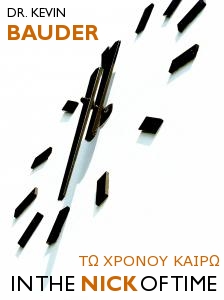
In The Nick of Time

The apostle Paul was under arrest, being transported to Rome by a military guard. Along the way, his ship put in at the Lycian port of Myra, where the Roman centurion found a different ship that was sailing to Italy (Acts 27:5-6). The book of Acts does not tell how long Paul was in Myra between ships.

Nobody knows when or how the Christian church was established in Myra. Paul had previously ministered in cities near Myra, so perhaps missionaries from one of those churches may have gone to that town. Or perhaps Paul himself was able to do some preaching while waiting for the centurion to locate a ship to take Paul to Italy.

What we do know is that the church in Myra survived until persecution came under the Emperor Diocletian. The Diocletian persecution was the most widespread and deadly harassment of Christians in Roman history. So systematic and thorough was the persecution that the emperor believed he had wiped out Christianity forever. He even minted a coin to commemorate the event.

Well into the Diocletian persecution, the church in Myra found itself without a pastor. Unable to locate a new shepherd (pastors were special targets of the emperor), the church sought counsel from neighboring pastors. These church leaders gathered in Myra to pray and to seek the Lord’s provision of a new bishop for the church. When they had exhausted every alternative, they gave themselves to a night of prayer. They asked God to send His choice as the first person to enter the church building in the morning.

In the church at Myra was a very young man names Nicholas. His parents were wealthy and privileged, and they were also Christians. Somehow they had escaped the persecution. Though no record exists of Nicholas’s conversion, he clearly was reared in the Christian faith. As he approached manhood, many opportunities were open to him in commerce and civil affairs. He sensed, however, that God had something else for him. He did not know what, but he began to pray for the Lord’s leading. Each period of prayer seemed to bring a greater sense of his unworthiness and sinfulness.

After one long night of struggle, Nicholas determined to go to the church to pray. Arriving early in the morning, he was surprised to find the building occupied by pastors from the surrounding churches. These men asked him who he was, and he replied, “I am Nicholas, a sinner.” Delighted with such a humble response, the pastors announced to Nicholas that God had called him to become the next pastor of the church. Nicholas took this as the answer to his prayers and the Lord’s direction for his life.

Though Nicholas had learned the Scriptures from his childhood, he pondered how a young man could pastor a church during persecution. He knew that Christians had to be taught to live by faith—but how could he teach them? The answer was obvious. He had to teach by modeling, and for Nicholas, modeling faith meant living in complete dependence upon God. Shortly after becoming the pastor in Myra, Nicholas gave away all of his wealth and possessions, committing himself publicly to live only by what God provided.

The city of Myra was dedicated to the worship of Diana—not the Roman goddess, but a goddess similar to Diana of the Ephesians. She was a fusion of the worst features of European and Asian deities. Nicholas abominated this goddess, but he was moved with compassion toward the people who ignorantly worshipped her. Once the persecution ended, Nicholas determined to attack this pagan worship directly. He announced publicly that he intended to demolish the temple of Diana. If she was truly a goddess, then she could stop him without human help. Day after day Nicholas carried his tools to the temple. He dismantled the whole structure stone by stone, preaching Christ while he worked. When he stood triumphant among the ruins, many of the people of Myra abandoned their paganism and turned to Christianity.

There is an old story that Nicholas attended the Council of Nicea. Subsequent researches have shown that this legend is probably untrue, but Nicholas was certainly aware of Arianism. This new heresy denied that Jesus was truly God. It insisted that Jesus was the first and greatest of God’s creatures, but that He was not eternal and did not share the divine nature. The task of the Council of Nicea was to answer Arianism and expose it as a perversion of Christianity. Even if Nicholas never attended the council, he certainly agreed with its decisions. He was a true worshipper of Jesus Christ, the God-man and Savior.

Through the years many stories have been told about Nicholas of Myra. Most of these appear to be fabrications, but some might likely be true. One of these concerns a poor man who had three daughters. Because he could provide no dowry, the daughters could not marry. The father determined to sell them into prostitution as they came of age. Nicholas heard about the plan. The night before the eldest daughter was to be sold, the pastor crept to the man’s home and left a bag of gold for her dowry. As each of the daughters came of age, he duplicated this generosity. For the third daughter, however, the father was watching and caught Nicholas in the act of leaving the money. The story is that Nicholas told him about the forgiveness that Christ offers, and the man repented and became a Christian. Incidentally, the symbol of St. Nicholas is still three gold balls, representing the three bags of gold.

Whether the story is true or not, it almost certainly bears the stamp of Nicholas’s character. His generosity was legendary. That is why he became associated in myth with the giving of gifts, and that is why people still give gifts in his memory. Saint Nicholas—Santa Claus—was not a fat man in a red suit who drove a sleigh pulled by reindeer. That character was invented by Thomas Nast and other merchandisers during the late 19th Century. Saint Nicholas was a pastor. He was a man of faith, courage, and generosity. He was a true worshipper of Jesus Christ. Every indication is that he was genuinely a saint, according to the biblical definition of that term.

When children ask if I believe in Santa Claus, I tell them the truth. I most certainly do believe in him! Then I tell them who he was. More importantly, I tell them who he worshipped.

O Splendor of God’s Glory Bright

Ambrose of Milan (4th Century)

Tr. Robert S. Bridges and John M. Neale

O splendor of God’s glory bright,
O Thou that bringest light from light;
O Light of light, light’s living spring,
O day, all days illumining.

O Thou true Sun, on us Thy glance
Let fall in royal radiance;
The Spirit’s sanctifying beam
Upon our earthly senses stream.

The Father, too, our prayers implore,
Father of glory evermore;
The Father of all grace and might,
To banish sin from our delight.

To guide whate’er we nobly do,
With love all envy to subdue;
To make ill fortune turn to fair,
And give us grace our wrongs to bear.

Our mind be in His keeping placed
Our body true to Him and chaste,
Where only faith her fire shall feed,
To burn the tares of Satan’s seed.

And Christ to us for food shall be,
From Him our drink that welleth free,
The Spirit’s wine, that maketh whole,
And, mocking not, exalts the soul.

Rejoicing may this day go hence;
Like virgin dawn our innocence,
Like fiery noon our faith appear,
Nor known the gloom of twilight drear.

Morn in her rosy car is borne;
Let Him come forth our perfect morn,
The Word in God the Father one,
The Father perfect in the Son.

All laud to God the Father be;
All praise, eternal Son, to Thee;
All glory, as is ever meet,
To God the holy Paraclete.Kevin Bauder

—————-
This essay is by Kevin T. Bauder, president of Central Baptist Theological Seminary. Not every one of the professors, students, or alumni of Central Seminary necessarily agrees with every opinion that it expresses.


Saturday, December 23, 2006

An Uncomfortable Christmas Card for Unbelievers Comfortable at Christmas

By Charles Randall Biggs @ http://www.reformationtheology.com/2006/12/an_uncomfortable_christmas_card_for_unbelievers_comfortable_at_christmas.php#more

Each year at this time, I think about how I would like to remind my unbelieving friends and loved ones of the glorious gospel and hope found in Jesus Christ. Seasons like Christmas give us another great opportunity to make the good news of Jesus known to the whole world, and especially to those closest to us.


Sadly however, when Christmas comes and we gather with our unbelieving friends and family, we Christians look into the eyes of our unbelieving friends and family members excitedly telling them of how God has greatly blessed us, and what the true meaning of Christmas is about, only for these glad tidings to be received at best as a nice sentiment that spiritually falls flat in their response to us, or at worst it is received as divisive and ignorant, and a subject to be avoided in our Christmas conversation.

This year I decided to write a letter to those friends and loved ones who love me, but who do not love Christ; this is a letter to friends and family who do not believe. I decided to write an uncomfortable Christmas card for unbelievers comfortable at Christmas.


No one should ever be too comfortable with the truths of Scripture any time of the year! I think it is important for the truths of Scripture to keep believers all uncomfortably ever-depending upon Jesus Christ alone for our righteousness throughout the year (one of the purposes of gospel preaching). I especially think it is good for unbelieving friends and relatives to be uncomfortable this time of year when we celebrate God becoming flesh in order to save those who believe. When unbelievers become comfortable this time of year, it is time to ask ourselves as the Church whether we are speaking and proclaiming the gospel in clear, pointed, penetrating ways as Jesus, John, and Paul preached it.

If you find this letter helpful, and would like to use it yourself in order to send to those whom you love and desire them to know Jesus, I invite you to use it as often as you would like, and to send it to as many as you would like.


Merry Christ,

Pastor Biggs

Dear Friend or Loved One Who Loves Me, but Does Not Love Jesus Christ:

This Christmas, I eagerly and affectionately desire to write to you a different kind of Christmas message. I long to send you good tidings of great joy, and high hopes that your Christmas and New Year will be cheerful and full of good things, but I also want to write to make you as uncomfortable with the Christmas message as possible.

“Why would I do that?” you may ask. “Why would you want someone you love to be uncomfortable by the Christmas message?” Well, Christmas is about more than eating together, mustering up good feelings, enjoying a restful winter holiday, giving and getting presents, and singing songs around the Christmas tree (even when we don’t feel like singing). Christmas is much more than that! Now understand me, you can have a holiday anytime of the year if you want, and if you want to take a holiday at Christmas time, then that is your prerogative, but please don’t feel comfortable with Christmas and Christmas things.

The gospel message of Christmas should greatly frighten all who do not believe and love Jesus Christ as Savior and Lord. God, the Creator of heaven and earth, the Great and Powerful God and Maker of the universe became flesh and dwelt among us; this is the message of Christmas. This great God who made us all, and to whom we will all be accountable, became one of us in order to make himself fully known. If you want to know God, you find him and understand him in the Person and Work of Jesus Christ; Jesus is the one who reveals God or makes him known in all of his attributes and righteousness (John 1:14-18).

This Christmas, I want you to consider three very special Christmas Bible verses, and I want you to feel very uncomfortable each time you read and hear them until you know the Lord Jesus Christ himself as your Lord and Savior. These three verses will be found this season in great number on church signs, songs you hear sung, and in Christmas cards sent by others to you. In hoping to make you feel uncomfortable, I am not doing this to be mean, or to be angry, or to cause you to be unnecessarily upset with me. I am doing this because I believe your eternal destiny is at stake for not believing upon the Lord Jesus Christ for salvation, and I take it very seriously because I love you very much! The Bible says in John 3:18 and 3:36:


John 3:18 Whoever believes in him is not condemned, but whoever does not believe is condemned already, because he has not believed in the name of the only Son of God….John 3:36 Whoever believes in the Son has eternal life; whoever does not obey the Son shall not see life, but the wrath of God remains on him.


There are only two kinds of people at Christmas: those who believe in the Christmas message, and those who do not believe the Christmas message.

Those who do not believe in Christ the Son, who was sent by God to save sinners, are already condemned. This means that if you are an unbeliever, or one who rejects Christ outright, or merely accepts Christ on your own terms as a good religious teacher, you abide under God’s wrath for your sins at this very moment (John 3:18, 36), and this is not something to take lightly- -but fearfully and uncomfortably until you find your sins forgiven and your rest in Jesus Christ alone. My hope as you read further is that you would feel greatly uncomfortable and convicted by your sins against God and man, and that the powerful Holy Spirit of God would reveal your need, hope, and ultimate and eternal comfort to be found in Christ alone!

With that said, may you never think the same comfortable, mere sentimental “Christmas” thoughts about the following Biblical passages! I am taking three familiar passages, two from Isaiah the Prophet (Isaiah 9:6-7 and Isaiah 40:1-5) and one from the Gospel of Luke. Let’s read together Isaiah 9:6-7:


“For Unto Us a Child Is Born…”

Isaiah 9:6-7: For to us a child is born, to us a son is given; and the government shall be upon his shoulder, and his name shall be called Wonderful Counselor, Mighty God, Everlasting Father, Prince of Peace. 7 Of the increase of his government and of peace there will be no end, on the throne of David and over his kingdom, to establish it and to uphold it with justice and with righteousness from this time forth and forevermore. The zeal of the LORD of hosts will do this.

This prophecy of Isaiah that is quite familiar and quoted very comfortably during the Christmas season is about the manger ultimately. This prophecy is about a child being born and a son being given for sinners. Notice how this child, this son is described: 1) He shall be a great ruler over all governments (“the government shall be upon his shoulder”); 2) He shall be called Wonderful Counselor, Mighty God, Everlasting Father, Prince of Peace; and, 3) His great rule will increase so that peace will cover the face of the earth and his Kingdom will extend throughout the earth and throughout eternity. He will rule with justice and righteousness forever.

This should only comfort you if you believe upon Jesus Christ, the child, the son who is given for us. Otherwise, this prophecy should greatly threaten your comfortable existence. The first way he is described is a great ruler over all governments. Do you bow before him in service and worship as your king? Do you treat this Jesus Christ as a King, a great and mighty ruler? Do you understand that even though you might not recognize his sovereign rule, he does indeed rule? If you do not obey and serve Christ as King, you are guilty of cosmic treason against the King, and he will judge you for your unrighteous trespassing on property that has been claimed by him as his own, and over which he rules and reigns even now.

Secondly, Jesus is described as Wonderful Counselor, Mighty God, Everlasting Father, Prince of Peace. Do you long for someone to guide you through this dark world of sin and misery, giving you a sense of purpose and understanding of who you are and who God is; HE is the Wonderful Counselor to guide and teach you. Do you listen to his counsel; or do you reject it; or are you disinterested in his counsel to you? Jesus came to make known the true God and he said that salvation was a knowledge of the True and Living God found in himself (John 17:1-3). Is he your wise and great Counselor, or do you live life on your terms, your way, according to your puny knowledge?

Jesus is called Mighty God. Do you recognize Jesus Christ, born in a manger of a virgin, from the little town of Nazareth, born in Bethlehem to be God himself for us? Jesus Christ was born as man to reveal God in all his greatness and power to us! Jesus called himself the Great “I AM”, making himself equal with Jehovah God. Jesus claimed to be very God of very God, that is, equal with God. The Apostle John opens his gospel with these words (speaking of Christ as ‘The WORD’): “In the beginning was the Word. And the Word was with God, and the Word was God.” Do you acknowledge him as God and Creator of all things? Think of how a Word describes and communicates something. John is saying that Jesus Christ was God’s communication of himself “The Word made flesh” to make his love and grace known (John 1:14).

I beg of you who think of Jesus as a merely another sentimental Christmas icon, don’t come to the manger to peer in and fondle God’s Son unless you are coming humbly as a sinner to bow to him as Lord, to serve and worship him! Do not come to Jesus merely thinking of him as a good teacher, or a nice man who lived and made a bit of a difference in the world. Jesus witnessed of himself, and other Scripture writers witnessed of him that he was the Mighty God; he is nothing less and will accept nothing less than your obedience and worship as God.

Jesus is called Everlasting Father and Prince of Peace. As Everlasting Father he shows to us eternal love and care. No matter how much hardship we have endured, no matter how far we have gone from the love of God, and how much we have sinned again him, he receives the humble and repentant back as his children. He has come to save his own, not to condemn those who believe! Do you believe you have sinned against him as a naughty child? Do you believe he is a forgiving Father (despite what kind of earthly father you had, or did not have)? Jesus says he came specifically for the sinners, not the righteous; he came to seek and save the lost! Are you lost? This “Everlasting Father” full of grace and truth has come to heal your wounds and forgive you your sins.

As Prince of Peace, Jesus has come to bring peace with God so that guilty consciences can be silenced by God’s grace and love. Do you long to know the peace with God that only Jesus can bring in reconciling you to the Father through his bloody death? Romans 5:1 says of believers that we receive reconciliation with the Father through Jesus Christ alone. Why? Because Jesus died as a sin offering, taking the wrath of God that sinners deserve upon himself, so that we could have peace with God.

Do you want this peace of God that passes all of your understanding? Not some fragile, temporal and idyllic peace of the world where everyone just “tries to get along” (the impossible!), but an eternal peace with God the Father and with those who are called by his name. Do you understand that accepting this peace causes you to be at enmity with those who do not believe? Jesus brings peace with God for those who believe, but he also divides families in the process. Jesus said that father and son, mother and daughter, and other members of one family will be divided because of the peace he offers. Some will give their all to him, and some will despise him in the same family- -but he comes to bring the eternal peace with God that truly matters and makes us members of his own family.

Jesus’ Kingdom is spoken of as extending throughout the world and throughout eternity. Are you a member of that Kingdom through belief in Jesus Christ? If you do not believe, as part of the display of his righteousness and justice, he will punish eternally in hell those who deny him. The only way and hope for salvation is found in Jesus Christ. Since he is the Great God and King, he calls the shots! If he says that there is only one way to receive eternal life and it is found in him, then he is the Way, the Truth, and the Life, and no man comes to the Father except through him (John 14:6).

If this great God and King says that those who oppose and deny him will be eternally punished and cut off from the grace and mercy of God, then this will occur because the mouth of the Lord has spoken. The Book of Revelation says when he returns it will be as a Mighty Warrior and as God Almighty to save and redeem his own of this world of sin and misery and to punish with fire those who do not believe (Revelation 19:11-16). This is not a picture of a baby in a manger, but of a warrior on a white horse full of the righteous and just wrath of Almighty God!

Repent now before it is too late. But please, stop merely thinking of Jesus as just another nice religious teacher, and baby Jesus as another American Christmas icon, and accept him as Lord and Savior. We shall now look at another popular text of Scripture from Isaiah 40:


“Comfort, Comfort My People…”

Isaiah 40:1-5: Comfort, comfort my people, says your God. 2 Speak tenderly to Jerusalem, and cry to her that her warfare is ended, that her iniquity is pardoned, that she has received from the LORD's hand double for all her sins. 3 A voice cries: "In the wilderness prepare the way of the LORD; make straight in the desert a highway for our God. 4 Every valley shall be lifted up, and every mountain and hill be made low; the uneven ground shall become level, and the rough places a plain. 5 And the glory of the LORD shall be revealed, and all flesh shall see it together, for the mouth of the LORD has spoken."

This is another famous portion of Scripture that has been made famous by Handel’s ‘Messiah’, but I beg you not to get too comfortable with it. Rather, heed and hear it’s message! It is good to be uncomfortable in God’s presence in order that perhaps through the work of the Holy Spirit and humility, you might seek after God in the face of Jesus Christ and find true and lasting comfort in his saving and loving arms- -but do not reject him!

Notice how this prophecy of Isaiah begins with words of comfort. This seems to be the opposite of what I am trying to do in my Christmas letter you might think. But notice something important: the comfort that God wants Isaiah to speak is address to his people. God says to comfort “my people” and to speak tenderly to Jerusalem, and from this Old Testament perspective, to speak to Jerusalem, meant to speak to those who were confessing to be God’s people. The sad news is that Jesus came to his own in Jerusalem, but many did not receive him. Those who received him in Jerusalem and in other parts of the worlds were saved, and were called sons of the living God, and were those to whom words of comfort could be spoken (John 1:9-12).

God, the living God, Creator of Heaven and Earth speaks through his Scripture. There are no more prophets like Isaiah, but Isaiah’s words are still in the Bible for us, and when we speak or declare these words, it is God speaking to us (Heb. 4:1-11). Is God speaking tenderly to you through these words? Do you find comfort in these words?

For these words were written as preparatory for those who confessed faith in God to be eagerly awaiting and eagerly watching for a voice, one calling in the wilderness to prepare the way of the LORD, in order for the LORD to come and make his glory manifest all over the earth. The voice that was prophesied in Isaiah was John the Baptist (Matthew 3), and John testified and witnessed to Jesus, who was God come in the flesh. The words of comfort here were for those eagerly awaiting and anticipating the arrival of God in the flesh, who were those who believed upon the Lord Jesus Christ. Those who believe in God’s Christ can truly take comfort as his people.

Do you believe upon the Lord Jesus Christ who has come? Do you await the Lord Jesus’ coming? Then you should be uncomfortable in the presence of God and His Christ. This passage in Isaiah goes on to say that the glory of God shall be revealed, and all flesh shall see it. The Apostle John writes in John 1:18 that we have “beheld his glory” that is, the glory of God was revealed in the face of Jesus Christ (John 1:14-18). Do you see God’s glory in the testimony of Jesus Christ found in the Scriptures? Jesus says that blessed are those who saw him and believed, but even greater blessings await those who do not see yet believe (John 20). In the Bible, we see the glory of God (that is all of who and what God is) in Jesus Christ.

Jesus Christ is your only hope of comfort and source of joy in this present evil age, as well as in the world to come. Do not make this prophecy a prophecy that is just part of the make up and background music of Christmastime. Let this prophecy make you feel greatly uncomfortable, and seek comfort in God alone. God speaks comfort to HIS PEOPLE- -those who receive the Lord Jesus Christ—not those who reject him selfishly.

And for those who are part of the Christian Church, who confess Christianity as their religion. Do you hope in Jesus Christ alone for your salvation? Are you comforted by Christ and something you have done for him as the basis or source of your salvation? Only in Christ alone will you find the righteousness of God that God requires in order to be saved and redeemed from death, hell, and the devil.

Remember also for those who are outwardly Christian in name. This comfort was written for those in Jerusalem who confessed their belief in God. When Christ came however, many of them rejected him because he was not the Savior they desired. Do you long for Christ’s return as the Christ that is revealed in Scripture? Do you believe in Christ alone not trusting merely in the fact that “Jesus is alright with you” and that perhaps the Christian religion seems the best option or choice for you among many good religious out there? Or, is belief upon Jesus Christ your only hope of eternal life, the very revelation of God’s glory and righteousness, and the one you hope in daily in order to be saved from hell?


“Would Someone Tell Me What Christmas is All About?!”

Finally, we shall turn to Luke 2. Growing up as an unbeliever, I was thankful for the opportunity every year to hear Linus Van Pelt in Charles M. Schultz’s ‘A Charlie Brown Christmas’ broadcast on CBS, to hear the gospel good tidings of Jesus born in a manger. If you remember the cartoon, Charlie Brown the main character, while unsuccessfully trying to direct a Christmas play, yells out in great frustration: “Would someone please tell me what Christmas is all about!”

His friend Linus asks the lights to be dimmed, and steps forward into the spotlight, to declare the gospel of hope for all those who would believe. I remember believing sentimentally in what Linus was saying when I was a child, but it was not until later that I truly believed the truth of what Linus (and Luke) were saying in Luke 2! May you also come to understand this as more than a quotation from ‘A Charlie Brown Christmas’ and a sentimental Christmas wish- -and come to know the Lord Jesus Christ, the babe in the manger!

Luke 2:8-16: And in the same region there were shepherds out in the field, keeping watch over their flock by night. 9 And an angel of the Lord appeared to them, and the glory of the Lord shone around them, and they were filled with fear. 10 And the angel said to them, "Fear not, for behold, I bring you good news of a great joy that will be for all the people. 11 For unto you is born this day in the city of David a Savior, who is Christ the Lord. 12 And this will be a sign for you: you will find a baby wrapped in swaddling cloths and lying in a manger." 13 And suddenly there was with the angel a multitude of the heavenly host praising God and saying, 14 "Glory to God in the highest, and on earth peace among those with whom he is pleased!" 15 When the angels went away from them into heaven, the shepherds said to one another, "Let us go over to Bethlehem and see this thing that has happened, which the Lord has made known to us." 16 And they went with haste and found Mary and Joseph, and the baby lying in a manger.

Notice in this passage that when the angels appeared with this great and glorious news it caused sinful shepherds to quake in their boots at this vision in the dark night sky. The angel of the Lord tells them (and the entire world) not to fear because they bring glad tidings, or gospel good news from God himself! In order to find peace and hope they were to go to a manger, and in that manger they would find eternal hope in a baby. He was a Savior and was Christ the Lord.

What does this mean? It means that the little baby in Bethlehem’s stable was a Savior of sinners and an Anointed One full of God’s Spirit to save and renew those enslaved by sin and misery. A savior is one who can redeem, or purchase back from slavery, and Jesus said that he came to give his life a ransom for many (Mark 10:45). Jesus as Savior came to save his people from their sins (Matthew 1:21). As an Anointed One (which is the translation of ‘Christ’ from a Greek word; Christ is not his last name!), Jesus is one full of the Spirit of God, able to save the lost, able to renew them by His Spirit, able to lay down his life in order to take it up again for them in resurrection, and able to take away all the guilt and pollution in them because of their sins and unrighteousness.

This was great news but it was not for everyone, and so once again please stop merely sentimentalizing this passage, and remember to whom it is addressed specifically. Don’t get me wrong, this message should be proclaimed to the whole world; this message of this baby in the manger is God’s only hope for peace, hope, and love for mankind, and this is to be declared to as many as possible.

But the actual point of this message, that is, the message as a message that makes a difference for a weary world as far as the curse is found, is the message addressed to those with whom God is pleased (Luke 2:14). There have been other translations of this passage, but this is the best one. God is saying that there is peace on earth and goodwill toward men in Christ alone! Please do not lie to yourself (or God), and pretend to think that this message of good tidings and cheer, and peace on earth is for those who would deny and reject the Lord Jesus Christ!

God is saying through the angel here that there is true peace found among those whom he is pleased. God is pleased when men and women no matter how wicked their sins, or how hopeless their lives, believe upon the Son he sent to be Savior and Christ, who came to dwell with man, being born in a manger.

Jesus is the one who came to save us and deliver us from our sins. Do you know of the hope that only Christ can give? Do you long to know how to be right with God and the world? Are you tired of each Christmas getting a glimpse of what it is all about only to find yourself rejecting him once again?

This Christmas receive the Lord Jesus Christ. As Savior of sinners he does not require you to be righteous first (he will make you righteous later)! All that he requires is that you believe and receive the Lord Jesus Christ as your only Savior and hope.

This is the message of good tidings of great joy that shall be to all people throughout the earth who believe! Jesus came to be born for you, to live the law of God perfectly for you; Jesus came to die a terrible death on a heinous cross for your sins, and he came to be raised for your justification (or your being declared righteous and no longer condemned before God!).

Do you believe?

If you do not believe, you have every right to be uncomfortable this Christmas! The wrath of God abides on you; you are in serious danger. You should not be comfortable at Christmas or any other time of the year! Repent of your sins! And believe the good news of Jesus!

Hear the words of Jesus (and I pray with every fiber of my being that you can hear):

“Come to me, all of you who are burdened by the commands of God, and of the uncomfortable feeling found in sermons about Jesus and sin, and who feel like a world of trouble and sin is on your shoulders and that it is killing you…

Come to me, and I will give you rest!

Come to me, and I will give you rest!

Come to me, and I will give you rest!

My burden is easy, and my yoke is light!” – Jesus says.

This means that belief upon the Lord Jesus Christ will give you the peace for which you so desperately long, and the good news and glad tidings of Christmas will be truly yours. But don’t seek comfort until you believe and bow before the babe in the manger in worship and obedience because you have recognized that he is God with us, and if God is with us, he is for us who believe!

Military in Iraq celebrating Christ amidst war, chaplain says


By Staff @ Baptist Press
Click here to play Video

BAGHDAD, Iraq (BP)--A Southern Baptist chaplain in Iraq says military personnel are celebrating the birth of Christ in the midst of a war-torn country.

Chaplain LTC Jim White, 3rd Infantry Division, says "in spite of the circumstances," America's finest are celebrating Christmas in Baghdad and throughout Iraq. White, stationed in Baghdad, requested prayer for members of the military who are away from family during the Christmas season -- that they may "sense God's presence each and every day."

Following is the full text of White's message to Southern Baptists:

"Here in Baghdad our soldiers are celebrating the Christ in Christmas in spite of the circumstances. All across our area of operations, Christmas trees are going up, choirs are singing. We're celebrating the birth of our Lord. On behalf of all military Southern Baptist chaplains, we'd like to thank you for your support and wish each of you a Merry Christmas. We'd like to ask you to lift us up in prayer this time of prayer, praying for our Soldiers and Sailors and Airmen and Marines as they go about their work in some of the most dangerous places in the world. As they go about that work, may they sense God's presence each and every day.

"We also [ask that you] pray for our families and loved ones back home, [asking] that you will lift them up before our Lord in a very special way, that they might sense His presence also and that they might have the Christmas spirit and bring us all safely home to them. We also ask that you'll pray for each of our chaplains, that they will sense the when, the where and the how to share God's love this Christmas season to all that they serve. Meanwhile, here in Baghdad, we continue to celebrate the Christ of Christmas."

Wise Men Still Seek Him

From Suzanne Bowdey.
Senior Writer and Editor at Family Research Council
In Baghdad, the blackened cars outside churches and abandoned houses where people once worshiped point to an even greater emptiness in Iraq. Since the war, Christians have faced great persecution and hardship, all signaling a new era in a country that was once the cradle of their faith. While it may be home to the ancient cities of Ninevah and Babylon, Ur and the Garden of Eden, families of God are fleeing Iraq—afraid for their lives and the daily threat of terrorism. Frightened by a future where they would be hunted or outcast, thousands of Christians have fled for safe havens.

In the past few years, the fragile peace between the country’s Christians and Muslims has been shattered. God-fearing Iraqis have watched helplessly as their brothers and sisters in Christ fall victim to bombings, assassinations, kidnappings, and intimidation. In the face of great suffering, the shrinking population still searches for asylum. By record numbers, nearly half of what was once considered the world’s oldest Christian body has disappeared. As one religious leader said, “The situation that is in the country will not allow us to practice our services freely. It is not safe to go [out] from home. We are meeting every Sabbath, but it is very difficult. We expect an explosion at any time during the day.” Like every Iraqi, he prays for a better tomorrow. “We hope that things will change,” he said. “But no one knows except God.”

Two thousand years ago, the fate of the world hung by a similar thread. A virgin birth. The innocent manger. A promise of salvation. All were endangered by a Middle Eastern tyrant who slaughtered millions in hopes of killing the rightful King, Jesus Christ.

‘…After Jesus was born in Bethlehem of Judea, wise men from the East came to Jerusalem, asking, ‘Where is the child who has been born king of the Jews? For we have observed his star and have come to pay him homage.’ When King Herod heard this, he was frightened… Then Herod secretly called for the wise men… and sent them to Bethlehem, saying, ‘Go and search diligently for the child; and when you have found him, bring me word so that I may also go and pay him homage… When they had heard the king, they set out; and there, ahead of them, went the star that they had seen at its rising… When they saw that the star had stopped, they were overwhelmed with joy. They saw the child with Mary his mother; and they knelt down and paid him homage… And having been warned by a dream… they left for their country by another road… Now after they had left, an angel of the Lord appeared to Joseph in a dream and said, ‘Get up and take the child and his mother, and flee to Egypt… for Herod is about to search for the child and destroy him.’ (Matthew 2:2-3, 9-13)

Just as the Savior is born every year within the hearts and minds of His people, so too are the modern Herods, armed with angry troops and deadly weapons. But I am grateful for this side of the nativity story, because we learn that in the face of evil and corruption, the Messiah still finds His way.

Though suicide bombers threaten and war tears many apart, the faithful have clung to the Light in a world that seeks to destroy it. While the course is difficult, and fear and darkness often cover our path, history tells us that somewhere behind these horrors are the stirrings of peace and goodwill. On the other side of this manger is the Kingdom of Heaven. We celebrate with the poet T.S. Eliot, who wrote of the Magi, We returned to our places / But no longer at ease here / in the old dispensation / with an alien people clutching their gods / I should be glad of another death. This season, may the world be grateful “of another death” that brings new life in Christ.

°°°°°°

Friday, December 22, 2006

Slappy holiday

Why not take the Santa Claus tradition a little further? |

By Gene Edward Veith @http://cranach.worldmagblog.com/cranach/

Santa Claus had his origins in St. Nicholas, the fourth-century bishop of Myra in present-day Turkey. Known for his generosity and his love of children, Nicholas is said to have saved a poor family's daughters from slavery by tossing into their window enough gold for a rich dowry, a present that landed in some shoes or, in some accounts, stockings that were hung up to dry. Thus arose the custom of hanging up stockings for St. Nicholas to fill. And somehow he transmogrified into Santa Claus, who has become for many people the secular Christmas alternative to Jesus Christ.

But there is more to the story of Nicholas of Myra. He was also a delegate to the Council of Nicea in a.d. 325, which battled the heretics who denied the deity of Christ. He was thus one of the authors of the Nicene Creed, which affirms that Jesus Christ is both true God and true man. And unlike his later manifestation, Nicholas was particularly zealous in standing up for Christ.

During the Council of Nicea, jolly old St. Nicholas got so fed up with Arius, who taught that Jesus was just a man, that he walked up and slapped him! That unbishoplike behavior got him in trouble. The council almost stripped him of his office, but Nicholas said he was sorry, so he was forgiven.

The point is, the original Santa Claus was someone who flew off the handle when he heard someone minimizing Christ. Perhaps we can battle our culture's increasingly Christ-less Christmas by enlisting Santa in his original cause. The poor girls' stockings have become part of our Christmas imagery. So should the St. Nicholas slap.

Not a violent hit of the kind that got the good bishop in trouble, just a gentle, admonitory tap on the cheek. This should be reserved not for out-and-out nonbelievers, but for heretics (that is, people in the church who deny its teachings), Christians who forget about Jesus, and people who try to take Christ out of Christmas.

This will take a little tweaking of the mythology. Santa and his elves live at the North Pole where they compile a list of who is naughty, who is nice, and who is Nicean. On Christmas Eve, flying reindeer pull his sleigh full of gifts. And after he comes down the chimney, he will steal into the rooms of people dreaming of sugarplums who think they can do without Christ and slap them awake.

And we'll need new songs and TV specials ("Santa Claus Is Coming to Slap," "Deck the Apollinarian with Bats of Holly," "Frosty the Gnostic," "How the Arian Stole Christmas," "Rudolph the Red Knows Jesus").

Department store Santas should ask the children on their laps if they have been good, what they want for Christmas, and whether they understand the Two Natures of Christ. The Santas should also roam the shopping aisles, and if they hear any clerks wish their customers a mere "Happy Holiday," give them a slap.

This addition to his job description will keep Santa busy. Teachers who forbid the singing of religious Christmas carols—SLAP! Office managers who erect Holiday Trees—SLAP! Judges who outlaw manger displays—SLAP! People who give The Da Vinci Code as a Christmas present—SLAP! Ministers who cancel Sunday church services that fall on Christmas day—SLAP! SLAP!

Perhaps Santa Claus in his original role as a theological enforcer may not go over very well in our contemporary culture. People may then try to take both Christ and Santa Claus out of Christmas. And with that economic heresy, the retailers would start to do the slapping.

The Gospel Truths of CHRISTMAS

By Rev. Charles R. Biggs (OPC) @ http://www.reformationtheology.com/2006/12/the_gospel_truths_of_christmas.php#more

I’m not a big fan of such things as books addressed to “dummies”, nor theology that has to be proven relevant before being heard, nor am I a fan of education for the sake of merely getting a job, nor of little cutesy figurines with scripture slapped on them, nor of plastic lit up baby Jesus in someone’s front yard, nor of reality TV, and neither am I a fan of acrostics in order to communicate biblical truths.


With that said, I must say that sometimes one perhaps will look inside a book addressed to dummies for some quick info, try to work hard and make theology relevant to the theologically skeptical, go to some classes for a raise or a new position, receive and proudly display a cutesy figurine with a scripture from someone who loves us, reflect upon the meaning of the incarnation upon seeing a lit up baby Jesus, watch a reality show to see what all the hype is about, and someone may even use an acrostic to communicate some gospel truths.


I am about to be guilty of the last one of those things of which I’m not a big fan.


With that warning, and with the reminder that acrostics have limits, and can be simplistic if that is all that is all the understanding we have, I want to send your family an acrostic to reflect upon the gospel truths we learned together and summarizes the preaching and teaching this year at Ketoctin Covenant Presbyterian Church (www.aplacefortruth.org/ketoctin).


Using the letters from the word 'Christmas', we can reflect and be reminded of Christ's birth during the Advent Season, but let us also be constantly reminded of Christ’s accomplished work that he merited on our behalf.

We rejoice that the "LORD is come" at Christmas, but we should also rejoice and be reminded of what the "LORD has done" for those who love him!


The first letter of the word 'Christmas' is C...


C: CHOSEN IN CHRIST- Ephesians 1:11-14:

Ephesians 1:11-14: "In him we were also chosen, having been predestined according to the plan of him who works out everything in conformity with the purpose of his will, in order that we, who were the first to hope in Christ, might be for the praise of his glory. And you also were included in Christ when you heard the word of truth, the gospel of your salvation. Having believed, you were marked in him with a seal, the promised Holy Spirit, who is a deposit guaranteeing our inheritance until the redemption of those who are God's possession-- to the praise of his glory."

What great news for those who love Christ: "Chosen according to God's plan, because of the purpose of his will, for the praise of his glory!" God is so gracious and good to his people! What we could never have done in choosing the Lord Jesus as Savior because of the weakness, disinterestedness, and pathetic sinfulness of our hearts, God did - -for us! God loved us long before we loved him and chose us in Christ, so that we might be given the righteousness that Jesus earned in his perfect obedience to the Father.

Christ came to earn our salvation, to obey where Adam failed as our representative. Because we are chosen in Christ, we are privileged to be called the children of the Living God and receive all of the benefits of Christ's blessed work as our inheritance. When we believe, we receive Christ's righteousness to cover our unrighteousness, so that his righteousness is truly "alien", yet God views it as our own for Christ's sake! Remember to rejoice this season in Christ's birth, but remember also to rejoice this season in his atoning death for sinners, his resurrection on our behalf, and his ascension to the right hand of the Father where he ever lives to make intercession for his justified people!


The second letter of the word 'Christmas' is H...

H- HE IS OUR HOLINESS- I Corinthians 1:30:
"It is because of him that you are in Christ Jesus, who has become for us wisdom from God-- that is, our righteousness, holiness and redemption."

All the benefits of Christ's perfect life: living in perfect conformity to God's Law, loving God with all of his heart, soul, mind and strength are given to the believer. All the benefits of Christ's perfect death: dying on behalf of sinners as a ransom, taking the wrath of God as punishment. God credits this "active" and "passive" obedience of Christ to his people!

1 Corinthians 1:2,10 says that we are "sanctified in Christ Jesus". That is, we are holy in Christ because we have been united to him and receive his holiness which is part of the revealed wisdom of God in sending Jesus to save his people. There should always be a distinction between our justification, or being declared righteous based on Christ's perfect merits, and our sanctification, or being conformed and made holy like him. However, we should never separate these two.

Both justification and sanctification are benefits of being united to Jesus Christ by faith. This means that all who are united to Jesus by faith partake of all his benefits, including righteousness and holiness. While justification is an act of God that is once and for all, sanctification is a process or work that begins when we are justified. Rejoice today that when you see your many sins and how far you fall short of the glory of God, you know that if you have believed in the Lord Jesus, that God is at work in you to conform you to Christ's image and make you holy as he his holy. When we confess our sins and are obedient to his gracious commands by the power of the Spirit, he forgives us and strengthens us to grow in more holiness!


The next letter of the word 'Christmas' is R...


R-RIGHTEOUSNESS OF CHRIST IMPUTED- Romans 4:5-8-

"However, to the man who does not work but trusts God who justifies the wicked, his faith is credited as righteousness. David says the same thing when he speaks of the blessedness of the man to whom God credits righteousness apart from works: 'Blessed are they whose transgressions are forgiven, whose sins are covered. Blessed is the man whose sin the Lord will never count against him'."

Justification is forensic (that is, it is "courtroom language"). We are declared, counted or reckoned to be righteous when God imputes the righteousness of Christ (an "alien righteousness") to our account. In other words, the Judge of all the earth declares us "not guilty" when we believe because Christ was pronounced "guilty" for us on the cross.

We are NOT first made righteous, then declared righteous; we are declared righteous by grace through faith in Christ, then made righteous through sanctification!

When we believe, God imputes Christ's righteousness to us 'as if' it were our own. However, it is HIS righteousness, that is why Paul says in Romans 1:17 that there is a righteousness that has been revealed from God, a righteousness not of our own, but a righteousness revealed from God and freely given to those who do not work, but to those who believe.

In light of the goodness and graciousness of God who was in Christ reconciling the world to himself, we should daily repent of our own self-righteousness (our works), and constantly be trusting in the righteousness of Jesus Christ that has been given to us!

Remember the story of the Pharisee and the tax collector in Luke 18 who go up to the temple to pray and seek God's forgiveness? The story begins with these words: "To some who were confident of their own righteousness and looked down on everybody else, Jesus told this parable..." The Pharisee in the story basically thanked God he was not unrighteous, thinking that he was a righteous, God-fearing man. While the tax collector could not even look up to God but said, "God, have mercy on me, a sinner." Jesus said the tax collector went home justified. The tax collector was justified because he asked God for mercy and trusted the Living God who justifies the wicked and credits righteousness apart from works! Everyone who exalts himself will be humbled, and he who humbles himself will be exalted.


The next letter of the word 'Christmas' is I...

I-INCARNATION- Hebrews 2:14-18:
"Since the children have flesh and blood, he too shared in their humanity so that by his death he might destroy him who holds the power of death-- that is, the devil-- and free those who all their lives were held in slavery by their fear of death. For surely it is not angels he helps, but Abraham's descendants. For this reason he had to be made like his brothers in every way, in order that he might become a merciful and faithful high priest in service to God, and that he might make atonement for the sins of the people. Because he himself suffered when he was tempted, he is able to help those who are being tempted."

Great news for those who are united by faith to the Son of God and thus become sons of God! God became man, "enfleshed" himself, took upon our flesh so as to destroy the devil who holds the power of death.

The Son of God became a son of Adam to represent those whom he loved and to be obedient to God in the face of the greatest temptation presented to him by the devil. Jesus knew when tempted by Satan in the wilderness (Mt. 4), that his provision, power, and promotion were going to be given to him by God his Father upon perfect obedience to his will, going to the cross to die for sinners, taking God's wrath upon himself, and being justified and raised from the dead, so that those who believe will never die but inherit eternal life!

However, the devil offered him provision, power and promotion if he would believe his words and be prevented from going to the cross to offer himself as a substitute for sinners.

He was made like his brothers in every way to represent us before the Living God as a perfect sacrifice to atone for our sins and to be a perfect mediator representing those he loved before the Father, ever living to make intercession for them. When we are tempted, we know that Jesus can help us because he knows our weakness, our trials, the deceit and subtlety of the devil, and by his Spirit can help us to overcome in the power of His Name.

The next time you are tempted to submit yourself to the devil's teaching and to resist God's commands (rather than to submit yourself to God and to resist the devil as James teaches), remember Jesus who was made like you, who has overcome, defeating death, hell, and the devil on your part, so that you might overcome! He understands because he was made like you and he can indeed help those who are being tempted!


The next letter of the word 'Christmas' is S...


S: Sola Fide- "Faith Alone"

Ephesians 2:8-10- "For it is by grace you have been saved, through faith-- and this not from yourselves, it is the gift of God-- not by works, so that no one can boast. For we are God's workmanship, created in Christ Jesus to do good works, which God prepared in advance for us to do."

Another important truth about justification is that it is "by faith alone" (sola fide). Faith is the instrumental cause of justification, in that faith is the means by which the merits of Christ are appropriated or given to us.

We are not justified because of our faith because then it would be "by works" (although some would argue it is a very small work). Paul clearly says in Ephesians 2:8-10 that we are saved by the grace of God through the instrument of faith, which is a gift from God, not "because of" our faith, but simply because of the grace and mercy of God while were were dead in trespasses and sins as he says early in chapter 2.

This means that faith is the empty open hands by which we grab hold of the grace of God in Christ that is held out to us in God's Word. As we sing in the great hymn: "Nothing in my hands I bring, simply to thy cross I cling." That is why Paul says that we cannot boast!

Faith alone also means that faith is a faith in Christ's saving work without anything else added to it. Our salvation is never to be understood as "faith plus something" ("it is not from ourselves"). It is simply by grace through faith - -alone. According to Ephesians 2:9, though we are saved by faith alone, we are not saved by a faith that is alone. That means, that God has created us in Christ Jesus to do good works which God prepared for us to do, but that these works follow our justification in that we bear good fruit and show forth our being united to Jesus Christ by producing fruits of the Spirit.

Philippians 2:13 reminds us that our works that follow our justification are works because the Father is committed to working in us that which is good and pleasing according to his will. God is committed to making his people look like the LORD Jesus. Rejoice today that the faith God has given us is not a dead faith, but a working faith! A faith that desires to serve the Lord Jesus, and out of gratitude for what he has done, live according to his gracious word!


The next letter of the word 'Christmas' is T...


T- "THEOLOGICAL ARTICLE UPON WHICH THE CHURCH OR INDIVIDUAL STANDS OR FALLS"- MARTIN LUTHER

Galatians 1:6-12: "I am amazed that you are so quickly deserting Him who called you by the grace of Christ, for a different gospel; which is really not another; only there are some who are disturbing you, and want to distort the gospel of Christ. But even though we, or an angel from heaven, should preach to you a gospel contrary to that which we have preached to you, let him be accursed. As we have said before, so I say again now, if any man is preaching to you a gospel contrary to that which you received, let him be accursed....For I would have you know, brethren, that the gospel which was preached by me is not according to man. For I neither received it from man, nor was I taught it, but I received it through a revelation of Jesus Christ."

During the Reformation of the 16th century, the doctrine of justification was called the "theological article upon which the church or individual stands or falls". The revelation of justification by faith alone is the one and only gospel. As Paul says in Galatians 1:6-12, there are indeed counterfeits and other "gospels" but they are in reality no gospels at all, because they do not in reality bring good news!

In Galatians 3:6ff, Paul teaches us about the one and only gospel according to Jesus. He says: "Abraham believed God, and it was reckoned (credited) to him as righteousness. Therefore, be sure that it is those who are of faith who are sons of Abraham....Now that no one is justified by the Law before God is evident; for, 'The righteous man shall live by faith'."

The reason why justification is the theological article upon which the church or individual stands or falls is because it is the gospel as revealed in Scripture. As Paul says in Galatians 1, even if he had gone back to the Galatian church and preached another gospel, or an angel from heaven preached another gospel, they should be accursed (he repeats this twice to emphasize the great importance of holding to the true gospel).

The reason why they should be accursed is because Paul received the gospel of justification by faith alone from Jesus Christ himself. His good news was revealed to him from the Living God; it was not something he dreamed up in his own theological mind. And because it is the revealed gospel of Jesus Christ, it is the only gospel, the only good news of Jesus Christ!

The good news is that we are justified, or declared righteous by grace through faith alone in Christ alone. The extremely good news is that what we could not do in living a perfect life of upholding God's Law in thought, word, and deed - -Jesus did- -all for those who believe in him! This is a salvation that is revealed apart from our works, because the focus is on Christ's work for those whom he loves!

If a church, or an individual denies the truth of the one and only gospel of the Lord Jesus revealed in Scripture, that church or that person will not stand on the Day of Judgment, but will be condemned to eternal wrath and punishment for their sins from the hands of the Living God. However, for those who turn from their sins in daily repentance, believing by faith that Jesus took their wrath and punishment for them on the cross, they will receive his righteousness so that they might humbly, yet confidently stand in Christ's righteousness alone! If Jesus were to return this moment to judge the world would you stand or fall?


The next letter of the word 'Christmas' is M...

M- MESSIAH-THE LAMB OF GOD-

John 1:29: "The next day John saw Jesus coming toward him and said, "Look, the Lamb of God, who takes away the sin of the world!"

The Substitutionary atonement of Christ- Romans 3:23-26: "...for all have sinned and fall short of the glory of God, and are justified freely by his grace through the redemption that came by Christ Jesus. God presented him as a sacrifice of atonement, through faith in his blood. He did this to demonstrate his justice, because in his forbearance he had left the sins committed beforehand unpunished-- he did it to demonstrate his justice at the present time, so as to be just and the one who justifies those who have faith in Jesus."

Jesus was 'Messiah' or the Anointed One of God that Israel had expected for many years, but when he came, he came quite unexpectedly. He came as the long expected King that Isaiah 40 spoke of in "Preparing the way of the LORD." But he also came as Isaiah 52-53 prophesied: as the Suffering Servant of the LORD.

The Israelites expected the 'Messiah', or 'Anointed One', or 'Christ' to overthrow the temporal and provisional Roman government and to set up his throne over all the rulers and nations. Jesus was to rule over all the nations as the Son of Man (Daniel 7:14)- - but not yet! He was first to suffer as Messiah, the Lamb of God on behalf of his people.

The great King, or Anointed One was to take the sufferings for sin and the wrath of God upon himself as the pure and unblemished Lamb of God for the sins of those who would believe in his work on their behalf.

When John the Baptist prophesied about the Messiah, the Lamb of God to come, he said that he was one to bring salvation, but also judgment (Mt. 3: "His winnowing fork is in his hand...and he will burn up the chaff"). Later, John himself would be confused over whether Jesus was the one they were to expect (Mt. 11). The problem was that John did not understand that when Messiah came, he would suffer, then a time period of patience would pass as Jesus ruled at God's right hand until all of his people were saved, then he would return in judgment. Jesus the Christ ("Messiah", or "Anointed One") was to complete the work of God out of love for his sheep, but then there was to be a undetermined period before his final judgment upon the world.

The reason Jesus laid down his life as the Messiah, the Lamb of God who takes away the sins of the world, was so that God could be just and the justifier of those who believe in Christ Jesus as Romans 3:23-26 teaches.

God is loving as well as just and cannot allow sin against his holy character to go unpunished. Therefore, God the Father offered his own Son as a sacrifice without blemish, a sacrifice of atonement to himself so that he would be just in punishing sin, but also the justifier who believed in his only begotten Son. God cannot overlook sin, so he placed all the sin of his people upon Jesus's precious, unblemished back, and poured out his terrible wrath upon his Son, so that those who believed in him, would be justified by faith alone! The great news at Christmastime is that God himself saved us from God! He remains just and and still justifies those who believe in Jesus the Messiah!


The next letter of the word 'Christmas' is A...

A- ACCOMPLISHMENT OF CHRIST IN ETERNITY AND THE APPLICATION OF HIS WORK BY THE SPIRIT-

Ephesians 1:4: "...even as he chose us in him before the foundation of the world, that we should be holy and without blemish before him in love..." Titus 3:4-7: "But when the kindness and love of God our Savior appeared, he saved us, not because of righteous things we had done, but because of his mercy. He saved us through the washing of rebirth and renewal by the Holy Spirit, whom he poured out on us generously through Jesus Christ our Savior, so that, having been justified by his grace, we might become heirs having the hope of eternal life."

Christ's accomplishment of his work on behalf of those he loved was a reality even before he put on human flesh and stepped into time and history to accomplish this work. From the foundation of the world, we were chosen in Christ based on the work he would perfectly perform on behalf of those who believe (cf. Matthew 25:34).

However, the work of Christ was accomplished in time and history in his substitutionary life, death, resurrection, and ascension for those who believe (Hebrews 9:26-28). On the cross, Jesus said: "It is finished" indicating the finality of his substitutionary death for sinners and atonement for sin. The Father vindicated, or justified Jesus in his resurrection, and Jesus accomplished his work on earth when he sat down at the right hand of the Father in heavenly places (1 Tim. 3:16; Heb. 10:12; Col. 3:1).

His work "continues" still today in the sense that he prays for and ever intercedes for those he loves at God's right hand, as well as keeps believers safe in his grip, but his once and for all work for sinners has been accomplished on earth (Heb. 7:25; cf. Heb. 9:28). Now all men living and dead await His Judgment.

When he sat down at God's right hand in his ascension he sent the promised Holy Spirit to be with his people and apply the salvation which he secured for his own people (Acts 1:8ff). The Spirit's primary ministry is to make known Christ's salvation to his people and to glorify Christ in his perfect work by applying this work to believers by grace, through faith in real time and history when the Spirit unites them to Jesus Christ to partake in all of the benefits of his salvation accomplished from the foundation of the world (John 14:15-21; 25-31; 15:1-17).

When we believe and the Spirit unites us to Jesus Christ, we receive all the benefits of his work on our behalf: justification, adoption, sanctification, and eventually our glorification with him! (Romans 8:28-31).

Once we are united to Christ by faith, the application of his work continues by him making us holy and without blemish as Ephesians 1:4 teaches. According to Titus 3:7, we also become heirs of God having the hope of eternal life! (cf. Romans 8:15-17). Once we are justified by his grace, we are sanctified by his grace of working in us that which is good and pleasing according to his will (Phil. 2:13), while we work out our salvation with fear and trembling by his grace, and because he is working in us (Phil. 2:12).

The Spirit uses the Word of God, primarily through the preaching of the Word and the sacraments of the Lord's Supper to help us to be spiritually strengthened and nourished, so that we might be ever more conformed to Christ's glorious image, and that we might persevere in faith to the end! As John says: "What great love the Father has lavished on us that we should be called the children of God and that is what we are (present tense)....and when he appears (future tense) we shall be like him!" (1 John 3:1-2 paraphrased).

Give thanks to God this Christmas season that because of God's great love for you, you are now receiving the benefits and gifts Christ secured for you! And our contentment in these benefits and gifts cause us to realize that there is absolutely nothing here on this earth that could be given to us at Christmas that could bring us greater joy as we serve God wholeheartedly out of gratitude for what he has given to us!


The last letter of the word 'Christmas' is S...


S- SIMUL IUSTUS ET PECCATOR- "JUSTIFIED, AND AT THE SAME TIME SINFUL"

Eternal life is Christ dwelling in His righteousness in the soul of the justified person. So eternal life can be easily understood as union with Jesus Christ.

And the word for that union with him is faith. The sinner comes to him, rests in him, trusts in him, is one with him, abides with him; and this is life because it never ends. The united soul abides in the Vine eternally. Weakness, sin, proneness to sin never brings separation, but only the Father's pruning, which cements the union even and ever tighter (John 15:1-8).

Our great hope in our union with Christ is that we know that we are truly forgiven of all our sins. Christ died for all of our sins, not merely a few of them, but all of them.

As justified sinners, we will still struggle with sin and temptation, in fact a Christian ought to be described as a "struggling sinner", or better "one who struggles with sin". In John's first epistle, he writes that if we say we have no sin we lie and we call God a liar (1 John 1:8-10). In fact, John says if we claim to be without sin "his word has no place in our lives" (primarily because the Word became flesh "to save his people from their sins").

However, those covered with Christ's righteousness given to them, those who have Christ as their Advocate with the Father, can go to Christ confessing their sins and he is faithful and just and will forgive as well as purify us from all unrighteousness (1 John 1:8,9). We have this great benefit because we are united to Christ and because he is the atoning sacrifice for our sins (1 John 2:2).

To be justified and at the same time sinful ("simul iustus et peccator") is to be one who is united with Jesus Christ while truly struggling against our sinful nature, or "old man" as Paul describes our former way of sinful life in this world. We are truly at war with our sinful nature as justified sinners!

The difficulty with the war is that we know our sinful inclinations are not good, yet we still are very much attracted to our sins. We hate our sins, while we love them; we love certain sins, while we at the same time hate them! It is like in the 'Fellowship of the Rings' when Bilbo desires to get rid of the great ring he has obtained from Gollum. He knows it is evil and too powerful for him to control, yet he tells Gandalf the Wizard "it is precious" to him. While we struggle to kill our "old man", our sinful nature and the sins that so easily beset us, we at the same time think they are "precious" to us. Notice how Paul describes this life-long battle with sin in Romans 7.

Paul describes the conflict in this way: "I do not understand what I do. For what I want to do I do not do, but what I hate I do...As it is, it is no longer I myself who do it, but it is sin living in me...For what I do is not the good I want to do; no, the evil I do not want to do - -this I keep on doing" (Romans 7:15-20).

In our conflict with our sin, this is exactly how we feel as well! We want to do good, we desire to obey God's law because it is our delight, but at the same time our sins are still "precious" to us. Where can we go? What can we do? We must run to the Lord Jesus Christ daily confessing our sins and transgressions, knowing confidently that he will forgive us and purify us. This is exactly what Paul does: "Who will rescue me from this body of death? Thanks be to God --through Jesus Christ our Lord!" (Rom. 7:24,25).

There is a daily struggle and battle going on in the heart's of justified sinners! We are at the same time justified and yet still tainted with sin. Our hope is that he will cleanse us, he will purify us and one day will present those who are united to Jesus Christ as a Bride without spot, wrinkle, or blemish. I

n other words, we shall be perfect as he is perfect when we are glorified on that Great Day when Christ shall return for his bride! This is our hope today! God, who began a good work our uniting us to His Son, shall complete it on the Day of His return! Glory be to God! May God grant us more grace and strength to overcome our sins, to despise and hate the sins that so easily beset us, causing us to see Jesus as more "precious" in our sight, and our sins as truly heinous in His sight!

Remember that God has granted us means of grace to help us in our battle: the Word of God and the Lord's Supper! May His Spirit help us today to hate the sins that are so "precious" to us and may we be more conformed to his image this Christmas season! Amen.