Showing posts with label Doctrine-Essence. Show all posts

Friday, June 06, 2008

How Do You Know if a Doctrine is Essential? Three Criteria

C Michael Patton @ http://www.reclaimingthemind.org provides three criteria to determine "essential doctrine". From his introduction:“In Essentials, unity. In non-essentials, liberty. In all things, charity.” These are the words of obscure reformer Rupertus Meldenius (often wrongly attributed to others). They form somewhat of an Evangelical credo. Evangelicals have traditionally believed that there are certain doctrines that form the core of the Christian faith. They are called “cardinal doctrines.” They are what we might call the sine quo non—the “without which, not”—of the Christian faith. In other words, there are certain doctrines that when denied, by definition, evidence a person does not have the basic core beliefs that must be present in the truly regenerate".

1. Historicity: Does the doctrine have universal historical representation?

2. Clarity (Perspicuity): Is the doctrine represented clearly in Scripture?

3. Explicity: Does the passage of Scripture explicitly teach that a certain doctrine is essential?

Friday, August 10, 2007

Identifying the Fundamentals

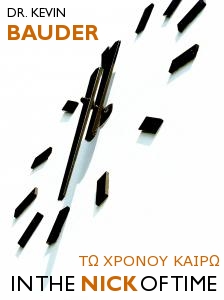
In The Nick of TimeRead Part 1, Part 2, Part 3, Part 4, Part 5, Part 6, and Part 7.

by Kevin T. Bauder @ http://www.sharperiron.org

Sometimes people assume that a fundamentalist is simply a person who affirms the fundamentals. That is not the case, for two reasons. The first reason is that fundamentalism is not simply the affirmation of the fundamentals. It is also an attitude toward the fundamentals. For example, both fundamentalists and indifferentists affirm the fundamentals, but only the fundamentalist insists upon restricting Christian unity, fellowship, and collaboration to those who affirm the fundamentals. Fundamentalists (as opposed to other forms of evangelicals) see indifferentism as scandalous conduct and refuse to recognize indifferentists as Christian examples and leaders.

The second reason is that the notion of fundamentals is much older than the existence of fundamentalism. Christian theologians were pointing out the existence of fundamentals for hundreds of years before there was an identifiable fundamentalist movement. In other words, there were fundamentals for a long time before there were fundamentalists.

The idea that some doctrines are fundamental or essential to the Christian faith can be traced at least to the Reformers, and possibly much earlier. Their usual labels for the fundamentals were the cardinal doctrines or the capital heads of doctrine. They understood the fundamentals to be those doctrines that were essential to the being of the church, and not merely to its wellbeing.

The notion of fundamental doctrines is rampant in Protestant history. It can be found in Luther and Calvin. Arminius wrote about the fundamentals, and so did Turretin. The Puritans understood the distinction between essential and non-essential doctrines, and later on this distinction became a major concern of the Presbyterians and Congregationalists in America. The writings of the Princeton theologians are full of it.

One of the major problems with which these writers had to grapple was how to distinguish fundamental doctrines from non-fundamentals. More recently, fundamentalists and other evangelicals have found themselves asking the same question. Perhaps a review of the earlier answer would be helpful.

Theologians from the Reformers through the Princetonians persistently refused to compile any exhaustive list of the fundamentals. What they did was to articulate the characteristics by which a fundamental doctrine could be recognized. Their discussions usually centered on three tests.

The first test is centrality: a fundamental doctrine has to be central to the Christian faith. Its centrality could be detected by its direct connection to the gospel. This was the most important test for identifying a fundamental doctrine: to deny the doctrine was implicitly to deny the gospel itself.

Of course, all biblical doctrines are connected to the gospel somehow. In the case of a fundamental doctrine, however, the connection is very direct. It is easy to see how denying the virgin birth entails a denial of the incarnation, which amounts to the denial of a qualified sin-bearer. The connection of the virgin birth to the gospel is quite direct. The timing of the Second Coming, however, does not directly affect the content of the gospel. For that reason, the virgin birth is a fundamental, but one’s view of the millennium is not.

The second characteristic of a fundamental doctrine is its clarity. As a rule, the fundamental doctrines are the ones that are most clearly revealed in Scripture. Obversely, the more obscure or disputed a doctrine is, the less likely it is to be a fundamental.

To say that the fundamentals are revealed with clarity is not to suggest that they are necessarily transparent to our understanding. A doctrine can be clearly revealed and yet remain very difficult to grasp. The Trinity is clearly revealed, and so is the hypostatic union, yet the human mind staggers before each of these doctrines. Their status as fundamentals depends upon the clarity with which they are affirmed by Scripture, not upon the completeness with which our minds grasp them.

The third characteristic of a fundamental doctrine is its catholicity. The fundamentals are recognized, at least in germ form, by all the true people of God. Therefore, a doctrine that is widely disputed by genuine Christians cannot be recognized as a fundamental.

This third characteristic is probably the least useful, for it involves an element of circularity. Fundamentals are affirmed by all the true people of God, but they also serve as the test to determine who the true people of God are. Therefore, this test functions largely in the negative: when people who are acknowledged to be God’s people have widely questioned or rejected a teaching, it cannot be taken as a fundamental.

This test must also be set within an understanding of the progress of doctrine. The clarity with which doctrines are perceived and articulated tends to develop over time. Different major doctrines become clear at different points in the process. Trinitarian doctrine is clarified by the fourth century. Christological doctrine is clarified in the fifth and sixth, as is the understanding of human sinfulness. The doctrines of forensic justification, sola fide, and the imputation of Christ’s alien righteousness are not clarified until the sixteenth century. It is a mistake to expect precision before the point of clarification, but imprecision is not the same as denial.

One implication of the foregoing is that all of the fundamentals may not have been clarified even now. Typically, a doctrine is only clarified in response to a heresy. Gnosticism and Arianism forced the clarification of Trinitarianism. Pelagianism forced the clarification of human depravity. Arguably, some fundamentals are still being clarified in response to new heresies (Open Theism, for example). One of the reasons that we cannot draft an exhaustive list of the fundamentals is that they may not all have been clarified, for the simple reason that Christians may not have been forced to think through them all.

Of course, my presentation of the ideas in this essay is only the briefest introduction. Each of the three characteristics of a fundamental deserves much fuller discussion. Indeed, each deserves whole volumes to be devoted to it. Still, I think I have provided an outline of the topic as it has been discussed since at least the time of the Reformation. I genuinely hope that Christian thinkers will take up this subject and give it the fuller treatment that it deserves.

Jesus, Thy Boundless Love to Me

Paul Gerhardt (1607-1676)
Tr. John Wesley (1703-1791)

Jesus, Thy boundless love to me
No thought can reach, no tongue declare;
O knit my thankful heart to Thee,
And reign without a rival there:
Thine wholly, Thine alone I am:
Be Thou alone my constant flame.

O grant that nothing in my soul
May dwell, but Thy pure love alone;
O may Thy love possess me whole,
My joy, my treasure, and my crown:
Strange fires far from my soul remove;
May every act, word, thought, be love.

O Love, how cheering is Thy ray;
All pain before Thy presence flies;
Care, anguish, sorrow, melt away,
Where’er Thy healing beams arise;
O Jesus, nothing may I see,
Nothing desire, or seek, but Thee.

In suffering, be Thy love my peace;
In weakness, be Thy love my power;
And, when the storms of life shall cease,
Jesus, in that important hour,
In death, as life, be Thou my guide,
And save me, who for me hast died.

Kevin BauderThis essay is by Dr. Kevin T. Bauder, president of Central Baptist Theological Seminary (Plymouth, MN). Not every professor, student, or alumnus of Central Seminary necessarily agrees with every opinion that it expresses.

Friday, October 20, 2006

So What Are the Fundamentals Anyway?

I have been gratified of late to hear of so many men and women discussing what exactly Fundamentalism is. The biggest recurring problem, however, is that while everyone seems to be talking about it, we have not been able to determine what exactly the “fundamentals” are. I do not believe that this question is as difficult as it may seem to be, although to a certain extent a multitude of counselors has made the discussion louder and more unclear. As I see it, a ‘fundamental’ is a doctrine that is critical to orthodox Christianity—that if it were to be removed or impugned, it would be utterly impossible to have or maintain Christian orthodoxy. While this may initially seem to be a matter of semantics, bear with me as I explain further.

A fundamental is any doctrine expressly articulated within the Scriptures that is critical to a right understanding of the Christian faith. These doctrines are similar to the “We hold these truths to be self evident” phrasing in the Declaration of Independence; or, as the Westminster Confession notes in chapter one, article seven:

VII. All things in Scripture are not alike plain in themselves, nor alike clear unto all; yet those things which are necessary to be known, believed, and observed, for salvation, are so clearly propounded and opened in some place of Scripture or other, that not only the learned, but the unlearned, in a due use of the ordinary means, may attain unto a sufficient understanding of them . . .

Some of these fundamental truths would therefore include, but are certainly not limited to, the following:

  1. The humanity and deity of Jesus Christ
  2. The destructive and corrupting influences of sin
  3. Eternal separation from God and unending torment for those who reject Him
  4. Justification by faith alone in Jesus Christ
  5. The Person and Work of the Holy Spirit
  6. The inspiration, inerrancy, and infallibility of the Scriptures as given in the original writings.

Fundamentals are also truths that can also be easily verified by comparing the doctrinal statements of orthodox churches and parachurch organizations. While some might dispute this, we all know that every believer is tasked with the knowledge of, the proclamation of, and the defense of the Truth that we have received. . . . Paul repeatedly appeals in his epistles for the churches to hold to the truths that he had given them and even went so far as to say on one specific occasion that if anyone, even an angel, brought another gospel that contradicted what Paul had said, the angel was to be eternally condemned (Gal. 1:6-9, ESV) [1]. Furthermore, Luke praised the believers in Berea for comparing what they already knew from the Old Testament Scriptures with what Paul and others were teaching (see Acts 17:11).

In these many statements of faith, creeds, and catechisms that are in existence, we find many of the same truths—the same Fundamentals—of Christianity reiterated time and time again. It does not matter whether one is reading the Bob Jones University Creed, the Westminster Catechism, or the “The Gospel of Jesus Christ: An Evangelical Celebration” [2]. Each of these creeds may be individually flawed. For example, one creed may not mention or develop a doctrine as fully as another does, but by comparing them (and many other excellent creeds) together, we begin to see a consistent theological framework by which we can determine what doctrines are truly worth fighting for—which doctrines truly are fundamental.

Fundamentals are not truths that must be discerned through careful study and exegesis, although careful study and exegesis are certainly important. Rather, they are truths that are so clearly taught that to deny them would be to deny the very meaning of words or a refusal to follow a literal interpretation of words that are written. These truths, as I noted, must be clear by their very nature, as they flow directly from God who is truth and who can only speak truth (John 17:17). Whenever we hear so-called “truths” that are extremely difficult to understand, that rely on special knowledge that only a select few have, or that have some ‘new’ spin on them, they have usually been corrupted and should be rejected.

Fundamentals are also rarely, if ever, methods of application, although there are certainly applications that flow from a right understanding of them. A large portion of the confusion that rampages within the church of Christ is because there are many people who have tried to place the application from these principles on the same level as the principles themselves. A quick way to evaluate such positions is to ask whether such a position is legitimately a threat to Christianity itself. The reality is that if you cannot affirm such a threat, or if it takes several “if/then” statements to rationalize the position, it is probably not a true fundamental. Christianity has existed before Jonny Lang and Selah, and it will exist long after they have fallen out of the top ten CCM bestsellers list at Amazon.com. While the quality of our worship and musical entertainment is indeed important, it is not vital to our salvation. Contrast that with those who insist that the King James Version is the only true and universal scriptural authority for all Christians (an application). By taking this stand, they have distorted the doctrine of preservation (a fundamental), and should be resisted. There are many more examples of this, but I wanted to note that such people should be called “Hyper-Fundamentalists”—a term describing those who have taken Christian doctrines to an extreme and, like the Pharisees of old, are “making void the word of God by . . . tradition that [they] hand down” (Mark 7:13).

There is a tendency on the part of Christians, as we “work out our own salvation with fear and trembling,” to go beyond the boundaries and try to determine just exactly how God is compelled to work. Calvin himself noted this when he wrote:

This discussion of Predestination—a subject of itself rather intricate—is made very perplexed, and therefore dangerous, by human curiosity, which no barriers can restrain from wandering into forbidden labyrinths, and from soaring beyond its sphere, as if determined to leave none of the Divine secrets unscrutinized or unexplored.

First, then, let them remember that when they inquire into [this], they penetrate into the inmost recesses of divine wisdom, where the careless and confident intruder will obtain no satisfaction to his curiosity.

For we know that when we have exceeded the limits of the word, we shall get into a devious and irksome course, in which errors, slips, and falls will be inevitable. Let us then, in the first place bear in mind, that to desire any more knowledge . . . than that which is unfolded in the word of God, indicates as great folly as to wish to walk through impassible roads, or to see in the dark. Nor let us be ashamed to be ignorant of some things relative to a subject in which there is a kind of learned ignorance. [3]

This does not mean that study or discussion and debate are worthless. I personally have been greatly edified by many of the discussions here on SharperIron, in “armchair theology” sessions in college, in graduate school, and around the dinner table. Topics like the KJV debate or free will and predestination or even the use of Sunday evening church services are good as long as the discussion is civil and edifying and that we are careful, as Calvin said, to avoid being “ashamed of our own ignorance.”

Finally, while all fundamentals are always that—fundamental—not all fundamentals will always carry the same emphasis at the same time. When the church was young, it was racked by controversies regarding just who Jesus was and what exactly He came to do. Later on, there were more controversies regarding who or what had the final authority for matters of faith and practice. Was it the Bible? Was it the pope? Was it someone or something else? Fundamentals being tested today include the doctrines of preservation, inspiration, inerrancy, and infallibility of God’s word and the person and work of the Holy Spirit and His relationship to us. Christians everywhere should stand in opposition to these postmodern, liberal theologies and others that will eventually present themselves, as we have done throughout the course of history. That is what it means to be a fundamentalist.

And that statement, indirectly, brings us back full circle. I have not attempted to compile a complete and final articulated list of doctrines that are fundamental to the Christian faith and am not even sure that the compilation of such a list would be as useful as I might hope. I have a feeling that if such a thing were to be created, it would create more controversy and consternation than it could be worth. Instead, “I . . . ask for counsel and the unraveling of hard words,” as J.R.R. Tolkien wrote for his character Boromir in The Lord of the Rings [4]. That being said, I trust that this is a helpful “push” for my audience as we all search out these things together for the glory of God.

__________
1. All Scripture quotations, unless otherwise indicated, are taken from The Holy Bible, English Standard Version. Copyright 2001 by Crossway Bibles, a publishing ministry of Good News Publishers. Used by permission. All rights reserved.
2. To read the entire “Evangelical Celebration” article, you may visit Christianity Today’s website. As usual, any referral to a document, book, or musical group does not necessarily constitute any endorsement by either Jay Camp or SharperIron. All Christians are hereby encouraged to “test the spirits to see whether they are from God” (I John 4:1, ESV) in regard to these matters.
3. Calvin’s Institutes, III, 21:22, as quoted in the Bob Jones University Systematic Theology [Th601/Th602] syllabus, p. 124.
4. J.R.R. Tolkien, The Fellowship of the Ring (New York, NY: The Houghton Mifflin Company, 1998) p. 259.
Jay Camp ———–
Jay Camp earned a bachelor’s degree in Pastoral Studies at Northland Baptist Bible College (Dunbar, WI) and a master’s degree in Pastoral Studies at Bob Jones University (Greenville, SC). He is happily married to his wife, Julie. He enjoys following professional football and hockey, reading, and SharperIron, of course. He also shamelessly promotes his own blog, The Preacher’s Thoughts. He ministers at Grace Baptist Church (Highland Falls, NY) and serves as a trustee on the church board.

Monday, October 16, 2006

Studies in the Second London Baptist Confession of Faith (1689)


By Ian Hugh Clary

So everyone who acknowledges (homologeo) me before men, I also will acknowledge before my Father who is in heaven (Matthew 10:32).

If you confess (homologeo) with your mouth that Jesus is Lord and believe in your heart that God raised him from the dead, you will be saved
(Romans 10:9).


Being Confessional
1) Provides a public declaration to the world of what the church believes about God and man
2) Provides an expression of unity in belief between individual churches
3) Preserves historic, biblical doctrine
4) It is a concise statement that can measure the preaching of ministers
5) Confessions and catechisms are also tools for teaching
- we live in an age where Christians don’t even know their own faith. It is much like the time of Dorothy Sayers who could say, ``It is fatal to imagine that everybody knows quite well what Christianity is and needs only a little encouragement to practise it. The brutal fact is that in this Christian country not one person in a hundred has the faintest notion what the Church teaches about God or man or society or the person of Jesus Christ. If you think I am exaggerating, ask the Army chaplains. Apart from a possible one percent of intelligent and instructed Christians, there are three kinds of people we have to deal with. There are the frank and open heathen, whose notions of Christianity are a dreadful jumble of rags and tags of Bible anecdote and clotted mythological nonsense. There are the ignorant Christians, who combine a mild gentle-Jesus sentimentality with vaguely humanistic ethics :“ most of these are Arian heretics. Finally, there are the more or less instructed churchgoers, who know all the arguments about divorce and auricular confession and communion in two kinds, but are about as well equipped to do battle on fundamentals against a Marxian atheist or a Wellsian agnostic as a boy with a pea-shooter facing a fan-fire of machine-guns. Theologically, this country is at present in a state of utter chaos``
(Creed or Chaos, 28).

Everyone has a creed, or a belief. To say, ``I have no creed``
is to have a creed. ``No creed but Christ`` is also a creed, and is indefinable. Who Christ is needs to be explained.
``To arrive at the truth we must dismiss religious prejudices``We must let God speak of himself``Our appeal is to the Bible for truth``
(Let God Be True, by Jehovah’s Witnesses).


Creeds and Confessions

Defined

Homologeo :“ to acknowledge something, ordinarily in public, a public declaration; a profession of allegiance. Translated confess, profess or acknowledge.

Credo :“ I believe

Confessio :“ Confession; a written or oral assertion against oneself made by a party regarding a matter under trial

Creeds in Scripture

Peter’s Confession (Matt. 16:16)
Now when Jesus came into the district of Caesarea Philippi, he asked his disciples, "Who do people say that the Son of Man is?" And they said, "Some say John the Baptist, others say Elijah, and others Jeremiah or one of the prophets." He said to them, "But who do you say that I am?" Simon Peter replied, "You are the Christ, the Son of the living God." And Jesus answered him, "Blessed are you, Simon Bar-Jonah! For flesh and blood has not revealed this to you, but my Father who is in heaven.

John 6:69
And he said, "This is why I told you that no one can come to me unless it is granted him by the Father." After this many of his disciples turned back and no longer walked with him. So Jesus said to the Twelve, "Do you want to go away as well?" Simon Peter answered him, "Lord, to whom shall we go? You have the words of eternal life, and we have believed, and have come to know, that you are the Holy One of God."

Acts 8:36-38 (Verse 37 is an omitted text)
And as they were going along the road they came to some water, and the eunuch said, "See, here is water! What prevents me from being baptized?" And Philip said, If thou believest with all thine heart, thou mayest. And he answered and said, I believe that Jesus Christ is the Son of God. And he commanded the chariot to stop, and they both went down into the water, Philip and the eunuch, and he baptized him.

1 Corinthians 15:3-8
For I delivered unto you first of all that which I also received, how that Christ died for our sins according to the scriptures; that he was buried, and that he rose again the third day according to the scriptures: And that he was seen of Cephas, then of the twelve: After that, he was seen of above five hundred brethren at once; of whom the greater part remain unto this present, but some are fallen asleep. After that, he was seen of James; then of all the apostles. And last of all he was seen of me also, as of one born out of due time.

Other creedal statements in Scripture: Deuteronomy 6:4-9 (Shema); Matthew 10:32; Luke 12:8; John 20:28; Romans 10:9; 1 Corinthians 8:6; 1 Timothy 3:16, 6:12; Hebrews 4:14, 10:23; 1 Peter 3:18-22

Creeds in Early Church

Rule of Faith (Regula Fidei)
- developed some time in the second century
- summary of the gospel
- not really a fixed creed with a verbal form that did not vary
- used against Gnosticism
- harmonious with apostolic teaching
- tradition of teaching first referred to by Irenaeus, Bishop of Lyons (ca. 140-200)
- North African Father Tertullian (ca. 160-225) first used the term regula fidei
- likely a reference to Galatians 6:16 :“ walk according to this ``rule``
or kanon (kanovni)

Apostles’ Creed (c. 390)
Schaff: ``As the Lord's Prayer is the Prayer of prayers, the Decalogue the Law of laws, so the Apostles' Creed is the Creed of creeds.``
- not written by the apostles
- reflects apostolic teaching and the Rule of Faith
- explicitly Trinitarian
- ``catholic church``
means ``universal church`` not Roman Catholic. From the Latin catholicus universal.``
- ``descended into hell``
:“ based on Matt. 27:52; Lk. 23:43; 1 Pet. 3:18-20. Some believe it referred to victory over evil, others the suffering on the cross, and some a place of ``existence`` to preach the gospel to the dead children of God. The Thirty-Nine Articles affirms this in Art. III.

The Nicene Creed (325)
- written during the Arian controversy
- at the Council of Nicaea in 325
- ``substance`` (homoousios) language indicates the full divinity of the Son
- procession of the Spirit from the Father and the Son (filioque)

The Definition of Chalcedon (451)
- confirmed at the Council of Chalcedon in 451
- reaffirms Nicaea and Constantinople, especially ``substance``
language
- because of Nestorian controversy, additions needed to be made
- doctrine of the God-man defined (duality of natures)

Other Creeds include: Constantinopolitan Creed, Athanasian Creed.

Confessions of Faith of the Reformation

The Augsburg Confession (1530)
- official Lutheran document
- written by Philip Melancthon; had the full approval of Luther
- to consolidate Lutheran teaching, as well as to disprove false allegations and display areas of agreement with RC
- at the request of the German Emperor Charles V; presented to him June 25
- signed on Aug. 23 by seven German princes
- recognised for its moderation

The Belgic Confession (1561)
- part of the ``Three Forms of Unity``
of the Reformed Churches
- based on the Gallican Confession (1559)
- written by Guido de Bres (1522-1567) :“ later martyred
- to conciliate the Netherlands’ government
- adopted later by the Synod Dort

The Heidelberg Catechism (1562)
- part of the ``Three Forms of Unity``
of the Reformed Churches
- drafted by Zacharias Ursinus (1534-1583) and Kaspar Olevian the latter had been influenced by Melancthon
- a catechism, written in question and answer format
- opening statement is beautiful: ``Question 1: What is your only comfort in life and in death? Answer 1: That I, with body and soul, both in life and in death, am not my own, but belong to my faithful Savior Jesus Christ, who with His precious blood has fully satisfied for all my sins, and redeemed me from all the power of the devil; and so preserves me that without the will of my Father in heaven not a hair can fall from my head; indeed, that all things must work together for my salvation. Wherefore, by His Holy Spirit, He also assures me of eternal life, and makes me heartily willing and ready from now on to live unto Him.

Thirty-Nine Articles of the Church of England (1571)
- standard confession for the Church of England
- written by Thomas Cranmer (1489-1556), Archbishop of Canterbury during the reign of Henry VIII
- instead of being a formal creed, it is rather a ``short summary of dogmatic tenets, each article dealing with some point raised in current controversies and laying down in general terms the Anglican view.``


Other Reformation Confessions include: The Lambeth Articles, the Genevan Confession, the Scots Confession, the Tetrapolitan Confession, the Helvetic Confession and the Council of Trent (Counter-reformation).

Confessions of Faith in the Puritan Era

Canons of Dort (1618-1619)
- part of the ``Three Forms of Unity``
of the Reformed Churches
- developed during the famous Synod of Dort held in the Dutch city of Dordtrecht
- convened in response to the Remonstrants
- Reformed theologians from all over the continent, as well as some from Britain, attended
- where the Five Points of Calvinism originated

Westminster Standards:
Westminster Confession of Faith (1646)
Westminster Shorter Catechism (1647)
Westminster Larger Catechism (1647)

- official confession and catechisms of Presbyterian church the world over
- drafted by 151 Puritan divines from England and Scotland mostly Presbyterian (some Independents)
- during religious toleration under Oliver Cromwell
- met at Westminster Abbey from July 1, 1643 to February 22, 1649 with 1163 sessions, although it never formally dissolved
- the first question/answer of the Shorter Catechism is well-known. ``Question: What is the chief end of man? Answer: Man’s chief end is to glorify God and enjoy Him for ever.``

Savoy Declaration of Faith (1658)
- standard confession for the Congregationalist (Independent) churches
- drafted at the Savoy Palace by representatives of 120 churches
- John Owen and Thomas Goodwin were involved in drafting it
- reflects the language, often word for word, with the Westminster Confession
- differences: SDF XXI.II&III and WCF XX.II&III on Liberty of Conscience; SDF XXIV.III and WCF XXIII.III on the Civil Magistrate; SDF XXVI.I-V and WCF XXV.I-VI on Marriage. As well there were thirty short statements describing Congregational church polity

Other Puritan era confessions include: the Irish Articles, the Arminian Articles, the Cambridge Platform.

Baptist Confessions of Faith

The London Baptist Confession of Faith (1644)
- drafted in London by seven representative Particular Baptist Churches
- advocated Calvinistic theology and believers baptism as well as strict rejection of the Anabaptists (whom the Baptists were accused of following)
- written to defend themselves against charges of Anabaptism that arose in London
- also defending themselves against the charge of sexual immorality in the practice of immersion

The Second London Baptist Confession of Faith (1689)
- first appeared in 1677, but was not publicly released until 1689 because of religious persecution; the Glorious Revolution allowed its publication
- accepted by the General Assembly of Particular Baptist Churches in 1689 with 108 representative churches
- likely drafted by William Collins, and was signed by such Baptist dignitaries as Hanserd Knollys, William Kiffin and Benjamin Keach
- like the Savoy, it shares much in common with WCF, much of it word for word
- also dependent on the Savoy and the First London Confession
- of the 160 statements in the 1689, 146 are from the Savoy (with its similarities to WCF remembered) and the First London Confession
- differences with WCF in areas such as church government (Congregational), relationship of church to state and baptism (adults/immersion)
- to encourage unity the Baptists intentionally used WCF; in the first edition the writers explain their ecumenical desires
- later adopted in America in 1742 as the Philadelphia Confession of Faith

Other Baptist confessions: the Baptist Catechism, the Philadelphia Confession, the New Hampshire Confession, Abstract of Principles.

Modern confessions include: the Chicago Statement on Biblical Inerrancy; the Cambridge Declaration

Wednesday, September 27, 2006

Doctrinal Religion by Ryle

By Darrin R. Brooker

In these days where Christianity can mean whatever one wants it to mean and we’re told by the postmodern practitioners of religion that doctrine—specific facts about Christ and His work—are unimportant, we must at times even remind ourselves not to become tepid readers of the great truths revealed on the pages of the Bible. J. C. Ryle was another of the bold 19th century leaders who was unafraid to speak his mind. Here is a brief excerpt from one of his many tracts imploring his readers to throw aside their religious sentimentalism for the proclamation of a hearty and robust Christianity where the truth of Christ is exalted and the only means by which God saves.

page.jpg

jcryle1.jpgMark what I say. If you want to do good in these times, you must throw aside indecision, and take up a distinct, sharply-cut, doctrinal religion. If you believe little, those to whom you try to do good will believe nothing. The victories of Christianity, wherever they have been won, have been won by distinct doctrinal theology; by telling men roundly of Christ’s vicarious death and sacrifice; by showing them Christ’s substitution on the cross, and His precious blood; by teaching them justification by faith, and bidding them believe on a crucified Saviour; by preaching ruin by sin, redemption by Christ, regeneration by the Spirit; by lifting up the brazen serpent; by telling men to look and live,—to believe, repent, and be converted. This,—this is the only teaching which for eighteen centuries God has honoured with success, and is honouring at the present day both at home and abroad. Let the clever advocates of a broad and undogmatic theology,—the preachers of the Gospel of earnestness, and sincerity and cold morality,—let them, I say, show us at this day any English village or parish, or city, or town, or district, which has been evangelized without ‘dogma,’ by their principles. They cannot do it, and they never will. Christianity without distinct doctrine is a powerless thing. It may be beautiful to some minds, but it is childless and barren. There is no getting over facts.

The good that is done in the earth may be comparatively small. Evil may abound, and ignorant impatience may murmur, and cry out that Christianity has failed. But, depend on it, if we want to ‘do good’ and shake the the world, we must fight with the old apostolic weapons, and stick to ‘dogma.’ No dogma, no fruits! No positive evangelical doctrine, no evangelization! The men who have made the deepest mark on their day and generation have always been men of most decided and distinct doctrinal views. It is the bold, decided outspoken man, like Capel Molyneux, or our grand old Protestant champion Hugh M’Neile, who makes a deep impression, and sets people thinking, and ‘turns the world upside down.’ It was ‘dogma’ in the apostolic ages which emptied the heathen temples, and shook Greece and Rome. It was ‘dogma’ which awoke Christendom from its slumbers at the time of the Reformation, and spoiled the Pope of one third of his subjects. It was ‘dogma’ which 100 years ago, revived the Church of England in the days of Whitefield, Venn, and Romaine, and blew up our dying Christianity into a burning flame. It is ‘dogma’ at this moment which gives power to every successful mission, whether at home or abroad. It is doctrine,—doctrine, clear ringing doctrine—which, like the ram’s horns at Jericho, casts down the opposition of the devil and sin.

-Edited from a tract What Do the Times require? by J.C. Ryle.

Tuesday, September 26, 2006

Recovering the Real Old Paths

By William Dudding

I recently saw an advertisement in the Revival Fires paper for an "Old Paths" Conference hosted by Jeff Owens. Kieth Gomez also had a conference last year about staying on the "Old Paths". These guys consider men like Paul Chappell and to be neo-fundamentalists or borderline neo-evangelicals because they use modern architecture for their buildings, digital keyboards, conservative contemporary music and screens to display sermon notes.

So, ask yourself: "What are the old paths of fundamentalism?" These so-called old paths that these extreme fundamentalists claim to be holding to are really not old at all. They're realatively new in the light of the history of American Fundamentalism. In March 2006 there was an article called "Defending the Faith" in Tabletalk Magazine produced by Ligonier Ministries. I read this article as they explained the modernist vrs. fundamenalist controversy of the early 1900's. In the late 1800's it was Baptist pastor Charles Spurgeon who laid the ground work for fundamentalism as he fought for doctrinal purity during the "Downgrade Controversy". Later, the predominant leader of the fundamentalist movement was J.Gresham Machen, a Presbyterian theologian who started Westminster Theological Seminary. At this point in history, Fundamentalism was purely a theological movement that was vigorously defending the faith against liberalism. R.A. Torrey was also a heavy hitter for the fundamentalists who wrote a book called 'The Fundamentals'. Within 50 years, the liberals had won over several seminaries and thier theology of unbelief became mainstream in many of the mainline denominations. It wasn't until the late 1940's and 50's that men like Lee Roberson, Lester Roloff and John R. Rice started to separate from the Southern Baptist Convention that had been tolerating liberalism in it's ranks, and became maverick independents. During this time, however there were still loyal fundamental men who were contending for the faith within their denominations like Martin Loyd-Jones, and Bob Jones Sr. It was at this point in history that the fundamentalist movement had started departing from the "Old Paths" which their fathers Machen, Torrey, Spurgeon had paved.

When Elvis introduced Rock 'n Roll and the Beatles lead the British Invasion of boy bands to America, Fundamentalism abandoned the theological fight and entered the culture wars. These culture wars have been a distraction from the real war that the Devil has been waging on Christianity which has always been against the Word of God. John R. Rice spent most of his time writing books like "What's Wrong with the Movies" and "Hippie Hair" produced by The Sword of the Lord. By the 70's and 80's Jerry Falwell's Moral Majority started up as a counter attack to political liberalism, Jack Hyles started Hyles-Anderson College to produce preacher boys who would fight against cultural wickedness and worldliness. All this time, fundamentalists have been fighting the wrong war, the Devil has crept in and stolen the crown jewels of doctrinally sound, biblical theology. Pseudo-Theologies like 'secondary separation', and 'King James Onlyism' have taken the place of the essentials: the fundamentals.

My wife came from a more reformed Baptist background in Mexico. She had grown up on a steady diet of preaching on the subjects of justification, imputation, election and predestination, the atonement, the incarnation of Christ, sanctification, regeneration, and evangelism. When she moved to the U.S. and went to what she thought was a historic fundamental Baptist church (where we met eachother) she heard preaching on standards, King James onlyism, standards, soul-winning, standards, convictions, soul winning and more standards. She was used to singing hymns written by Isaac Watts, Charles Wesley, and Martin Luther, but when she went to a typical Fundamental church, they were singing the 'old fashioned' songs of Bill Gaither, Squire Parsons, and Dottie Rambo. She asked: "what is this?" and we told her this was fundamentalism....and she had to get rid of her Reina Valera 1960 translation of the Spanish Bible and get a real Bible: a KJV!!! "BLESS GOD!!" She questioned why we called our churches "independent" when in reality we were answering to our favorite mega-church and Bible College. "So, why do you guys criticize conventions like the Southern Baptists?" she asked me "just because your association or fellowship doesn't have a charter? You're doing the same thing. We need to look back to the monuments of our Baptist heritage and teach them to our future generations." I'm glad that God sovereignly led my wife on the old paths before I even met her and that we crossed paths in His Providencial plan. This reminds me of the London Baptist Confession of Faith of 1689. This confession of faith is the old paths of real Baptist fundamentalism!

Fundamentalism has come a long way off the old paths. Those who want to return to them only want to return to the rabbit trails of the 1950's because they wouldn't recognize the original old paths if they saw them. In fact, they attack those who have continued on the original old paths like John MacArthur and the Bob Jones University crowd.

I have been hacking my way through the jungle of false teaching and hysteric fundamentalism in search of the old paths of historic fundamentalism. As I've been tracking foot prints that lead to the old paths, here are the charactaristics of old path fundamentalism that I have found in comparison to the new 1950's fundamentalism:

Historic Fundamentalism
1. The Sovereignty of God
2. The authority and sufficiancy of Scripture
3. Theological preaching
4. The Holiness of God reflected in His people
5. Preaching faith and repentance unto salvation
6. Fighting the enemy of liberal unbelief
7. Persecuted for their doctrine

1950's Style Fundamentalism
1. The sovereignty of man (Arminianism)
2. The worship of the KJV or KJB!
3. Theatrical preaching
4. Legalism enduced holiness
5. Preaching fast prayer easy believism
6. Fighting eachother for influence
7. Complacent with doctrine

Tuesday, September 19, 2006

What Jesus Demands from the World

Here's an audio clip by John Piper, explaining why he wrote What Jesus Demands from the World.

-Contents
http://www.gnpcb.org/product/1581348452/contents#extra
-Suggestions for How to Read This Book, Introduction, A Word to Biblical Scholars (and Those Who Wonder What They Are Doing), and Demand #1 - 346K PDF
http://www.gnpcb.org/assets/products/excerpts/1581348452.1.pdf

John Piper's new (and excellent) book, is now available online as a free PDF

Monday, September 18, 2006

Doctrine and Life

By Darrin R. Brooker

How many times have you heard people say things like: “Theology puts God in a box. My God is much bigger than that;” or, “I don’t need doctrine; just give me Jesus;” or, as I was most recently told in a discussion, “Your thinking is a product of modernism; doctrinal certainty does not exist.”

While on the surface these statements may sound pious, they are nonsensical; or as Bonar called them, “pompous.” You cannot separate the doctrine of Christ from the person of Christ because the former is merely an expression of the latter. On hearing statements like the above, I cannot help but ask, ‘Can you tell me one thing you know about Christ that is not doctrinal nor contained in the scriptures?’ Never have I been given an answer to that question; or at least one that wasn’t utterly absurd. To separate the person of Christ from the biblical record of Him is to travel down the broad road of mysticism and away from the very One whom is sought. What follows is an excellent lesson from one who understood that Christianity is first belief of doctrinal truth—belief of certain facts about the person and work of Jesus Christ—and then, and only then, can it be a “life.”

Oh how I wish those caught up in the emergent church movement, or the vast number of denominations held tightly in Liberalism’s soul-strangling grip, would understand the point that Horatius Bonar makes: that Christianity is the belief in objectively knowable truths, as well as a life lived in accordance with those truths.

page.jpg

hbon50.jpgChristianity, say many among us, is a life, not a dogma; and they reckon this the enunciation of a great and unappreciated truth. It is, however, a mere truism, or it is an unmeaning antithesis, or it is an absolute falsehood. It sounds oracular and great; it is only pompous.

Christianity is both a life and a dogma; quite as much the one as the other.

But it is a dogma before it is a life; it cannot be the latter till it has been the former. It is out of the dogma that the life emerges; not the dogma out of the life; and the importance that is attached in Scripture to knowledge,—right knowledge,—should make us cautious in disparaging doctrine, as if it were harmless when wrong, and impotent or uninfluential when right. The mystics of different ages have tried hard to depreciate doctrine, to praise what they call “the spirit” at the expense of “the letter”; and it is somewhat remarkable that infidelity has generally taken their side, joining with them in their jests at creeds and their sneers at dogmas. Many of the statements which we hear from advocates of the “advanced Christianity” of our day are a mere variation of the old infidelity which told us, in the last century,

“For modes of faith let fools and bigots fight,
His can’t be wrong whose life is in the right.”

Creeds, they say, are dungeons for the old; catechisms are fetters for the young; and doctrine in general, at least if precise and defined, is inconsistent with liberty of thought and expansion of intellect. “Life” is a pliable thing; it is an unfenced common; it may be anything a man likes to call it or to fancy it; there is no imperilling of human liberty in calling Christianity a life; the men of “progress” and “freshness” are safe in making this their standard; for Christianity = life may mean just Christianity = 0; at least it is an equation capable of being so manipulated as to bring out any result which the theological algebraist may desire.

And then there is the advantage of having a popular and high-sounding watchword. “Christianity a life, not a dogma” sounds nobly. It is quite a formula to tell; fitted to take with a superficial public; an axiom rather than a proposition; just the thing for empiricism, or mysticism, or free-thinking, to flaunt upon their banners. It takes largely; it convinces hundreds without further inquiry or argument; it is plausible; it is in harmony with the spirit of the age; it is so catholic and comprehensive; it would enable us to believe any one to be pious,—Moslem, Hindoo, Romanist, Pantheist, or Sceptic,—who could produce a worthy and earnest life.

Now, disguise it as we may, truth is dogma. Let men sneer at catechisms and creeds, as bondage and shackles, let them call them skeletons, or bones, or something more offensive still, these formularies are meant to be compilations of truth. In so far as they can be shewn to contain error, let them be amended or flung aside; but in so far as they embody truth, let them be accepted and honoured as most helpful to the Christian life; not simply sustaining it, but also giving it stability and force; preventing its being weakened or injured by change, caprice, love of novelty, or individual self-will.

The Bible is a book of dogmas and facts; these two parts making up the one book, as soul and body make up the one man. The facts are the visible embodiment of the dogmas, the dogmas the spiritual interpretation of the facts. Religious life or piety is the result or product of these;—the effect produced upon man by the right knowledge and use of these. Faith transfers them from the exterior region of our being to the interior; and, thus transferred, they issue in religious life—life comprehending both the inner spirituality and the outer walk. To oppose life and dogma to each other, is not so much to depreciate creeds as to misunderstand the Bible, and to represent life and the Bible as antagonistic to each other.

Though divine truth is deposited in the person of “the Christ,” the “Word made flesh,” yet the truth is not thereby sunk or lost sight of; nor does it become a trivial matter to know or not to know the truth, provided we love the Lord Jesus. The error of some religionists on this point is specious, but it is full of peril. As truly as exclusive regard to abstract doctrine lands us in rationalism or an unliving orthodoxy, so does exclusive regard to the person of Christ land us in mysticism. The doctrine and the person mutually reveal each other. It is evil to say, I have the person, let the doctrine go; for how can that person be understood, appreciated, loved, honoured, confided in, unless illuminated by the truth, which shews us who and what he is in himself; who and what he is to us? Remain ignorant of the doctrine, and you remain ignorant of the person; nay, that person becomes a mysterious shadow,—vague, unintelligible, and unloveable.

Few falsehoods are more insidiously working their way into the minds of men in our day than this, of setting life and dogma, religion and theology, the heart and the mind, in opposition to each other. Religion without a creed, religion without truth, religion without the Bible, religion without Christianity, religion without Christ,—is set down now, not simply among things possible, but amongst things desirable. Religion as a sentimentalism, an abstraction; religion without reference to any book, or any church, or any particular God, is to have our homage paid to it as a necessity, or at least a propriety; but no more. “Unconditioned” religion is to be accepted as not inconsistent with philosophy or liberty, but conditioned or defined religion is to be regarded as bondage or imbecility.

-Taken from the preface of Catechisms of the Scottish Reformation, 1866.

Saturday, September 16, 2006

First Order Doctrines

http://exfide.com/blog/?page_id=14

While I didn’t appreciate it like I should have when I was there, I have grown to love and appreciate the BJU Creed:

“I believe in the inspiration of the Bible (both the Old and the New Testaments); the creation of man by the direct act of God; the incarnation and virgin birth of our Lord and Savior, Jesus Christ; His identification as the Son of God; His vicarious atonement for the sins of mankind by the shedding of His blood on the cross; the resurrection of His body from the tomb; His power to save men from sin; the new birth through the regeneration by the Holy Spirit; and the gift of eternal life by the grace of God.”

So, we have accepted the taxonomy of three categories of doctrine: first, second, and third order doctrines. We need to add that practice also has a corresponding taxonomy that parallels the doctrinal taxonomy already mentioned. This will become more apparent as we move forward, but what we need to do now is begin to delve into the specifics of each category and how we should determine the proper category for a specific doctrine or practice.

At this point, we will address the first order doctrines and their corresponding practice. “Wait a minute,” you can hear some say. “Are there really some non-negotiable, fundamental, practices for the believer???” I believe there are, and that this area has been sadly neglected by both ends of the discussion. In fact, I am willing to submit that it is the area of practice that has so undermined both ends of the spectrum doctrinally.

Let’s look at the categories of doctrine that I believe are first order doctrines:

  1. The person of Christ (Full deity, full humanity, virgin birth)
  2. The work of Christ (sinless life, selfless sacrifice, resurrection, future return and ultimate restoration)
  3. The revelation of Christ (Inspiration, inerrancy, sole authority, sufficiency, and perspicuity of Scripture)
  4. The reconciliation of Christ (substitutionary atonement, faith alone, grace alone, Christ alone, regeneration, and restoration of fellowship with God)
  5. The worship of Christ (accepting and proclaiming the lordship of Christ, Glorification of the Father through the exaltation of the Son, and progressive transformation of the believer into the image of Christ)

If we can agree that the above are essential to Christianity, then there are clear practical implications of each category of doctrine. To deny the practice while accepting the doctrine is to undermine the veracity of our profession. Here are what I believe to be first order practice:

  1. Belief in Christ (faith in Him, as He has been revealed)
  2. Trust in Christ (reliance upon Him as the sole savior and reconciler of men)
  3. Submission to Scripture (obedience to the revelation of the will of God, the person of Christ, and commitment to discipleship)
  4. Fellowship in Christ (participating in relationship with God in prayer and obedience motivated out of love and humility; this includes a corresponding love for His people)
  5. Practice of Christ (reflecting the image of God in all that is said and done - living worship, particularly as reflecting the image of Christ in humility and love)

Just as when you remove one of the five doctrinal principles, you remove the essence of Chrsitianity; if you remove any of these five practices, you also destroy the essence of what it means to be Christian. This isn’t to say that we should expect unanimity in the application, but a Christian cannot deny the requirement of any of them.

Thursday, September 14, 2006

The Essence of Biblical Christianity


How would you describe the essence of biblical Christianity?

Here is Herman Bavinck's attempt: "The essence of the Christian religion consists in this, that the creation of the Father, devastated by sin, is restored in the death of the Son of God, and recreated by the Holy Spirit into the kingdom of God."

Herman Bavinck, Gereformeerde Dogmatiek, 4th ed., 2 vols. (Kampen: Kok, 1928), 1:89, as cited in Michael Williams, Far as the Curse Is Found.