From Tony Reinke@ http://spurgeon.wordpress.com/2007/12/18/
The stack of excellent Christian books published in 2007 would reach at least 5 feet in the air. So while I’m privileged to have read so many great books, whittling down my top 30 favorites is no easy assignment.
In the past, some TSS readers have asked what criteria I use in making this determination and I admit it’s very subjective. My list of top books is based upon a personal opinion of the overall value of individual volumes. Which volumes pioneer new territory? Which books clarify topics of great importance? Which books from 2007 will my kids read in 10 years?
Included in the list are complex doctrinal books, academic polemics, historical biographies, children’s books, marriage books, exegetical guides, etc. My reading interests are wide open, and so is the TSS book of the year competition. There are book recommendations for pretty much all readers.
Themes in 2007
Topically, 2007 will be remembered as the year where precious doctrines like justification and the atonement took rightful center stage (see The Truth of the Cross by R.C. Sproul, The Great Exchange by Bridges and Bevington, and also #3, #12, and #25 on the top-30 list). The doctrine of assurance was the focus of two excellent new volumes (see #13 and #23). Church history and the events of the Reformation found themselves in three excellent volumes (see #8, #11, and #30). But 2007 will also be remembered as the year of John Owen, reformed spirituality, and communion with God (see #6, #14, #15, and #21). We also saw the publishing of one of the best new children’s books (see #4). All around, it was a very fruitful year for some very important topics.
2007 Books of the Year
But two books stand apart from the rest in 2007, because they are volumes that promise to shed a wealth of understanding over large sections of Scripture. They captured my attention because I know I myself have some work to do in discovering the richness of God’s revealed truth in Scripture (and especially in the Old Testament narratives).
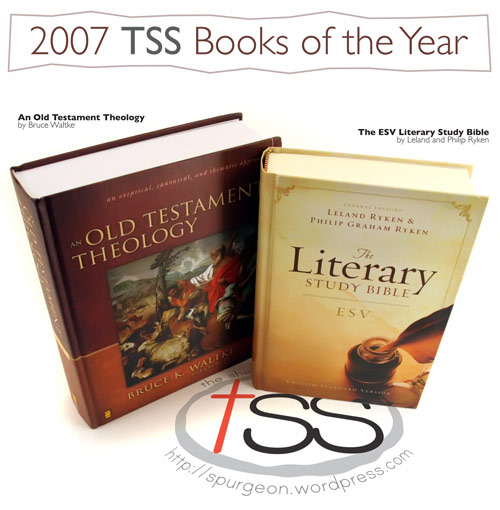
So today I happily announce the 2007 TSS books of the year – The ESV Literary Study Bible by Leland and Philip Ryken and An Old Testament Theology by Bruce Waltke.
TSS top-30 books from 2007
 1 (tie). ESV Literary Study Bible edited by Leland and Philip Ryken (Crossway). Getting readers comfortable enough to read large selections of Scripture was formerly the work of dynamic equivalent translations like The Message. But the Rykens establish a framework for readers to comprehend large sections of Scripture for themselves by introducing each chapter, exposing the literary style of the work, and providing a general outline of what to expect. Then readers can jump into the literature of Scripture to experience the text for themselves. In the end, the Rykens have produced a Bible that retains the “word-for-word” literal language of the ancient Scriptures (ESV) while helping readers along in fruitful comprehension. Readers who have never enjoyed the Bible from cover-to-cover will especially benefit and find the biblical storyline easier to follow. This is no ordinary study Bible, and it is one that will be cherished by the church long into the future. We wrote a full review of the LSB and also talked with Leland Ryken about it this Summer. $31.49
1 (tie). An Old Testament Theology: An Exegetical, Canonical, and Thematic Approach by Bruce Waltke (Zondervan). Some of the details of the Old Testament appear to simply hang suspended for the modern reader. Let’s take Exodus 2:11 for example: Why is it important that Moses became angry when he saw the harsh treatment of the Israelite by an Egyptian? Why did Moses kill the Egyptian? Why would the biblical author record this event in the first place? Some events in the Old Testament don’t entirely make sense on the surface. Waltke takes these events from the biblical narratives and weaves them into the bigger storyline of Scripture. For this specific example, it helps to understand that Moses was in transition from his identity in Pharaoh’s palace to his new identity with Israel (p. 352). This personal transition is critical in the development of Moses into one of the leaders of the Exodus. And this is just one itsy-bitsy detail from the Old Testament. By taking these seemingly disconnected events and connecting them into the bigger picture of Scripture, Waltke has given us a very helpful guide to understanding the Old Testament. This clarity informs the church of her past and thereby informs her present identity. This is a volume you will want to read slowly and digest fully, perhaps within a group of fellow Christians. Read more about this volume in our full review. $29.69
3. Pierced for our Transgressions: Rediscovering the Glory of Penal Substitution (UK:IVP/US:Crossway). Written by Steve Jeffery, Michael Ovey, and Andrew Sach, this book has proven to be a huge success in both the UK and the US in defending the core of the atonement of Jesus Christ. If you want to understand the Cross at a deeper level (don’t we all) you will cherish this volume. It will go on my shelf along with some of the giants on this topic (like Stott). But what makes this volume especially important is the central role it represents in bringing together a worldwide brotherhood of Christians who believe and cherish the penal substitutionary atonement of the Cross. Together for the Gospel and the Gospel Coalition conferences have unified the American church around these precious truths, and Pierced for Our Transgressions has unified the global Christian community. $16.50
4. The Jesus Storybook Bible: Every Story Whispers His Name by Sally Lloyd-Jones (Zondervan). Finding children’s books that introduce little ones to the major stories of the Bible while simultaneously pointing their souls to the Cross is a rarity. This is perhaps the best children’s storybook Bible on the market, and a must-have for any parent of young children. Incredible illustrations, too. $11.65
 5. When Sinners Say “I Do”: Discovering the Power of the Gospel for Marriage by Dave Harvey (Shepherd Press). Harvey has blessed couples with an excellent book for connecting the Cross to the daily trials and triumphs of marriage. Don’t attempt marriage without the Gospel. Bring Harvey along to explain why. $11.16
6. Communion with the Triune God by John Owen (Crossway). The classic book written by English Puritan John Owen resurfaced in 2007, in a new edition edited by Kelly Kapic and Justin Taylor. It’s unlikely I can overstate the importance of Taylor and Kapic’s editorial work in introducing Owen to the new generation of young, reformed Christians. An excellent follow-up to last year’s Overcoming Sin and Temptation (Crossway). $14.96
7. Doing Things Right in Matters of the Heart by John Ensor (Crossway). Ensor provides an excellent introduction to biblical manhood and femininity that will help engaged or married couples understand their God-ordained roles. This book is perhaps the best introductory volume on these often controversial topics. $9.59
 8. The Reformation: How a Monk and a Mallet Changed the World by Stephen Nichols (Crossway). With brevity, pictures, call-out boxes and humor, Stephen Nichols walks through the highlights of the Reformation to help us see that “the Reformers saw nothing less than the gospel at stake” (p. 21). It’s cliché, but true: I couldn’t put this volume down. Nichols is always good, but especially here. $10.39
9. The Reading and Preaching of the Scripture in the Worship of the Christian Church: The Modern Age by Hughes Oliphant Old (Eerdmans). This is volume six of Old’s large series tracing out the history of preaching from the Biblical era (vol. 1; 1998), the Patristic age (vol. 2; 1998), the Medieval church (vol. 3; 1999), the Reformation period (vol. 4; 2002), during Moderatism, Pietism and Awakening (vol. 5; 2004) and now the most recent volume covering the modern age of 1789-1989. Volume six alone is about 1,000 pages and covers preachers like Broadus, Kuyper, Maclaren, Moody, Spurgeon and Lloyd-Jones. Very insightful work on the history of preaching that has replaced Dargan on my shelves. $36.50
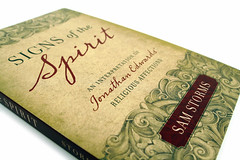 10. Signs of the Spirit: An Interpretation of Jonathan Edwards’ ‘Religious Affections’ by Samuel Storms (Crossway). Edwards’ work is classic, and Storms helps the contemporary reader glean its gold. Excellent commentary on one of Edwards’ most valuable works. $10.87
11. Church History: A Crash Course for the Curious by Christopher Catherwood (Crossway). Catherwood sets out the history of the Church from a global perspective, and at all times relays the implications of history to contemporary events. This “crash course” is another volume published this year for a popular audience that will help readers grown in appreciation for developments in the church’s history. $12.99
12. The Future of Justification: A Response to N.T. Wright by John Piper (Crossway). Piper excels with a clarification on justification in light of the contemporary debate. $12.23
13. Assured by God: Living in the Fullness of God’s Grace by Philip Graham Ryken, Al Mohler, Joel Beeke, Sinclair Ferguson, John MacArthur, Jerry Bridges and R.C. Sproul (P&R). This collaborative effort is a very helpful collection of essays on the topic of the reformed doctrine of assurance. How do we know that we know God? (see Tullian Tchividjian’s work later.) $12.24
14. Sweet Communion: Trajectories of Spirituality from the Middle Ages through the Further Reformation (Baker Academic). Written originally in Dutch by Arie de Reuver, this academic work was made available in English in 2007. It traces the influences of Bernard of Clairvaux (1090-1153) and Thomas à Kempis (1379-1471) upon the “Dutch Puritans” like Willem Teellinck, Herman Witsius and Thodorus and Wilhelmus à Brakel. The seven biographies that fill this volume are excellent. This volumes helps us develop a “reformed spirituality,” a seeking after God’s presence illuminated by genuine theology. $21.89
15. The Inner Sanctum of Puritan Piety: John Flavel’s Doctrine of Mystical Union with Christ (Reformation Heritage Books). Flavel is one of the most valuable Puritans, and this study by Stephen J. Yuille looks at one facet of his theology. The doctrine of the believer’s union with Christ lies at the heart of the Puritan pursuit of godliness, and this small but wonderful outline traces the doctrine generally and highlights Flavel’s rich teaching specifically. $12.00
16. Chosen for Life: The Case for Divine Election (Crossway) by Sam Storms. Originally published in 1987 by Baker under the title, Chosen for Life: An introductory guide to the doctrine of divine election, Storms’ work was republished in 2007 and remains one of the clearest defenses for reformed soteriology. $12.23
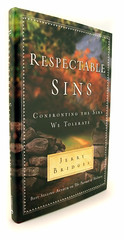 17. Respectable Sins: Confronting the Sins We Tolerate by Jerry Bridges (NavPress). Hitting from all sides, Bridges confronts all those sins we would rather not talk about, and provides a very Cross-centered approach to killing the flesh. $12.91
18. B.B. Warfield: Essays on His Life and Thought edited by Gary L.W. Johnson (P&R). Part biography, part collected works, this new book on Warfield provides a treasure of essays on the thought and life of the outstanding theologian. $15.59
19. A Sweet Flame: Piety in the Letters of Jonathan Edwards by Michael A.G. Haykin (Reformation Heritage Books). A short but excellent collection of Edwards’ most important and moving personal letters, this little volume makes a great gift. $7.50
20. By Faith Alone: Answering the Challenges to the Doctrine of Justification edited by Gary L.W. Johnson and Guy P. Waters (Crossway). Including chapters by David Wells, Cornelius Venema and Al Mohler, this work tackles contemporary attacks upon the gospel (and especially those of N.T. Wright). $12.23
21. Communion with God: The Divine and the Human in the Theology of John Owen by Kelly Kapic (Baker Academic). The long-awaited printing of Kapic’s research did not disappoint. On these same lines, Kapic also wrote the introduction to Communion with God (see #6). $18.47
22. The Expository Genius of John Calvin by Steven J. Lawson (Reformation Trust). This short work traces out 32 distinctives from the expositional ministry of the great Reformer, and sets them out as patterns for contemporary preachers. A short and encouraging work for pastors.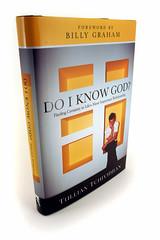
23. Do I Know God? Finding Certainty in Life’s Most Important Relationship by Tullian Tchividjian (Random House). An understanding of assurance written from a very personal and compelling vantage point. Excellent in content, but I especially appreciate the format that other writers can follow in communicating biblical doctrine to a new generation of readers. $11.55
24. Interpreting the Psalms: An Exegetical Handbook by Mark D. Futato (Kregel). Excellent little handbook in helping expositors pull all the meat from the Psalms for their their sermon preparations. Not just exegetical, but also helpful in determining the overall theology of the Psalms. $14.27
25. Justified in Christ: God’s Plan for us in Justification (Christian Focus). Edited by K. Scott Oliphant this compilation includes an intro by Sinclair Ferguson and chapters by men like Carl Trueman, William Edgar and Peter Lillback on the importance of justification by faith alone, in Christ alone. Looks at traditional problems with Roman Catholic theology and contemporary concerns with N.T. Wright on union and imputation. $12.99
26. The Majesty of God in the Old Testament: A Guide for Preaching and Teaching (Baker Academic). Renowned Old Testament scholar Walter C. Kaiser Jr. says we should preach more of the Old Testament and in his newest book he takes the preacher by the hand and shows them exactly how. Walking through 10 texts, Kaiser models exegesis and outlining of each specific texts. But in it’s easy-to-read format and concluding application questions in each chapter, this book will double as a group study of God in the Old Testament. $11.55
27. Preaching the Cross: Together for the Gospel (Crossway). The transcripts from the 2006 Together for the Gospel conference written and delivered by Ligon Duncan, Al Mohler, Mark Dever, C.J. Mahaney, John MacArthur, John Piper and R.C. Sproul. An all-star lineup and one of the best compilation on the topic of preaching the gospel. $13.59
28. Revelation and Reason: New Essays in Reformed Apologetics (P&R). Edited by K. Scott Oliphint and Lane G. Tipton. Yet another excellent collection of essays from P&R that captured my attention and helped me work through various difficulties in apologetics. $18.24
29. The Faithful Preacher: Recapturing the Vision of Three Pioneering African-American Pastors by Thabiti Anyabwile (Crossway). Highlights Lemuel Haynes (1753-1833), Daniel A. Payne (1811-1893) and Francis J. Grimké (1850-1937). The book contains one short biography of each man, but is largely comprised of sermon transcripts. Anyabwile’s book is especially important because he is challenging the contemporary African-American churches to consider the gospel of first importance and is thereby calling for large-scale reform. $10.87
30. Reformation Heroes: A Simple, Illustrated Overview of People Who Assisted in the Great Work of the Reformation by Joel R. Beeke and Diana Kleyn (Reformation Heritage). The men, women and events of the Reformation written for older children and teens to boost their appreciation for the church. $18.00
And here are some other titles that are likely worthy of the above list, and I wish I made time to read:
- Andrew Hoffecker, ed., Revolutions in Worldview: Understanding the Flow of Western Thought (P&R) $23.51
- Norman Geisler, Reasons for Faith: Making a Case for the Christian Faith (Crossway) $12.23
- J. Mark Bertrand, Rethinking Worldview: Learning to Think, Live, and Speak in This World (Crossway) $11.55

- Jerry Bridges and Bob Bevington, The Great Exchange: My Sin for His Righteousness (Crossway) $10.87
- Herman J. Selderhuis, Calvin’s Theology of the Psalms: Texts and Studies in Reformation and Post-Reformation Thought (Baker Academic) $21.89
- Sinclair Ferguson, In Christ Alone (Reformation Trust) $14.40
- Justin Taylor and John Piper, The Supremacy of Christ in a Postmodern World (Crossway) $10.19
- R.C. Sproul, Gospel of God: An Exposition of Romans (Christian Focus) $14.99
- Thabiti M. Anyabwile, The Decline of African American Theology: From Biblical Faith to Cultural Captivity (IVP) $13.60
So these are my favorite books of 2007. I hope this list serves you in your book-purchasing for the glory of Christ!
___________________________________________________________________
by Andreas Köstenberger@http://www.biblicalfoundations.org/?p=165
Books in Bible and theology continue to pour from the presses at an ever-accelerating pace. Surely, of the making of books there is no end … (in fact, I’m working on a few myself right now). In case anyone is interested, here is my “completely objective” list of the “Best of 2007,” ranked in order of importance. As always, I welcome your comments and suggestions regarding any additions or subtractions.
 1. Greg Beale and D. A. Carson, eds. Commentary on the New Testament Use of the Old Testament. Baker. In the interest of full disclosure, I contributed “John” to this volume, but still no reason not to award first place to this book. The publication of this volume is truly a significant event in evangelical scholarship.
 2. Bruce Waltke. An Old Testament Theology. Zondervan. The magnum opus of an exceedingly prolific Old Testament scholar.
 3. (tie) John Piper. The Future of Justification. A Response to N. T. Wright. Crossway. A very helpful and important contribution to the ongoing discussion of the biblical teaching on justification and imputation.
 3. (tie) Steve Jeffery, Michael Ovey, and Andrew Sach. Pierced for Our Transgressions. Rediscovering the Glory of Penal Substitution. Crossway. A compelling defense of the doctrine of penal substitution.
 5. Daniel Akin, ed. A Theology for the Church. B & H. A very fine collection of contributions on Systematic Theology produced by a Baptist team of scholars. Again, in the interest of full disclosure, the contributors include the president, dean, and colleagues of the school where I teach, but not a reason not to include this important new volume in this list.
 6. Donald McKim, ed. Dictionary of Major Biblical Interpreters. IVP. A major second edition that will serve as a very useful reference for years to come.
7. Philip Noss, ed. A History of Bible Translation. American Bible Society. For anyone interested in Bible translation, this is a must.
 8. Mark Strauss. Four Portraits, One Jesus. An Introduction to Jesus and the Gospels. Zondervan. Beautifully produced and competently written, this is a very accessible resource on Jesus and the Gospels, probably the best currently available on its level.
 9. Jeannine Brown. Scripture as Communication. Introducing Biblical Hermeneutics. Baker. A stimulating new book on hermeneutical theory in the Vanhoozer tradition that is sure to make a contribution to the field.
 10. Tom Thatcher, ed. What We Have Heard from the Beginning. The Past, Present, and Future of Johannine Studies. Baylor University Press. Thatcher has assembled a remarkable group of scholars representing the past, present, and future of Johannine studies. This book gives an excellent orientation to the state of the field. Includes an essay by Don Carson and a brief response by yours truly.
From Tim Challies @ http://www.challies.com/archives/book-reviews/my-favorite-books-of-2007.php A few days ago Tullian Tchividjian published his list of his favorite books of 2007 and asked me if I’d do the same. I had, in fact, already worked up a list, and thought that, now that the year is drawing to a close, I’d publish it. So these are my 7 favorite books that were published in 2007 and which I read in 2007. So this is the top 7 in 07 of 07. Or something like that. Why seven? Well, because it’s catchy to say “the top 7 in 07 of 07,” but also because keeping a small list makes it more meaningful, I think.
Do note that these are the “favorite” books I read in 2007, not necessarily the “best” books I read in 2007. Hence this list is a bit more subjective than objective and looks more to the joy of reading a book than the quantity of what I learned from it. Often they go hand-in-hand, but not always.
So here they are. The top 7 in 07 of 07. In each case I’ve linked to my review of the title. With the exception of the final title, they are in no particular order.
 When Sinners Say “I Do” by Dave Harvey is probably the best book I’ve read on marriage. It’s a book I’d unhesitatingly recommend to any engaged or married couple because of the way it deals so well with matters of the heart and because of the way it points always to the message of the gospel.
 Running Scared by Edward Welch deals with the universal problem of fear. A book that is filled with great quotes and impactful teaching, it is one worth reading and worth reading slowly. Because I do not know anyone who is immune from fear, I do not know of anyone who would not benefit from reading it.
 A Journey Worth Taking by Charles Drew is the only book I read twice this year. It is a book that deals superbly with the notion of calling and finding our place in this world. Written by a pastor who is in the thick of things, planting a church in New York City, it provides a biblical perspective on the “self-help”
genre.
 Respectable Sins by Jerry Bridges is Bridges at his best. He deals harshly but biblically with the kinds of sins we too often overlook. This is exactly the kind of book I love to see coming from the pen of one of Christian publishing’s elder statesmen.
 Pierced for Our Transgressions by Steve Jeffery, Michael Ovey and Andrew Sach is an important contribution in the area of theology. This book is a line in the sand, so to speak, and one that has served to shine a biblical light on the doctrine of atonement, standing for the orthodox view in opposition to the many alternate and unbiblical views.
 Amazing Grace by Eric Metaxas. This is a biography of William Wilberforce that coincided with the 200th bicentenary of the abolition of the British slave-trade—a movement tirelessly headed by Wilberforce. I gave this book a slight edge to John Newton by Jonathan Aitken. But you may well wish to read both, especially since the men were friends and co-laborers in this work.
 Polishing God’s Monuments by Jim Andrews gets the nod as my favorite book of 2007. I was drawn by the author’s ability to seamlessly blend biography with theology. Andrews models the kind of grace I hope I could display in a similar situation of pain and suffering. I’ve recommended it to more people this year than any other title. I’m going to make sure I read it again in 2008.
There are many other titles that could have made the list. There were plenty of books published this year that look excellent but which I have not yet read. While I admit that this list is no doubt imperfect, it does represent the books I most enjoyed reading this year.
___________________________________________________________________
From Eric Reymond @ http://www.irishcalvinist.com/?p=1106
I have been greatly encouraged, refreshed and taught this past year through the ministry of several authors, some of them alive and some of them with the Lord. In this post I want to highlight the top five books that I have read this year and in doing so, commend them to you, in this order:
/1/ Pierced for our Transgressions: Hands down, the best book I have read in a long time. This is the next book that you need to buy and read, period. (read the full review)
/2/ Evangelical Feminism: Grudem was masterful in this book. He interacted with the arguments in the egalitarian position with biblical fidelity and consistent clarity. (read the full review)
/3/ Chosen for Life: Sam Storms writes this book with passion and biblical precision. A thoroughly enjoyable read. (read the full review)
/4/ The Great Exchange: Another book on the gospel. This was great stuff from Jerry Bridges; highly recommended. (read the full review)
/5/ The Life of John Murray: I really enjoyed this book. I enjoy Murray’s commentaries and this biography was a helpful look into what made the man tick. (read the full review)
honorable mention…Temptation, Resisted & Repulsed: This book, taken from the works of John Owen, is written with great clarity and practicality for the Christian who is serious about dealing with temptation. (read the full review)
--------------------------------------------------------------------------------------------------------------------------------------
From Kim Riddlebarger @http://kimriddlebarger.squarespace.com/the-latest-post/2007/12/27/five-of-the-best-books-of-2007.html
 Since we are nearing the end of 2007 and everyone is looking back on the events of the past year, I thought it might be a good time to mention my top five recommended books (most important) published in 2007. These are books well worth buying and reading!
1). Michael Horton's stellar Covenant and Salvation: Union With Christ (Westminster John Knox). Michael's response to Wright, Dunn, and Sanders is outstanding. Click here: Amazon.com: Covenant and Salvation: Union With Christ: Books: Michael Scott Horton
2). G. K. Beale and D. A. Carson, Commentary on the New Testament Use of the Old Testament (Baker). This is one of the most important reference books to come down the pike in years. I'm already finding it indispensible. Click here: Amazon.com: Commentary on the New Testament Use of the Old Testament: Books: G. K. Beale,D. A. Carson
3). Ken Samples' A World of Difference: Putting Christian Truth Claims to the Worldview Test (Baker). Ken Samples is doing yeoman's work in making the critical philosophical and apologetic issues accessible to larger audiences. Ken's also a great writer. Click here: Amazon.com: A World of Difference: Putting Christian Truth-Claims to the Worldview Test: Books: Kenneth Richard Sa
4). Dennis Johnson's Him We Proclaim: Preaching Christ from All the Scriptures (P & R). This book should be read by every preacher as well as everyone who sits in a pew! How should ministers prepare to preach and what should God's people be looking for in a sermon? Click here: Amazon.com: Him We Proclaim: Preaching Christ from All the Scriptures: Books: Dennis E. Johnson
5). Bruce Waltke's An Old Testament Theology (Zondervan). A great overview of redemptive-history during the Old Covenant era. Click here: Amazon.com: An Old Testament Theology: A Canonical and Thematic Approach: Books: Bruce K. Waltke,Charles Yu
------------------------------------------------------------------------------------------------
Most important books of 2007 from C Michael Patton @ http://www.reclaimingthemind.org/blog/2007/12/30/best-of-2007/
1. UnChristian by David Kinnaman and Gabe Lyons
2. Kingdom Triangle by JP Moreland
3. Christianity’s Dangerous Idea by Alister McGrath
4. Putting Jesus in His Place by Ed Komoszewski and Robert Bowman
5. They Like Jesus but Not the Church by Dan Kimball
 Far from showing all the complexity of these issues, The Case for Life strips away appeals to complexity from claims of choice, privacy or scientific research. The fundamental appeal rests on the question of what’s the issue: in considering who are the unborn? That human beings of every stage of development are made in the image of God, puts everything into perspective.


 We Become What We Worship by G. K. Beale (IVP, 2008)—This is a brand-new biblical theology of idolatry. Beale states that his hope is “that the biblical-theological perspective of this book will provide greater fuel to fire the church’s motivation not to become conformed to the idols that surround it in order better to fulfill its mission to the world, which is to proclaim that people need to be conformed to Christ’s image for the greater glory of God” (p. 12). [
 Love Divine and Unfailing: The Gospel According to Hosea by Michael Barrett (P&R, 2008)—One of my (JB) favorite classes during my undergraduate years was a study through the minor prophets with Dr. Michael Barrett. I filled the margins of my Bible with notes and cross-references from his lectures, and then somewhere along the way misplaced this Bible. I have deeply regretted loosing it ever since. Now I can revisit those probing lectures once again thanks to the publication of this new study. I’ve not yet obtained a copy, but am confident in recommending any book by Dr. Barrett. [
 Lloyd-Jones: Messenger of Grace by Iain H. Murray (Banner of Truth, 2008)—This is not a repetition of his two-volume biography, but a focus on key themes in Lloyd-Jones’ ministry and an interaction with contemporary criticisms. [
 Dictionary of the Old Testament: Wisdom, Poetry & Writings: A Compendium of Contemporary Biblical Scholarship edited by Tremper Longman and Peter Enns. (IVP Academic, 2008)—This series of dictionaries has set a new standard in the industry, and this latest volume will abundantly reward the careful reader. I (JB) have got my copy close at hand and have benefited much from it as I have used it in conjunction with my study of this favorite portion of Scripture. Read the SI review
 Kingdom of Priests: A History of Old Testament Israel
 The Promise-Plan of God: A Biblical Theology of the Old and New Testaments
 Genesis and
 Psalms. This new series “is written primarily for students, pastors, and other Christian leaders seeking to engage in theological interpretation of Scripture” (from the series introduction). Each commentary consists of two major sections: 1) theological exegesis and 2) theological reflection. These are not like your typical commentary which gives “careful attention to philology, grammar, syntax, and concerns of a historical nature.” Rather, the result of these commentaries “is a paragraph-by-paragraph engagement with the text that is deliberately theological in focus” (ibid). These commentaries are recommended as supplemental to other technical commentaries. [Genesis by James McKeown:
 The ESV Study Bible (Crossway, 2008)—This study Bible is practically a theological library in one volume. See the SI review

 The Kids Bible: King James Version (Hendrickson, 2008)—This is a very nicely formatted Bible geared to children between the ages of eight and twelve, including easy-to-read 10-point type, 24 pages of color illustrations, words of Christ in red, and special features in the back. The text is the KJV with the Scofield updates. Hendrickson also has a KJV Kids Study Bible due out in July of 2009. For those of you who prefer this translation, these are two very nice options for your children. [
 Holiness Day by Day: Transformational Thoughts for Your Spiritual Journey by Jerry Bridges (NavPress, 2008)—This is a devotional based on his previous books. [

 A Short Life of Jonathan Edwards by George M. Marsden (Eerdmans, 2008)—This is a shorter version of Marsden’s much larger and highly praised biography of Edwards. Pastors ought to be familiar with the life and ministry of great men like Jonathan Edwards. [
 Fathers and Sons: Stand Fast in the Way of Truth, Volume 1 by Douglas Bond (P&R, 2007) & Fathers and Sons: Hold Fast in a Broken World, Volume 2 by Douglas Bond (P&R, 2008)—There is over a year’s worth of readings in these two volumes. “Strengthens the faith and love of fathers and sons. Promotes Christian leadership and maturity in young men” (from the publisher’s description). These two volumes come highly recommended by one of the pastor’s at Tim’s church. [
 Practical Theology for Women by Wendy Horger Alsup (Crossway, 2008)—This is a fantastic little book written for women. I (JB) have given away two copies to family members and am ordering more. Wendy has provided a great entry point for those who may be intimidated by theology. Our review of this title is forthcoming. [
 The Christian Ministry by Charles Bridges (Banner of Truth, 1958)—This book, written primarily for ministers and students, is thought-provoking and convicting. [
 God’s Passion for His Glory: Living the Vision of Jonathan Edwards by John Piper (Crossway, 1998)—This book is included as a classic because it contains the complete text of Edwards’s The End for Which God Created the World. Piper’s book is in two parts: Part One (almost the first half of the book) is Piper’s extended introduction to Edwards and his book. Part Two is the full text of Edwards’s book with explanatory footnotes. It pays rich dividends to all believers willing to put forth a little effort and is especially helpful to ministers and other Christian leaders. [
 The Everlasting Righteousness by Horatius Bonar (Banner of Truth, 1996)—This is a warm, scriptural study of the atonement. It can be enjoyed by most any Christian and is not hard reading. [


 Purchase:
