Showing posts with label Worship. Show all posts

Tuesday, February 06, 2007

When the Spirit Falls

Exerpts from Dan Edelen @ http://ceruleansanctum.com/2007/02/when-the-spirit-falls.html

This last Sunday, I was helming the drums during a worship song our lead guitarist had written, when the Holy Spirit fell on the church. His presence was palpable and from my spot on stage, I could see Him on people’s faces. By the time we segued into “The Beauty of Simplicity,” I was close to weeping. Let me say this: when you’re the timekeeper, it’s not wise to go all to pieces.

Come, Holy Spirit!Now I know some people reading this may not have experienced one of those beautifully sweet times when the Holy Spirit broods over worship. He’s light permeating the darkest recesses of your soul, warm oil anointing your head, and love overflowing your heart. No words fully describe the naked encounter of your person with the person of the Holy Spirit.

I’m no pushover for emotionalism, either. Anyone reading this blog long enough knows I don’t stand for that. If I’m overwhelmed, it’s because God Himself showed up, not because some favorite worship song tugs my heartstrings.

Sunday’s touch proved to be the real deal. I’d only wished I’d been better prepared to receive instead of dedicating so much brain power to each timekeeping limb and upcoming musical transitions.

If one thing troubles me about these visitations of the Spirit it’s that we may be wasting them. I don’t believe He comes just to make us feel warm and fuzzy for a few minutes.

When the Spirit falls, I believe we need to be ready to meet Him just like the five wise virgins, with lamps filled with oil and wicks trimmed. His real Presence must be met with ready hearts, otherwise I believe we miss the fullness of the blessing He’s prepared to lavish on us.

I won’t presume to understand the heart of the Spirit in all His manifestations, for He blows as He wills, but I feel He expects the following from us when we encounter Him:

  • Repentance - First and foremost, He is the Holy Spirit. We are to be a holy people.
  • Praise - He is Lord and must be worshiped as such.
  • Reception - We are to receive Him and receive blessings from Him with praise.
  • Transformation - We are to be bettered for having met Him in that moment.

For these reasons, I believe when we encounter the Lord in this way we should do the following:

  • Confess any known sin.
  • Ask the Spirit to search our hearts for hidden sin.
  • Confess hidden sin when He reveals it.
  • Praise Him for revealing sin in our lives.
  • Praise Him for who He is.
  • Ask Him to prepare us for what we might receive from Him.
  • Ask Him (for) His direction.
  • Thank Him for meeting those needs.
  • Ask Him to transform our lives so that we are better able to serve him, so we leave the church with a greater revelation of Him to share with the community of faith and those still outside the flock.
  • Thank Him and praise Him again.

I think if we take these ten steps in the presence of the Lord, He’ll bless us so much more than if we simply bask in Him then leave unchanged after the encounter. And all too often, we walk out those church doors with less than we ought simply because we did not know how to come before Him.

Think about these things. Like Samuel, if we desire to grow up into the fullness of service the Lord asks of us, we must be ready to meet the Spirit when He comes calling.

Be blessed.

Friday, October 13, 2006

Baptizing the Imagination


By Skye Jethani

True spiritual formation requires more than Bible knowledge and skills

Our Good Friday this year included no sermon, no worship team, no cutting edge technology or lavish drama. And still people lingered for hours to pray, teenagers returned later in the night with their friends, and children begged their parents for the opportunity to stay longer. Why? I believe it’s because our church chose to nourish the most emaciated aspect of people’s spiritual lives—their imaginations.

Traditionally discipleship has focused upon two areas—knowledge and skills. Churches have poured enormous energy into communicating knowledge about God through preaching, classes, and small groups. In recent years an increasing number of voices have challenged the effectiveness of information based discipleship. That has resulted in churches shifting their focus to skill driven formation—“how to” have a healthy marriage, share the gospel, or parent difficult teenagers.

However, knowledge and skill based models, while necessary components of spiritual formation, both miss the imaginative aspect of the human spirit. And by ignoring the intuitive capacity of the mind the church has essentially surrendered people’s imaginations to the pop secular culture without a fight.

In his stirring book The Prophetic Imagination, Walter Brueggemann says, “We need to ask if our consciousness and imagination have been so assaulted and co-opted by the royal consciousness [popular culture] that we have been robbed of the courage or power to think an alternative thought.” Those filling the pews every Sunday may be full of information about God, and they may be expertly trained to obey God, but without an imagination enraptured by God they will be powerless to live the life he’s called them to. They simply cannot imagine living any differently than the culture around them.

Without significant re-cultivation and sanctification of the imagination, aided by God’s Spirit, a disciple will be incapable of weeding out sin and living obediently. Oswald Chambers understood this reality. He knew that if “your imagination of God is starved then when you come up against difficulties, you have no power, you can only endure in darkness.”

Thankfully many are coming to recognize the importance of imagination in spiritual formation. Dr. Kevin Vanhoozer, author of The Drama of Doctrine and professor of systematic theology says:

“Imagination has been a dirty word for too long…The imagination enables us to see the parts of the Bible as forming a meaningful whole. But we can go further still. The imagination also enables us to see our lives as part of that same meaningful whole. This is absolutely crucial. Christians don’t need more information about the Bible, trivial or otherwise. What the church needs today is the ability to indwell or inhabit the text.”

Using the imagination to inhabit scripture may seem like a new idea to American evangelicals, but the practice is far from original. Since the middle ages practitioners of Ignatian spirituality have used their imaginations to enter biblical narratives, and Brother Lawrence has instructed Christians for centuries to practice the presence of the Lord with their intuitive senses. The beauty of these ancient models of spiritual formation is that they require no technology, no monstrous church building, not even a digital projector.

On Good Friday we helped people enter the biblical narrative with their imaginations by adapting the traditional stations of the cross into an experiential journey with Jesus from Gethsemane to the grave. While holding a bag of silver coins people contemplated what they valued more than Christ. Children, using a stool if they were too short, lifted a cross suspended from the ceiling while considering if they would have helped Jesus carry his burden. Newcomers jumped as someone nailed a spike into a beam while Isaiah 53 was softly read. Some adults who have known the story since childhood were brought to tears as their imaginations, perhaps for the first time, traveled with Jesus through the suffering.

Ultimately, we do not need multi-sensory events or media saturated worship to engage the imagination. Sometimes we just need the space (devoid of noise and clutter) and the permission (from leaders who affirm the importance of the imagination) to apprehend God and his story intuitively. When biblical knowledge and pragmatic skills are linked once again to an imagination ravished by God, we may finally find the power to obey.

Wednesday, September 27, 2006

Worship, Not Evangelism, The Most Important Task

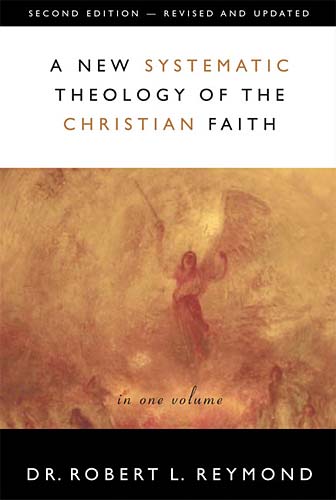
Quoting Robert Reymond . . .

To worship God - that is the primary reason why the Christian should go to church. In today's church climate this is a radical idea. Nevertheless, Christians should go to church, not to evangelize, not to provide a comfortable "consumer-friendly" setting for the unchurched, not even primarily for the benefit which fellowship with other Christians provides, and definitely not just for lectures and devotionals, but in order to worship God. Christians should also understand that evangelism and the missionary task are not the most important tasks the church has.

Such efforts exist among the nations, as John Piper argues in his Let the Nations Be Glad, only because worship of the true God among them does not! ...

Anyone who will take the time to study the matter will have to conclude that worship in evangelical churches in this generation is, speaking generally, approaching bankruptcy. There is neither rhyme nor reason, much less biblical warrant, for the order of and much that goes on in many evangelical church services today. The fact of the matter is, much evangelical "worship" is simply not true worship at all.

For decades now evangelical churches have been conducting their services for the sake of unbelievers. Both the revivalistic service of a previous generation and the "seeker service" of today are shaped by the same concern--appeal to the unchurched. Not surprisingly, in neither case does much that might be called worship by Christians occur. As a result, many evangelicals who have been sitting for years in such worship services are finding their souls drying up, and they have begun to long for something else.

Accordingly, they have become vulnerable to the appeal of the mysterium of hierarchical liturgical services. This is why some today are "on the Canterbury trail" of defecting to Greek Orthodoxy and Roman Catholicism. Others who have been simply spectators for years in their worship services are getting caught up in the people-involving worship of charismatic services. ...

From:

A New Systematic Theology Of The Christian Faith

Thursday, September 07, 2006

"Worship" from Don Carson's book Worship by the Book:
Worship is the proper response of all moral, sentient beings to God, ascribing all honor and worth to their Creator-God precisely because he is worthy, delightfully so. This side of the Fall, human worship of God properly responds to the redemptive provisions that God has graciously made. While all true worship is God-centered, Christian worship is no less Christ-centered. Empowered by the Spirit and in line with the stipulations of the new covenant, it manifests itself in all our living, finding its impulse in the gospel, which restores our relationship with our Redeemer-God and therefore also with our fellow image-bearers, our co-worshipers. Such worship therefore manifests itself both in adoration and in action, both in the individual believer and in corporate worship, which is worship offered up in the context of the body of believers, who strive to align all the forms of their devout ascription of all worth to God with the panoply of new covenant mandates and examples that bring to fulfillment the glories of antecedent revelation and anticipate the consummation.

Tuesday, August 15, 2006

The Public Confession of Sin

By Bob Kauflin

At the Worship God 06 Conference on Friday night, we read through a public confession of sin, based on a number of the ten commandments. The purpose was not to "grovel in our sin," but to heighten our awareness of and gratefulness for what Jesus accomplished at the cross. We followed up this confession with Scriptures and songs that celebrated the full forgiveness provided in the substitutionary sacrifice of the Savior. In essence, we preached the Gospel to ourselves.

We excel at justifying, minimizing, psychologizing, and denying sin and its effects. But regardless of how we try to avoid it, we can't escape the reality that every sin is an act of cosmic defiance against a supreme, holy, and just God. Here is what we called to mind:
Holy and righteous God, we confess that like Isaiah, we are a people of unclean lips. But it is not only unclean lips we possess. We are people with unclean hands and unclean hearts. We have broken your law times without number, and are guilty of pride, unbelief, self-centeredness and idolatry. Affect our hearts with the severity of our sin and the glory of your righteousness as we now acknowledge our sins in your holy presence.

We have had other gods before you.

We have worshipped and served the creature rather than the creator.We have sought satisfaction in this world’s pleasures rather than in You. We have loved to praise our own glory more than yours.

We have taken your name in vain.

We have prayed religious prayers to impress others. We have uttered your name countless times without reverence or love.We have listened to others use your name in vain without grieving.

We have murdered in our hearts.

We have often destroyed our neighbor with our tongues.We have been quick to uncharitably judge others. We have considered revenge when we were sinned against.

We have committed adultery with our eyes.

We have loved temptation rather than fighting it.We have lusted after unlawful and immoral pleasures.We have justified our lusts by using the world as our standard.

We have stolen what is not ours and coveted what belongs to others.

Our lives overflow with discontent, ungratefulness, and envy.We have complained in the midst of Your abundant provision. We have sought to exalt ourselves through owning more.

We have lied to you and to others.

We have told distorted truths, half-truths, and untruths.We have despised the truth to make ourselves look better.Even in our confession, we look for ways to hide our guilt.

O God, we have sinned against your mercy times without number. We are ashamed to lift up our faces before you, for our iniquities have gone over our heads. If you, O Lord, should mark iniquities, O Lord, who could stand? How shall we answer you? We lay our hands on our mouths. We have no answer to your righteous wrath and just judgment.
We have no answer. But God Himself has mercifully provided one for us.


"All we like sheep have gone astray; we have turned every one to his own way; and the Lord has laid on him the iniquity of us all.” (Is. 53:6)