Showing posts with label Science-Evolution. Show all posts
Showing posts with label Science-Evolution. Show all posts
Tuesday, April 06, 2010
Evolution: Todays Battleground
Strong words from John MacArthur about evolution. Stick around. Theres a lot to back them up...


Saturday, May 30, 2009
Evolution of H1N1 Flu Virus?
"Viruses like the swine flu get to be potentially deadly because they EVOLVE, if you do not believe in evolution and you get it, you have to pray it away".
Is this the explanation for the H1N1 virus? What does this say about the topic of evolution? Look at this short video from Learn2Discern media @ http://www.coralridge.org/l2d on the lie and deception.
Thursday, May 28, 2009
Ida: the Missing Link at Last?
 From Answers in Genesis:
For all the headlines and proclamations, this “missing link” story includes an amazing amount of hot air.
A story we first previewed on May 16 has since rocketed to the heights of media hype as a team of scientists reveals “Ida,” the latest and greatest supposed missing link. But does Ida actually support “the evolution of early primates, and, ultimately, modern human beings,” as one news outlet reported?1
Another reporter raved, “The search for a direct connection between humans and the rest of the animal kingdom has taken 200 years—but it was presented to the world today at a special news conference in New York.”2
Formally identified as Darwinius masillae (in honor of Charles Darwin), the fossil originated in Germany and is purportedly 47 million years old. One scientist gave the find the nickname Ida (after his daughter).
As for a more level-headed explanation of the evolutionary excitement, the Wall Street Journal reports:
Anthropologists have long believed that humans evolved from ancient ape-like ancestors. Some 50 million years ago, two ape-like groups walked the Earth. One is known as the tarsidae, a precursor of the tarsier, a tiny, large-eyed creature that lives in Asia. Another group is known as the adapidae, a precursor of today's lemurs in Madagascar.
Based on previously limited fossil evidence, one big debate had been whether the tarsidae or adapidae group gave rise to monkeys, apes, and humans. The latest discovery bolsters the less common position that our ancient ape-like ancestor was an adapid, the believed precursor of lemurs.
Thus, rather than an apeman-like missing link that some media sources have irresponsibly implied, the real story is quite underwhelming and should in no way faze creationists. Let’s first review the facts:
- The well-preserved fossil (95 percent complete, including fossilized fur and more) is about the size of a raccoon and includes a long tail. It resembles the skeleton of a lemur (a small, tailed, tree-climbing primate). The fossil does not resemble a human skeleton.
- The fossil was found in two parts by amateur fossil hunters in 1983. It eventually made its way through fossil dealers to the research team.
- Ida has opposable thumbs, which the ABC News article states are “similar to humans’ and unlike those found on other modern mammals” (i.e., implying that opposable thumbs are evidence of evolution). Yet lemurs today have opposable thumbs (like all primates). Likewise, Ida has nails, as do other primates. And the talus bone is described as “the same shape as in humans,” despite the fact that there are other differences in the ankle structure.3
- Unlike today’s lemurs (as far as scientists know), Ida lacks the “grooming claw” and a “toothcomb” (a fused row of teeth) In fact, its teeth are more similar to a monkey’s. These are minor differences easily explained by variation within a kind.
Given these facts, it may seem incredible that anyone would hail this find as a “missing link.” Yet British naturalist David Attenborough claims:
“Now people can say, ‘Okay, you say we’re primates . . . show us the link.’ The link, they would have said until now, is missing. Well, it is no longer missing.”
Unbelievably, Attenborough claims his interpretation is “not a question of imagination.”
The Creationist Interpretation
The principles that inform creationists about Ida are some of the same that allow creationists to interpret fossil after fossil hailed as “transitional forms”:
- Nothing about this fossil suggests it is anything other than an extinct, lemur-like creature. Its appearance is far from chimpanzee, let alone “apeman” or human.
- A fossil can never show evolution. Fossils are unchanging records of dead organisms. Evolution is an alleged process of change in live organisms. Fossils show “evolution” only if one presupposes evolution, then uses that presupposed belief to interpret the fossil.
- Similarities can never show evolution. If two organisms have similar structures, the only thing it proves is that the two have similar structures. One must presuppose evolution to say that the similarities are due to evolution rather than design. Furthermore, when it comes to “transitional forms,” the slightest similarities often receive great attention while major differences are ignored.
- The remarkable preservation is a hallmark of rapid burial. Team member Jørn Hurum of the University of Oslo said, “This fossil is so complete. Everything’s there. It’s unheard of in the primate record at all. You have to get to human burial to see something that’s this complete.” Even the contents of Ida’s stomach were preserved. While the researchers believe Ida sunk to the bottom of a lake and was buried, this preservation is more consistent with a catastrophic flood.4 Yet Ida was found with “hundreds of well-preserved specimens.”5
- If evolution were true, there would be real transitional forms. Instead, the best “missing links” evolutionists can come up with are strikingly similar to organisms we see today, usually with the exception of minor, controversial, and inferred anatomical differences.
- Evolutionists only open up about the lack of fossil missing links once a new one is found. Sky News reports, “Researchers say proof of this transitional species finally confirms Charles Darwin’s theory of evolution,” while Attenborough commented that the missing link “is no longer missing.” So are they admitting the evidence was missing until now (supposedly)?
So it’s clear what Ida is not. As for our conclusion on what Ida is, we wrote in News to Note:
[B]ecause the fossil is similar to a modern lemur (a small, tailed, tree-climbing primate), it’s unlikely that creationists need any interpretation of the “missing link” other than that it was a small, tailed, probably tree-climbing, and now extinct primate—from a kind created on Day 6 of Creation Week.
Much of the excitement over Ida appears to stem from a well-coordinated public relations effort to promote an upcoming documentary and a new book titled The Link. The documentary will air on the History Channel in the U.S. (as The Link) on May 25 at 9 p.m. ET/PT. It will air on BBC One in the UK (as Uncovering Our Earliest Ancestor: The Link) on Tuesday May 26th at 9 p.m. Filmmaker Atlantic Productions even launched a website to promote the discovery, revealingthelink.com.
Yet as Hurum commented, “This fossil will probably be pictured in all the textbooks for the next 100 years.” So while the media rush may at first be a bid to promote the documentary and book, the ultimate result is one more trumped-up “missing link” presented to future generations as evidence of evolution.
Footnotes
- Ned Potter, “Primate Fossil Could Be Key Link in Evolution,” ABC News, May 19, 2009. Back
- Alex Watts, Scientists Unveil Missing Link in Evolution, Sky News Online, May 19, 2009. Back
- J. L. Franzen, et al., “Complete Primate Skeleton from the Middle Eocene of Messel in Germany: Morphology and Paleobiology,” PLoS One 4(5), 2009. Back
- Because of the location of this fossil, it may have been buried by a post-Flood period of residual catastrophism amid an unstable climate. Back
- “Fossils from the Messel site,” The Guardian, n.d. Back
Haven’t heard the real story of this supposed scientific breakthrough? Read the criticisms other evolutionists have made of the “missing link” claims and the science behind them.
See also:
Ida: Separating the Science from the Media Campaign
Wednesday, July 30, 2008
20 Fallacies By Evolutionists, Part 1 of 5 (Mike Riddle)
Mike Riddle explains 20 ways evolutionists use to create an illusion that their faith is a fact. School students are exposed to these techniques everyday, while sitting in their science classrooms, listening to so called "facts" without substance. If students were a manufactured product, the schools would be sued for product liability.
www.answersingenesis.org
Friday, August 24, 2007
Spurgeon on the Bible and Darwinism, Part 1
This article is reprinted with permission from As I See It, a monthly electronic magazine compiled and edited by Doug Kutilek. AISI is sent free to all who request it by writing to the editor at dkutilek@juno.com.
Compiled by Doug Kutilek
Note: A reader from Indiana recently asked if Charles Haddon Spurgeon (1834-1892) ever directly addressed the subject of Darwinian evolution. Because Darwin’s 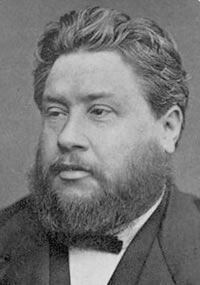 On the Origin of Species was published in England in 1859 only five years after Spurgeon began his London pastorate and was the occasion of great and continuing controversy directly affecting the credibility of the Bible, it would be most surprising indeed if Spurgeon had not addressed the subject. In fact, he did so numerous times, always in strong opposition. Our search turned up a number of quotes and references that should be of interest to the reader. We reproduce a selection of these, without extended comment. —Doug
On October 1, 1861, Spurgeon gave a popular lecture at the Metropolitan Tabernacle on the subject of the recently discovered African “gorilla” and its alleged evolutionary kinship to mankind; a full-sized stuffed gorilla shared the platform with Spurgeon. Mrs. Spurgeon, in compiling the four-volume C.H. Spurgeon’s Autobiography, devoted eight pages in volume III (pp. 51-58) to this lecture and the controversy it stirred. The following is an extract from the lecture:
He is an enormous ape, which claims to approach the nearest to man of any other creature. How nearly he approaches, I leave you to judge. True, his claim to be our first cousin is disputed (on behalf of the koolo-kamba [i.e., west African chimpanzee]), by several very learned men. If we should, therefore, admit you (addressing the gorilla) to be man’s first cousin, we fear that the koolo-kamba might institute a suit at law to claim equal rights, and so many cousins would be far from convenient. Besides, I have heard that, if we should admit this gentleman to be our cousin, there is Mr. Darwin, who at once is prepared to prove that that our great-grandfather’s grandfather’s father—keep on for about a millennium or two,—was a guinea-pig, and that we were ourselves originally descended from oysters, or seaweeds, or starfishes.
Now, I demur to that on my own account. Any bearded gentleman here, who chooses to do so, may claim relationship with the oyster; and others may imagine that they are only developed gorillas; but I, for my own part, believe there is a great gulf fixed between us, so that they who would pass from us to you (again turning to the gorilla) cannot; neither can they come to us who would pass from thence. At the same time, I do not wish to hold an argument with the philosopher who thinks himself related to a gorilla; I do not care to claim the honour for myself, but anyone else is perfectly welcome to it.
Seriously, let us see to what depths men will descend in order to cast a slur upon the Book of God. It is too hard a thing to believe that God made man in his own image; but, indeed, it is philosophical to hold that man is made in the image of a brute, and is the offspring of “laws of development.”
O infidelity! thou art a hard master, and thy taxes on our faith are far more burdensome than those which Revelation has ever made. When we have more incredulity than superstition can employ, we may leap into infidel speculation, and find a fitting sphere for the largest powers of belief. But who can deny that there is a likeness between this animal and our own race? . . . There is, we must confess, a wonderful resemblance,—so near that it is humiliating to us, and therefore, I hope, beneficial. But while there is such a humiliating likeness, what a difference there is! If there should ever be discovered an animal even more like man than this gorilla is; in fact, if there should be found the exact facsimile of man, but destitute of the living soul, the immortal spirit, we must still say that the distance between them is immeasurable.
C.H. Spurgeon’s Autobiography
London: Passmore and Alabaster, 1899
Vol. III, p. 354
In the final volume of the autobiography, Mrs. Spurgeon inserted her late husband’s reply to a letter inquiring about evolution, followed by his response to a question from a student regarding the same:
Westwood, February 5, 1887
Dear Sir:
Thanks for your most excellent and courteous letter. I have read a good deal on the subject, and have never yet seen a fact, or the tail of a fact, which indicated the rise of one species of animal from another. The theory has been laid down, and facts fished up to support it. I believe it to be a monstrous error in philosophy, which will be a theme for ridicule before another twenty years.
In theology, its influence would be deadly; and this is all I care about. On the scientific matter, you do well to use your own judgment.
The Lord bless you, and lead you into His truth more and more!
Yours heartily,
C.H. Spurgeon
At one of the memorable gatherings under “The Question Oak” [a tree in the yard of Spurgeon’s home where he and his students gathered on Fridays], a student asked Mr. Spurgeon, “Are we justified in receiving Mr. Darwin’s or any other theory of evolution?”
The President’s [Spurgeon’s] answer was:
My reply to that enquiry can best take the form of another question—Does Revelation teach us evolution? It never has struck me, and it does not strike now, that the theory of evolution can, by any process of argument, be reconciled with the inspired record of the Creation. You remember how it is distinctly stated, again and again, that the Lord made each creature “after its kind.” So we read, “And God created great whales, and every living creature that moveth, which the waters brought forth abundantly, after their kind, and every winged fowl after his kind: and God saw that it was good.” And again, “And God said, Let the earth bring forth the living creature after his kind, cattle, and creeping thing, and beast of the earth after his kind: and it was so. And God made the beast of the earth after his kind, and cattle after their kind, and every thing that creepeth upon the earth after his kind: and God saw that it was good.”
Besides, brethren, I would remind you that, after all these years in which so many people have been hunting up and down the world for “the missing link” between animals and men, among all the monkeys that the wise men have examined, they have never discovered one who has rubbed his tail off, and ascended in the scale of creation so far as to take his place as the equal of our brothers and sisters of the great family of mankind. Mr. Darwin has never been able to find the germs of an Archbishop of Canterbury in the body of a tom cat or a billy goat, and I venture to prophesy that he will never accomplish such a feat as that.
There are abundant evidences that one creature inclines towards another in certain respects, for all are bound together in a wondrous way which indicates that they are all the product of God’s creative will; but what the advocates of evolution appear to forget is, that there is nowhere to be discovered an actual chain of growth from one creature to another,—there are breaks here and there, and so many missing links that the chain cannot be made complete. There are, naturally enough, many resemblances between them, because they have all been wrought by the one great master-mind of God, yet each one has its own peculiarities. The Books of Scripture are many, yet the Book, the Bible, is one; the waves of the sea are many, yet the sea is one; and the creatures that the Lord has made are many, yet the Creation is one.
Look at the union between the animal and the bird in the bat or in the flying squirrel; think of the resemblance between a bird and a fish in the flying fish; yet, nobody, surely, would venture to tell you that a fish ever grew into a bird, or that a bat ever became a butterfly or an eagle. No; they do not get out of their own spheres. All the evolutionists in the world cannot “improve” a mouse so that it will develop into a cat, or evolve a golden eagle out of a barn-door fowl. Even where one species very closely resembles another, there is a speciality about each which distinguishes it from all others.
I do not know, and I do not say, that a person cannot believe in Revelation and in evolution, too, for a man may believe that which is infinitely wise and also that which is only asinine. In this evil age, there is apparently nothing that a man cannot believe; he can believe, ex animo [Latin for “from the heart”], the whole “Prayer-book” of the Church of England! It is pretty much the same with other matters; and after all, the greatest discoveries made by man must be quite babyish to the infinite mind of God. He has told us all that we need to know in order that we may become like Himself, but He never meant us to know all that He knows.
C.H. Spurgeon’s Autobiography
London: Passmore and Alabaster, 1899
Vol. IV, pp. 133-4
The worst sort of clever men are those who know better than the Bible and are so learned that they believe the world had no Maker, and that men are only monkeys with their tails rubbed off. Dear, dear me, this is the sort of talk we used to expect from Tom of Bedlam, but now we get it from clever men. If things go on in this fashion a poor ploughman will not be able to tell which is the lunatic and which is the philosopher.
Charles H. Spurgeon
John Ploughman’s Pictures
Pilgrim Publications, 1974, p. 84
 Doug Kutilek is editor of www.kjvonly.org, a website dedicated to exposing and refuting the many errors of KJVOism, and has been researching and writing about Bible texts and versions for more than 35 years. He has a B.A. in Bible from Baptist Bible College (Springfield, MO), an M.A. in Hebrew Bible from Hebrew Union College (Cincinnati), and a Th.M. in Bible exposition from Central Baptist Theological Seminary (Plymouth, MN). A professor in several Bible institutes, college, graduate schools, and seminaries, he edits a monthly cyber-journal, As I See It. The father of four grown children and four granddaughters, he and his wife, Naomi, live near Wichita, Kansas.
Tuesday, March 06, 2007
Missing: Earth’s Crust
From http://www.sfpulpit.com
For those interested in Flood geology will want to see this story from Reuters, entitled, “Missing: A Huge Chunk of the Earth’s Crust.”
According to the article:
Experts describe the hole along the mid-Atlantic ridge as an “open wound” on the ocean floor that has puzzled scientists for the five or so years that its existence has been known because it defies existing tectonic plate theories of evolution.
Yet it fits very nicely with this theory (based on the biblical account of Genesis 6-9). Coincidence? We don’t think so.
Wednesday, January 17, 2007
A Few Reasons an Evolutionary Origin of Life Is Impossible

By Duane Gish, Ph.D.* @ http://www.icr.org/article/3140/
There were no human witnesses to the origin of life, and no physical geological evidence of its origin exists. Speaking of the origin of a hypothetical self-replicating molecule and its structure, Pross has recently admitted that "The simple answer is we do not know, and we may never know."1 Later, concerning the question of the origin of such a molecule, Pross said, ". . . one might facetiously rephrase the question as follows: given an effectively unknown reaction mixture, under effectively unknown reaction conditions, reacting to give unknown products by unknown mechanisms, could a particular product with a specific characteristic . . . have been included amongst the reaction products?"2 That pretty well summarizes the extent of the progress evolutionists have made toward establishing a mechanistic, atheistic scenario for the origin of life after more than half a century of physical, chemical, and geological research. It is possible, however, to derive facts that establish beyond doubt that an evolutionary origin of life on this planet would have been impossible. The origin of life could only have resulted from the action of an intelligent agent external to and independent of the natural universe. There is sufficient space here to describe only a few of the insuperable barriers to an evolutionary origin of life.
1. The absence of the required atmosphere.
Our present atmosphere consists of 78% nitrogen (N2), 21% molecular oxygen (O2), and 1% of other gases, such as carbon dioxide CO2), argon (Ar), and water vapor H2O). An atmosphere containing free oxygen would be fatal to all origin of life schemes. While oxygen is necessary for life, free oxygen would oxidize and thus destroy all organic molecules required for the origin of life. Thus, in spite of much evidence that the earth has always had a significant quantity of free oxygen in the atmosphere,3 evolutionists persist in declaring that there was no oxygen in the earth's early atmosphere. However, this would also be fatal to an evolutionary origin of life. If there were no oxygen there would be no protective layer of ozone surrounding the earth. Ozone is produced by radiation from the sun on the oxygen in the atmosphere, converting the diatomic oxygen(O2) we breathe to triatomic oxygen O3), which is ozone. Thus if there were no oxygen there would be no ozone. The deadly destructive ultraviolet light from the sun would pour down on the surface of the earth unimpeded, destroying those organic molecules required for life, reducing them to simple gases, such as nitrogen, carbon dioxide, and water. Thus, evolutionists face an irresolvable dilemma: in the presence of oxygen, life could not evolve; without oxygen, thus no ozone, life could not evolve or exist.
2. All forms of raw energy are destructive.
The energy available on a hypothetical primitive Earth would consist primarily of radiation from the sun, with some energy from electrical discharges (lightning), and minor sources of energy from radioactive decay and heat. The problem for evolution is that the rates of destruction of biological molecules by all sources of raw energy vastly exceed their rates of formation by such energy. The only reason Stanley Miller succeeded in obtaining a small amount of products in his experiment was the fact that he employed a trap to isolate his products from the energy source.4 Here evolutionists face two problems. First, there could be no trap available on a primitive Earth. Second, a trap by itself would be fatal to any evolutionary scenario, for once the products are isolated in the trap, no further evolutionary progress is possible, because no energy is available. In his comments on Miller's experiment, D. E. Hull stated that "These short lives for decomposition in the atmosphere or ocean clearly preclude the possibility of accumulating useful concentrations of organic compounds over eons of time. . . . The physical chemist guided by the proved principles of chemical thermodynamics and kinetics, cannot offer any encouragement to the biochemist, who needs an ocean full of organic compounds to form even lifeless coacervates."5
3. An evolutionary scenario for the origin of life would result in an incredible clutter.
Let us suppose that, as evolutionists suggest, there actually was some way for organic, biologically important molecules to have formed in a significant quantity on a primitive Earth. An indescribable mess would have been the result. In addition to the 20 different amino acids found in proteins today, hundreds of other kinds of amino acids would have been produced. In addition to deoxyribose and ribose, the five-carbon sugars found in DNA and RNA today, a variety of other five-carbon sugars, four-carbon, six-carbon, and seven-carbon sugars would have been produced. In addition to the five purines and pyrimidines found in DNA and RNA today, a great variety of other purines and pyrimidines would exist. Further, of vital significance, the amino acids in proteins today are exclusively left-handed, but all amino acids on the primitive Earth would be 50% left-handed and 50% right-handed. The sugars in DNA and RNA today are exclusively right-handed, but, if they did exist, sugars on a primitive Earth would have been 50% right-handed and 50% left-handed. If just one right-handed amino acid is in a protein, or just one left-handed sugar is found in a DNA or RNA, all biological activity is destroyed. There would be no mechanism available on a primitive Earth to select the correct form. This fact alone destroys evolution. Evolutionists have been wrestling with this dilemma since it was first recognized, and there is no solution in sight. All these many varieties would compete with one another, and a great variety of other organic molecules, including aldehydes, ketones, acids, amines, lipids, carbohydrates, etc. would exist. If evolutionists really claim to simulate plausible primitive Earth conditions, why don't they place their reactants in a big mess like this and irradiate it with ultraviolet light, shock it with electric discharges, or heat it, and see what results? They don't do that because they know there wouldn't be the remotest possibility that anything useful for their evolutionary scenario would result. Rather, they carefully select just the starting materials they want to produce amino acids or sugars or purines or whatever, and, furthermore, they employ implausible experimental conditions that would not exist on a primitive Earth. They then claim in textbooks and journal articles that such and such biological molecules would have been produced in abundant quantities on the early earth.
4. Micromolecules do not spontaneously combine to form macromolecules.
It is said that DNA is the secret of life. DNA is not the secret of life. Life is the secret of DNA. Evolutionists persistently claim that the initial stage in the origin of life was the origin of a self-replicating DNA or RNA molecule. There is no such thing as a self-replicating molecule, and no such molecule could ever exist.The formation of a molecule requires the input of a highly selected type of energy and the steady input of the building blocks required to form it. To produce a protein, the building blocks are amino acids. For DNA and RNA these building blocks are nucleotides, which are composed of purines, pyrimidines, sugars, and phosphoric acid. If amino acids are dissolved in water they do not spontaneously join together to make a protein. That would require an input of energy. If proteins are dissolved in water the chemical bonds between the amino acids slowly break apart, releasing energy (the protein is said to hydrolyze). The same is true of DNA and RNA. To form a protein in a laboratory the chemist, after dissolving the required amino acids in a solvent, adds a chemical that contains high energy bonds (referred to as a peptide reagent). The energy from this chemical is transferred to the amino acids. This provides the necessary energy to form the chemical bonds between the amino acids and releases H and OH to form H2O (water). This only happens in a chemistry laboratory or in the cells of living organisms. It could never have taken place in a primitive ocean or anywhere on a primitive Earth. Who or what would be there to provide a steady input of the appropriate energy? Destructive raw energy would not work. Who or what would be there to provide a steady supply of the appropriate building blocks rather than just junk? In speaking of a self-replicating DNA molecule, evolutionists are reaching for a pie in the sky.
5. DNA could not survive without repair mechanisms.
DNA, as is true of messenger-RNA, transfer-RNA, and ribosomal-RNA, is destroyed by a variety of agents, including ultraviolet light, reactive oxygen species, alkylting agents, and water. A recent article reported that there are 130 known human DNA repair genes and that more will be found. The authors stated that "Genome |DNA| instability caused by the great variety of DNA-damaging agents would be an overwhelming problem for cells and organisms if it were not for DNA repair emphasis mine)."6 Note that even water is one of the agents that damages DNA! If DNA somehow evolved on the earth it would be dissolved in water. Thus water and many chemical agents dissolved in it, along with ultraviolet light would destroy DNA much faster than it could be produced by the wildest imaginary process. If it were not for DNA repair genes, the article effectively states, DNA could not survive even in the protective environment of a cell! How then could DNA survive when subjected to brutal attack by all the chemical and other DNA-damaging agents that would exist on the hypothetical primitive Earth of the evolutionists?
What are the cellular agents that are necessary for DNA repair and survival? DNA genes! Thus, DNA is necessary for the survival of DNA! But it would have been impossible for DNA repair genes to evolve before ordinary DNA evolved and it would have been impossible for ordinary DNA to evolve before DNA repair genes had evolved. Here we see another impossible barrier for evolution. Furthermore, it is ridiculous to imagine that DNA repair genes could have evolved even if a cell existed. DNA genes encode the sequences of the hundreds of amino acids that constitute the proteins that are the actual agents that are involved in DNA repair. The code in the DNA is translated into a messenger RNA (mRNA). The mRNA must then move to and be incorporated into a ribosome (which is made up of three different ribosomal RNAs and 55 different protein molecules). Each amino acid must be coupled to a transfer RNA specific for that amino acid, and the coupling requires a protein enzyme specific for that amino acid and transfer-RNA. Responding to the code on the messenger RNA and utilizing the codes on transfer RNA's, the appropriate amino acids, attached to the transfer RNAs, are attached to the growing protein chain in the order prescribed by the code of the messenger RNA. Many enzymes are required along with appropriate energy. This is only a brief introduction to the incredible complexity of life that is found even in a bacterium.
"Who knoweth not in all these that the hand of the Lord hath wrought this?" (Job 12:9).
Endnotes
1. Pross, Addy. 2004. Causation and the origin of life. Metabolism or replication first? Origins of Life and Evolution of the Biospheres 34:308.
2. Ibid., 316.
3. Davidson, C. F. 1965. Geochemical aspects of atomospheric evolution. Proc. Nat. Acad. Sci. 53:1194; Brinkman, R. T., 1969. Dissociation of water vapor and evolution of oxygen in the terrestrial atmosphere. J. Geophys. Res., 74:5355; Clemmey, H., and N. Badham. 1982. Oxygen in the Precambrian atmosphere; an evaluation of the geological evidence. Geology 10:141; Dimroth, E., and M. M. Kimberley. 1976. Precambrian atmospheric oxygen: evidence in the sedimentary distributions of carbon, sulfur, uranium, and iron. Can. J. Earth Sci., 13:1161.
4. Miller, Stanley. 1953. A production of amino acids under possible primitive earth conditions. Science 117:528.
5. Hull, D. E. 1960. Thermodynamics and kinetics of spontaneous generation. Nature 186:693.
6. Wood, R. D., et al. 2001. Human DNA repair genes. Science 291:1284.
*Dr. Duane Gish is Senior Vice President Emeritus of ICR.
Subscribe to:
Posts (Atom)