Showing posts with label Hermeneutics. Show all posts

Tuesday, January 27, 2015

How Do We Interpret The Seemingly Ridiculous In Scripture?

Bobby examines what we do with parts of scripture that can appear ridiculous to us.

Monday, August 11, 2014

Challenge Response: Didn't Jesus Say He Wants Christians to Kill All Non-Believers?


Alan Shlemon answers this week's STR blog challenge: "Didn't Jesus Say He Wants Christians to Kill All Non-Believers?"

Thursday, February 06, 2014

Missional Hermeneutic Psalm 1: Seven Minute Seminary

Dr. Brian Russell shares how we might read Psalm 1 using a missional hermeneutic, and what difference this makes for the church.

Friday, February 05, 2010

Bad Hermeneutics (John MacArthur)


Taking God's Word seriously means many hours of diligent study, which produces doctrinal coherence and theological consistency. That's not what today's evangelicals are known for. So how do we remedy that?

Wednesday, November 14, 2007

Grudem's Advice on Interpreting the Word

From Justin Taylor @ http://theologica.blogspot.com

In a new book (Preach the Word: Essays on Expository Preaching: In Honor of R. Kent Hughes), Wayne Grudem has a helpful chapter offering some suggestions for pastors and Bible teachers on right and wrong interpretation of the Bible. One of Grudem’s observations is that seminarians can often begin to despair due to the amount of information available and the number of viewpoints on any one passage. Therefore Grudem’s chapter represents some of the principles he has sought to impart to students throughout the years.

I thought it might be helpful to list Grudem’s principles. Of course you’ll have to read the chapter itself to see how he flesh them out.

General Principles for Right Interpretation

  1. Spend your earliest and best time reading the text of the Bible itself.
  2. The interpretation of Scripture is not a magical or mysterious process, because Scripture was written in the ordinary language of the day.
  3. Every interpreter has only four sources of information about the text [(1) The meanings of individual words and sentences; (2) The place of the statement in its context; (3) The overall teaching of Scripture; (4) Some information about the historical and cultural background.
  4. Look for reasons rather than mere opinions to give support to an interpretation, and use reasons rather than mere opinions to attempt to persuade others.
  5. There is only one meaning for each text (though there are many applications.
  6. Notice the kind of literature in which the verse is found.
  7. Notice whether the text approves or disapproves or merely reports a person’s actions.
  8. Be careful not to generalize specific statements and apply them to fundamentally different situations.
  9. It is possible to do a short or long study of any passage. Do what you can with the time you have, and don’t be discouraged about all that you cannot do.
  10. Pray regularly for the Holy Spirit’s help in the whole process of interpreting the Bible.

Keeping the “Big Picture” in Mind: Some Observations about the Whole of Scripture

Big Picture 1

The Bible is a historical document. Therefore, always ask, “What did the author want the original readers to understand by this statement?”

Big Picture 2

The original authors wanted the original readers to respond in some ways. Therefore, always ask, “What application did the original author want the readers to make to their lives?”

Big Picture 3

The whole Bible is about God! Therefore, we should always ask, “What does this text tell us about God?”

Big Picture 4

The center of the whole Bible is Jesus Christ. The entire Old Testament leads up to him and points to him, and the entire New Testament flows from him. Therefore, we should always ask, “What does this text tell us about the greatness of Christ?”

Big Picture 5

All history can be divided into several major “ages” or “epochs” in salvation history. Therefore, we should read every passage of the Bible with a salvation history timeline in our minds and constantly remember where every passage fits on the timeline.

Big Picture 6

Themes: Because the Bible is a unity (it has one divine Author though many human authors), there are many themes that develop and grow from Genesis to Revelation. Therefore, for each significant element in any text, it is helpful to ask, (a) Where did this theme start in the Bible? (b) How did this theme develop through the Bible? and (c) Where is this theme going to end in the Bible?

Private Interpretation Not Blind Interpretation

From http://www.oldtruth.com

Quoting RC Sproul . . .

The right of private interpretation is a special privilege we have today that we may easily take for granted, forgetting that the privilege was won through the blood of our ancestors, many of whom paid for it through their lives, even as those who dared to translate the Bible into the common language of the people. And we ought to be encouraged by this privilege, to be diligent in our own personal study of Scripture. But although the interpretation of the Scriptures may be something you do independently, and do so in private, I hope you don't do it privately in the sense that you never bother to see how others who perhaps are more experienced and who are more learned in the things of God than you are, have dealt with the text.

That's why, for example, I am constantly reading the best teachers that God has given to the church to help me understand the Scriptures. Not because I believe those interpretors are infallible, but because I believe they can check my instincts where I may be inclined to distort the Bible.

So let us be careful in enjoying this privilege of private interpretation, but let us not be guilty of distortion.

From:

Private Interpretation (10/31/07 Ligonier Podcast)

Monday, October 01, 2007

Are there Genres (Different Types) of Truth in Scripture?

~ C Michael Patton ~ @

Does the message of the Bible condescend to cultural norms? Did Paul ever exaggerate the truth? Is God ever sarcastic? Does inspiration necessitate the preclusion of certain methods of communication? How many different ways can truth be communicated? Is there such a thing as a genre of truth?

Most would hesitate to answer this question since this is a Christian blog. More than that, it is an Evangelical Christian blog! This means that we not only believe the Bible, but we really really believe the Bible. The hesitancy turns into reluctance when we consider the postmodern tendency to doubt any truth claims along with liberalisms skepticism about “Christian” truth claims.

Truth is truth, right? I think we need to be careful. Those of us who believe in objective truth, know that while truth transcends any subjective opinions, time, or culture, the communication of this truth can be done in a variety of ways. I like to think of the communication of truth in terms of ”Genres of Truth.” It is very closely connected to genres of literature, but is different in that it speaks to the principled understanding of the types of truth that these genres of literature generate.

It is no secret that the recognition of the various genres of literature in the Scriptures is one of the most neglected areas in hermeneutics. Most people think of the Bible as a whole genre in and of itself. It is not fiction, fable, parable, poetry, (theological) history or anything else. It is “the Bible”—God’s word. No—better—it is God’s personal letter to us. Therefore the only type of interpretation that will do is that follows the ”God’s word hermeneutic.”

But there is a problem. There is no such thing as a “God’s word hermeneutic.” We suppose there is because we believe that the Bible is inspired. Being inspired means that it is true (inerrant). Being true means that any hermeneutic employed when interpreting the Scriptures must always begin with a presumption of its truthfulness. The problem is that this presumption often unnecessarily creates a foreign hermeneutic that is very Gnostic in its psychological origin.

Yet, in the real world, it would seem that we do have justification for seeing a genre-like categorization of truth statements. There are many acceptable ways in which we communicate truth without being accused of inaccuracies. We have a high tolerance for this type of communication, knowing that people speak with figures of speech, sarcasm, exaggerations, understatements, and in many other less than literal ways to make their communication more relevant, forceful, and understandable. Here are some examples of “genres of truth.”

Mathematical truth: Truths that are technically precise by definition. “Two plus two equals four.”

Approximate truth: Truths that represent reality in a loose fashion, but are generally accurate. Saying ”It is nine-o’clock” when it is really 8:45.

Hyperbolic truth: Creating emphasis by saying more than is actually or literally true. “It took forever for you to call.”

Sarcastic truth: A cutting and often ironic remark intended to ridicule or bring about contempt in its subject. After someone is caught robing a bank you say, “Boy, you are really smart, aren’t you?”

Understated truth: Creating emphasis by saying less than is actually or literally true. “That game was not bad.”

Colloquial truth: Commonly understood statements of everyday language which are not meant to be taken literally: “I will be there in a minute.” In answer to the question “How are you doing?” you say “Great!”

Metonymy: A figure of speech that substitutes a word for something closely associated with the word. “The pen is mightier than the sword.” “The White House said . . .”

Fictional or parabolic truth: Truth that is communicated through a commonly understood fictional story, place, or character. “You are stronger than Superman.”

Anthropomorphic truth (personification): The implied analogous attribution of human physical characteristics to things that do not have exact parallels. “Love is blind” or “the long arm of the law.”

Anthropopathic truth (personification): The implied analogous attribution of human emotional characteristics to things that do not have exact parallels. “The sea is angry.”

Truth of condescension: The use of folk-lore, fable, or simplicity to communicate something too complex or sensitive for the listener to understand. In answer to a child’s question “Where do babies come from?” you answer with simplicity “From God” or “From mommy’s belly” or “From a stork.”

Phenomenological truth: Truth communicated from the vantage point of the viewer. ”The sun is going down.”

Proverbial truth: Wise statements of general truth that are not necessarily true in every situation. “Your sins will catch up to you.”

Certainly there are many more, and people will define these listed in different ways. The basic point is that we communicate truth in many different genres. These genres help us to understand each other as well as provide much needed depth or simplicity to our communication.

What we must consider now is the level that these genres of truths might play into our reading and understanding of Scripture. If God communicated through humans without vetoing their human qualities and if this type of communication was common when the Scriptures were written, then wouldn’t we expect the Scriptures to communicate through these genres of truth?

Let me throw out some examples for your consideration (none of which I am necessarily committed to one way or another):

  • “The love of money is the root of all evil” (1 Tim. 6:10). Is it really? All evil? Can this not fit into hyperbolic truth? Maybe money is not the only root of evil, but Paul, in this context, is exaggerating the role that money has to play in evil. Just a thought.
  • “If someone spreads false teachings and does not agree with sound words (that is, those of our Lord Jesus Christ) and with the teaching that accords with godliness, he is conceited and understands nothing” (1 Tim. 6:3-4). He understands “nothing”? Really, there has to be something he understands. Could Paul be overstating his case? Is that possible?
  • “The mustard seed is the smallest of all seeds.” Is it really the smallest? Do we need to take this literally just because Christ said it? Or can Christ condescend to the common understanding of his audience. Maybe it was the smallest seed in their agricultural environment. Not only that, maybe it was just thought to be the smallest seed by most people in this culture, but it really was not. Does this violate truth?

Wednesday, September 12, 2007

'Preach the Word': Tools for Interpreting & Applying God's Word

By Ryan Townsend @ www.blog.9marks.org

Preach the word; be ready in season and out of season; reprove, rebuke, and exhort, with complete patience and teaching. - 2 Timothy 4:2

For the word of God is living and active, sharper than any two-edged sword, piercing to the division of soul and of spirit, of joints and of marrow, and discerning the thoughts and intentions of the heart. - Hebrews 4:12

Below are three useful tools that I picked up from godly mentors who have been faithful in preaching God’s Word. May God use these suggestions to better equip and prepare you for the wonderful task of interpreting, preaching, and applying His whole Word to your family, friends, and congregations.

The Puritans – their methodology for interpretation and application
The following points come from chapter six of J.I. Packer’s A Quest For Godliness: The Puritan Vision of the Christian Life.

1. Interpret Scripture literally and grammatically. Ask yourself: What do these words actually mean?

2. Interpret Scripture consistently and harmonistically. Ask yourself: What light do other Scriptures throw on this text? Where and how does it fit into the total biblical revelation?

3. Interpret Scripture doctrinally and theocentrically. Ask yourself: What truths does it teach about God, and about man in relation to God?

4. Interpret Scripture christologically and experimentally. Ask yourself: How are these truths related to the saving work of Christ, and what light does the gospel of Christ throw upon them?

5. Interpret Scripture experimentally and practically. Ask yourself: What experiences do these truths delineate, or explain, or seek to create or cure? For what practical purposes do they stand in Scripture?

6. Interpret Scripture with a faithful and realistic application. Ask yourself: How do they apply to myself and others in our actual situation? To what present human condition do they speak, and what are they telling us to believe and do?

“The soundness of their [Puritan] method is unquestionable; we shall do well to follow in their footsteps” (Packer, 105).

The Joseph Hall Questions
Joseph Hall was an Anglican, Puritan from 17th century who wrote The Art of Divine Meditation in 1607, which was one of best selling books of its time (available for free online at http://www.luminarium.org/sevenlit/hall/hallbib.htm.). His questions are a useful tool in generating good information when meditating on and teaching Scripture.
1. What is it (define and/or describe what it is)?
2. What are its divisions or parts?
3. What causes it?
4. What does it cause, i.e., its fruits and effects?
5. What is its place, location, or use?
6. What are its qualities and attachments?
7. What is contrary, contradictory, or different to it?
8. What compares to it?
9. What are it’s titles or names?
10. What are the testimonies or examples of Scripture about it?

Mark Dever’s Application Grid
Mark often takes the main points of his sermon outline and plugs them into his application grid (available online at http://marks.9marks.org/Mark1). The main sermon points go down the first column of the grid. And then the first row has the six application headings listed below, asking, what does this mean for:
• Unique Salvation-History
• Non-Christian
• Public (e.g., culture, society)
• Christ
• Christian
• Your Church

Tuesday, June 12, 2007

How Do you know What God Says: The Need for Hermeneutics

After a continuing "debate" on how dead relatives communicate to the living by the phone, I must post:

From D. A. Carson, Exegetical Fallacies (p. 13):
"Almost twenty years ago I rode in a car with a fellow believer who relayed to me what the Lord had 'told' him that morning in his quiet time. He had been reading the KJV of Matthew; and I perceived that not only had he misunderstood the archaic English, but also that the KJV at that place had unwittingly misrepresented the Greek text. I gently suggested there might be another way to understand the passage and summarized what I thought the passage was saying. The brother dismissed my view as impossible on the grounds that the Holy Spirit, who does not lie, had told him the truth on this matter. Being young and bold, I pressed on with my explanation of grammar, context, and translation, but was brushed off by a reference to 1 Cor. 2:10b-15: spiritual things must be spiritually discerned-which left little doubt about my status. Genuinely intrigued, I asked this brother what he would say if I put forward my interpretation, not on the basis of grammar and text, but on the basis that the Lord himself had given me the interpretation I was advancing. He was silent a long time, and then concluded, 'I guess that would mean the Spirit says the Bible means different things to different people.'"

Friday, June 01, 2007

Feasting on the Word

Feasting on the Word by Mark Alderton (Sovereign Grace Fellowship, Bloomington MN) is a series of talks on biblical interpretation. (HT: Faithbyhearing)

Introduction to Interpretation
download
Mark Aldetron / February 2, 2007

Basic Principles of Interpretation Part One
download
Mark Aldetron / February 2, 2007

Basic Principles of Interpretation Part Two
download
Mark Aldetron / February 2, 2007

Interpreting Narratives
download
Mark Aldetron / February 3, 2007

Interpreting the Gospels/Interpreting the Parables
download
Mark Aldetron / February 3, 2007

Monday, March 19, 2007

The relationship of the Testaments: the NT view of the OT


I fear that pastors and theologians have assumed far more than brother Augustine ever meant when he gave his famous line, “The Old is in the New revealed; the New is in the Old concealed.” Somewhat humorously, Willem VanGemeren has caught the spirit of our hermeneutical age with a more fitting, “The Old is by the New restricted and the New is on the Old inflicted.” Humorous as it may be, VanGemeren’s wit reveals a real issue for evangelical hermeneutics and expository preaching.

Is there a discernable view of the OT from the perspective of the NT writers? That is the question before us now. There are a plethora of answers that have been offered in this regard and some have provided valuable insight into what might be one of the most perplexing issues in biblical studies. We need to tread cautiously here as some have rightly pointed out that “The NT use of the OT is a complex matter deserving much more study” [David Turner, “The Continuity of Scripture and Eschatology: Key Hermeneutical Issues,” Grace Theological Journal 6.2 (1985), 282]. In light of Turner’s wise advice I will try to summarize what I perceive to be the pivotal issues and leave the minutia to subsequent posts and future discussions.

I believe some of our overall deficiencies in preaching are cogently related to the dominant idea in evangelicalism that the NT holds the seat of priority. It does not take too many leaps in logic to see how closely this resembles Marcion’s view of the OT. While no evangelical today would affirm Marcion’s denial of the OT canon, his false view is still upheld in practical ways by those who apply a demoted authority to the OT or worse by those who ignore the OT all together. Marcion’s legacy is practically applied by those who would reinterpret the message of the OT as if it is somehow deficient and barren of meaning. I offer the following thoughts in an effort to raise questions about the status quo which assumes the NT has priority over the first testament and examine how the NT writers “used” (not interpreted) the OT.

1. Distinguish the uses of the OT in the NT

According to Roger Nicole, the NT quotes the OT some 295 times. Allusions are more difficult to pin down and estimates range from 442 to 4,105. There is not a one-size fits all when it comes to OT quotes in the NT. What can account for the hundred of quotes and possibly thousands of allusions? Roy Zuck answers that, “By quoting the Old Testament so frequently, the New Testament writers demonstrated their trust in the authority of the Old Testament. Nowhere does a New Testament writer question or repudiate the truth of an Old Testament passage he cited” (Basic Bible Interpretation, 252). So if some “new” piece of information is given in the NT it is not evidence of 1) a disagreement with the OT passage or 2) a NT “interpretation” overturning an OT meaning. I think we must conclude that it is the result of divine inspiration of the text.

There is no discernable hermeneutical pattern used by the writers of the NT when quoting/alluding to the OT. Kaiser has noted five categorical uses of the OT in the NT (apologetic, prophetic, typological, theological, and practical). However, Zuck’s categories are more definitive and practically helpful (summarized below):

  • Show accomplishment/realization of an OT prediction
  • Confirm that a NT incident is in agreement with an OT principle
  • Explain a point given in the OT
  • Support a point being made in the NT
  • Illustrate a NT truth
  • Apply the OT to a NT incident or truth
  • Summarize an OT concept
  • Use OT terminology
  • Draw a parallel with an OT incident
  • Relate an OT situation to Christ

Of the 295 quotes, we can safely conclude that there is not a single instance where the NT writer repudiates the original meaning of an OT text nor is there an instance where we can point to a definable hermeneutic used to “reinterpret” the OT.

2. Draw correct conclusions about the OT (from the NT)

The OT is a single work with a single purpose. This is how the NT writers and even Christ viewed the message of the OT. I simply want to emphasize the point that the NT writers were not writing to confirm or prove the validity of the OT. To the contrary, the NT has its literary, prophetic, and theological dependence on the OT. First Century Christians like the Bereans used the OT to verify what they were hearing from the apostles about Jesus (Acts 17:11). Against the stream of popular thought it was the OT that confirmed the claims being made in the ministry of Jesus and the Apostles (in addition to their signs and wonders). This is the point of Jesus calling his hearers to a closer examination of the OT text (Luke 24:44; John 5:39) and the Apostles showing that the grounds of their messianic hope was rooted in the authority of the OT (cf. Acts 8:35; 13:23; 17:2-3; 1 Cor. 15:3-4).

3. Display Christ in the OT

In order to display Christ in the OT, it is not necessary to “re-interpret” the OT so that He can show up in the most unexpected places. The Messiah is not muted in the OT and the writers of the NT well understood this. The key point that I want to emphasize here is that the NT writers didn’t discover the Messiah in the OT they recognized the Messiah already there. That is, there was no need to import Christ from the NT when the claims of the OT are solidly messianic to begin with. Jesus is identified in the NT because of the Messianic authority of the OT. Most reverse this order and identify Jesus in the OT using the NT as the starting point. Jesus in Luke 24 showed that the proof of His messianic claims rested on the authority of the OT not NT claims (for the NT did not exist). Sailhamer has summarized this well by writing, “The NT is not so much a guide to understanding the OT as it is the goal of understanding the OT. Unless we understand the OT picture of the Messiah, we will not understand the NT picture of Jesus. The OT, not the NT, is the messianic searchlight.”

For further reading, Randy McKinion has also dealt with this issue here.

Saturday, March 10, 2007

Bible Interpretation Toolkit

Richard at food4thought blogs about a book that lists sixteen tools to have in your biblical interpretation toolbox. We quote excerpts from his post here, but head over to Richard’s blog for more details.
  1. Author’s Purpose
    We need to get beyond what is said, important though that is, to asking the question why it’s been said.
  2. Context
    We need to understand how what we’re studying fits in with what precedes it and what follows it.
  3. Structure
    In paying attention to the structure of a passage we need to ask first, “how has the author broken down his material into sections?” and secondly, “how do those sections fit together?”
  4. Linking Words
    Linking words help us see the logical flow of an argument because they reveal the cause and effect relationships between different statements.
  5. Parallels
    Biblical poetry makes great use of parallelism.
  6. Narrator’s Comment
    Particularly in narrative sections the author may interrupt the narrative flow to provide a much needed commentary on what’s going on.
  7. Vocabulary
    The Bible like every other field of expertise has its own distinctive vocabulary.
  8. Translations
    Comparing a dynamic equivalent [DE] translation like the NIV or NLT with an essentially literal [EL] translation like the ESV or the NASB can be a useful exercise.
  9. Tone and Feel
    When we come to the Bible we need not only pay attention to the point being made but also how it is being made.
  10. Repetition
    When an author repeats something it’s usually because he wants to get our attention.
  11. Quotation/Allusion
    Bible writers often quote from other writers and it can be helpful to look up the original context of a quotation.
  12. Genre
    Genre is a way of classifying media according to their type or style rather than specific content or storyline.
  13. Copycat
    Sometimes we’re supposed to follow the example of people we read about in the Bible, though not always! We need to be wary of making narrative normative!
  14. Bible Timeline
    We need to locate the events in salvation history.
  15. “Who am I?”
    This helps us work out whether we’re supposed to identify with any character within a passage.
  16. “So What?”
    We need to read the Bible and ask, “what does this mean for me and my life?”

These tools are from Dig Deeper!,

Friday, December 22, 2006

Horrific Argumentation Illustration-Hermeneutics & Baptism

From James R. White @ http://www.aomin.org/

The following argumentation appears in Patrick Madrid's Does the Bible Really Say That? under the topic of...infant baptism.

Some argue that the command to repent in Acts 2 means that repentance, something only someone above the age of reason can do (i.e., not an infant), is a prerequisite for baptism. Since infants lack the capacity to repent, they argue, infants can't be baptized. This is a faulty argument however.
Let's apply the same logic to 2 Thessalonians 3:10, where Saint Paul says that if someone does not work he shouldn't be allowed to eat. Of course, infants cannot work. So does it follow therefore that infants should not eat? Of course not! (p. 114).

Now, having engaged the infant baptism issue in debate not too long ago, I admit it a little hard to shift from the meaningful arguments of my Presbyterian brothers to this kind of argument. We are truly in another world when we move from an intramural debate based upon the sufficiency of God's Word to the Roman Catholic realm, where we always must keep in mind that the conflict between sola ecclesia and sola scriptura defines the battle lines.

I would surely make the argument presented by Madrid. The text is clear and compelling:
Acts 2:37-41 37 Now when they heard this, they were pierced to the heart, and said to Peter and the rest of the apostles, "Brethren, what shall we do?" 38 Peter said to them, "Repent, and each of you be baptized in the name of Jesus Christ for the forgiveness of your sins; and you will receive the gift of the Holy Spirit. 39 "For the promise is for you and your children and for all who are far off, as many as the Lord our God will call to Himself." 40 And with many other words he solemnly testified and kept on exhorting them, saying, "Be saved from this perverse generation!" 41 So then, those who had received his word were baptized; and that day there were added about three thousand souls.
Let us consider the text (something that we do not find Madrid doing in his book). Let us ask basic questions: who is the audience? What does the audience do? If this text is important in establishing the objects of Christian baptism, what conclusions can we draw from it? Having first allowed Acts 2 to speak for itself, we can then turn to Madrid's attempted parallel to 2 Thessalonians 3:10.

First, the audience to which Peter speaks in v. 38 heard his preaching, v. 37. They respond to what they hear for they are "pierced to the heart." That is, they heard, and they heard with understanding. They respond to what they hear and the conviction it brings by asking what they should do as a result of the proclamation they have heard and, evidently, believed. These are Jews gathered at Pentecost, and they have just heard their entire nation charged with the betrayal and crucifixion of none other than the Messiah Himself!

Peter's response is direct. They are to do two things. They are to repent, an action that surely follows upon the previous indications of the capacities and abilities of Peter's audience. And they, individually ("each of you"), are to be baptized, but not just any baptism, a uniquely Christian baptism, in the very name of the Messiah crucified, Jesus Christ. It is their repentance that brings the forgiveness of sins (1 Peter 3:21), and upon which grounds they are baptized. The first part of the promise is repentance brings forgiveness of sins; the second follows hard on it, they will receive the gift of the Holy Spirit.

The promise of the Holy Spirit brings to mind the promises of God regarding the New Covenant, and Peter says that the promise is for you (his immediate audience), "your children and for all who are far off, as many as the Lord our God will call to Himself." Some interpret "your children" to refer to those who would have been present at the Pentecost celebration, referring to children who have not gained the age of maturity, but not to infants. I prefer a less complicated reading, where "to you and to your children" refers to the Jews, "those who are afar off" to the Gentiles.

In any case, there is a delimiter present in the text: "as many as the Lord our God will call to Himself." Some see a general call here, but that would make the entire phrase extraneous, for if the "as many as" has reference to a universal group, no limitation or definition is being expressed. Instead, we have here the call of God unto salvation, for this is directly related to the promise of the Holy Spirit, who brings salvation to God's people. So the promise is for Jews and Gentiles, for all the elect of God, or to borrow John's later phraseology, "men from every tribe, tongue, people and nation." But the promise is to those who are called.

We note that after this commandment Peter did not stop testifying and exhorting, again, actions aimed at those capable of understanding. Note as well the fact that "those who had received his word were baptized" (41). Reception of the word indicates cognition, understanding, and acceptance. For those who look to the Scriptures as their rule of faith, there is little question as to who was baptized by Apostolic command here at the very beginning of the New Testament era. A great deal of extraneous argumentation must be mustered to find infant baptism when the text is clear: those who received the word were baptized.

Now, is the argument from this text as simplistic as Madrid represented it? Surely not. In fact, the text taken as a whole is compelling. And, it is that full examination of the text that shows just how shallow Madrid's attempted parallel is to 2 Thessalonians 3:10:
2 Thessalonians 3:10-12 10 For even when we were with you, we used to give you this order: if anyone is not willing to work, then he is not to eat, either. 11 For we hear that some among you are leading an undisciplined life, doing no work at all, but acting like busybodies. 12 Now such persons we command and exhort in the Lord Jesus Christ to work in quiet fashion and eat their own bread.
See how Madrid created his own parallel that is not even in the text? Madrid has "if someone does not work he shouldn't be allowed to eat." The text actually says, "if anyone is not willing to work, then he is not to eat, either." This is in the context of undisciplined people "acting like busybodies" in contradiction of the apostolic command to "work in quiet fashion and eat their own bread." This is a discussion of adults who are busybodies and unwilling to work. The entire connection drawn by Madrid is missing since Paul is talking about busybodies, people unwilling to work. Even attempting to draw the parallel demonstrates a cavalier mishandling of the text.

But, of course, the text of Scripture, since it is not the final authority in Roman Catholic teaching, can be used in any fashion the Roman apologist wishes: contextual considerations and care in handling the Word as a consistent revelation is overthrown by the exaltation of Roman tradition and teaching. This kind of argumentation is common in Roman Catholic works, all across the spectrum of issues where Rome's tradition has violated Scriptural norms.

Wednesday, November 08, 2006

When you Don't "Get" a Verse

by Dan Phillips @ http://teampyro.blogspot.com/

'm in Leviticus in my personal Bible reading, and candidly it's pretty tough slogging. Numbers will be harder. Parts of both readily yield meaning and blessing, but other portions are... pretty chewy. It is from one of those parts that I take my illustration.

I hit Leviticus 12:5, which reads: "But if she bears a female child, then she shall be unclean two weeks, as in her menstruation. And she shall continue in the blood of her purifying for sixty-six days." So, the time for purification after giving birth to a girl, under the theocracy, was twice the time for purification after the birth of a boy (vv. 2-4).

Why? What in the world does that mean?

Uncharacteristically, Matthew Henry admits he hasn't a clue, which is somewhat comforting. I looked at a few others I had available electronically (Gill, JFB, K&D, Geneva [tersely "Twice as long as if she gave birth to a boy"; gee, thanks, guys], Clarke, Barnes). Nothing.

So here's the part where I unveil the grand insight I came to after further study, right? Sorry, there won't be any. I have one lame guess—so lame I'm not saying it in public. What's more, I'm not doing any further study right now. Sure, one of you smart cookies will have the answer, you'll tell us all, and we'll all applaud and marvel at the awesomeness that is you. But me? I've got nothing, and I'm stopping there deliberately at the moment—because that is going to be my focus.

What do you do when you hit a verse, or a passage, that either is totally impenetrable to you, or even initially strikes you (let's be honest) as absurd?

You and I have several options, theoretically.
  1. Reject it. It doesn't make sense to us, it is offensive, so it's wrong. Right? Well, if you really think you're smarter than Jesus, this is an option. I am not, at the moment, writing for that audience.

    But, to you, Dear Reader, whoever you are, I will say this: you may believe in Jesus, or you may reject parts of the Word you find difficult, uncongenial, or repulsive. You may not do both.

  2. Make fun of it. We can loudly tell others how stupid the text/passage is, mock it, make fun of it, parody it. We might look very clever, "transparent," "authentic," bold, and daring.

    I hope that the problem with that approach is obvious to all: it is ruinously inconsistent on the one hand to say we believe in Jesus, and on the other to mock the Word that He affirms as His sovereign Father's inerrant revelation (Matthew 5:18; John 10:45b; 17:17, etc.). Whatever wonderful things we tell our friends, relatives, children about our view of the Word, giving vent to mockery and belittlement can give the lie to our formally professed position.

  3. Refuse to draw a conclusion until we've made it make sense to us. By this I mean, do not commit to whether it is true or false, whether you believe it or not, until it makes sense to you, on your terms. This may seem to make better Christian sense, but I see two hazards, one of which is sizable, the other of which is deadly.

    The deadly hazard comes if by this we mean, "I'll withhold my opinion until I decide whether I agree with the passage or not." This is to head straight back to the Garden, take our stand next to Eve, and nod in agreement. Eve didn't say she necessarily disbelieved God. Maybe the fruit was bad, maybe it wasn't. She would find out for herself, and then decide. She might end up agreeing with God, she might not. Whatever she did, it would be on her terms. And so, in rejecting God's "Turn back, road out," she'd already made a decision, she'd already made a commitment. No longer was her knee bowed to God; autonomy had taken the throne. And that's the issue that we are supposed to have settled when we confessed that "Jesus is Lord"—for the corollary to that confession is, "and I'm not."

    The sizable hazard is the possible failure to come to grips with an important Biblical truth: omniscience is an attribute of God, and not of man. There are simply things that are over our heads, that we will not understand this side of Glory, period. The reasons for this state of affairs may be good (God hasn't provided enough objective light yet), or they may be bad (we're lazy, we're stubborn, we don't like to admit having to change our minds), but there it is. Peter—Jesus' right-hand man, the apostle, recipient of actual revelation—confessed that Paul's letters contained some pretty knotty passages (2 Peter 3:16). If Peter could say that of his contemporary peer, then how can it surprise us to find the same, as we seek to understand Moses, the prophetic historians, Ezekiel, or Solomon?

  4. Adopt a reverent, qualified, specific agnosticism. Confess our ignorance and, at the same time, confess the text as God's Word. I say "reverent," because the divine origin and authority of the Word doesn't cease at the limits of our understanding. In my case, a favorite verse such as Romans 5:1 or John 14:6 is God's Word for me, deserving of my submissive faith—and so, to no lesser degree, is Leviticus 12:5. I virtually never cite Matthew Henry as a model exegete, but he sounds a wise note here: "Why the time of both those was double for a female to what it was for a male I can assign no reason but the will of the Law-maker...." Henry admit he's hit a wall, but no less confesses the verse to be God's revelation.

    "Qualified" in the sense that I confess that I do not understand the text, but I grant that I will one day. It isn't that the text is meaningless; it is that I haven't yet gained its meaning. I don't even have a right to say much about it until I have worked hard to try to gain its meaning (which I haven't yet done with Leviticus 12:5). All I can say is, "I don't immediately catch that one." But I won't sit in the seat of scorners, and ridicule the text because I have failed to grasp it.

    And I say "specific," because to admit one personal interpretive dead-end is not to cast a shadow on the whole. There is a great deal in the Bible that is perfectly clear. In fact, this verse is perfectly clear, as to its practical impact under Moses. Some are fond of collapsing in a feigned inability to understand, when the problem is the will, not the intellect. Others take easy refuge behind a showy dodge of trumped-up and endless questions, like a precocious early teenager, when the real dilemma is that they simply don't like a text or a doctrine. All we need to know is what we are to do. This text is pellucid in that regard. The rationale may be murky, but the duty is not.

    So I can say, "It is the word of God. It is not to be mocked, ever. I know it makes sense, I know it is true, I know it is profitable—because God said it. I'm just not seeing it right now. Maybe later, I'll take the time to study it to the best of my ability, and maybe then God will open my eyes to the sense of it. But then again, maybe I won't ever see it, in this life. I can be content with that, because I can't expect to be able to make sense out of absolutely everything. I'm finite, flawed, fallen. My new nature is still shackled to my flesh. When I get to Heaven I'll see things very differently. If this passage hasn't made sense by then, it will."

    So what I do in such cases is say that I'm putting that on my list of things-I'll-ask-God-when-I-see-Him. (Though, to be honest, I expect the list to drop from my hand, overwhelmed by wonder, love, gratitude, and awe.)
Dan Phillips's signature

Friday, October 06, 2006

How to Enjoy Bible Study

How to Enjoy Studying the BibleBy John MacArthur

There’s nothing I enjoy more than studying the Bible. Yet it has not always been that way. My real passion for studying Scripture began when as a college student, I made a commitment to explore the Bible in earnest. I found that the more I studied, the more my hunger for Scripture grew.

Here are three simple guidelines that have helped me to make the most of my study time.

1. READ THE BIBLE

First, begin with reading the Bible. That seems obvious, but quite frankly, it’s where many people fail. Too many Christians are content with a second-hand knowledge of Scripture. They read books about the Bible instead of studying the Bible for themselves. Books are good, but collateral reading can never replace the Bible itself.

There are many good Bible reading plans available, but here is one I’ve found most helpful. I read through the Old Testament at least once a year. As I read, I note in the margins any truths I particularly want to remember, and I write down separately anything I don’t immediately understand. Often I find that as I read, my questions are answered by the text itself. The questions to which I can’t find answers become the starting points for more in-depth study using commentaries or other reference tools.

I follow a different plan for reading the New Testament. I read one book at a time repetitiously for a month or more. I began doing this when I was in seminary, because I wanted to retain what was in the New Testament and not always have to depend on a concordance to find things. If you want to try this, begin with a short book, such as 1 John, and read it through in one sitting every day for 30 days. At the end of that time, you will know what’s in that book. Write on index cards the major theme of each chapter. By referring to the cards as you do your daily reading, you’ll begin to remember the content of each chapter. In fact, you’ll develop a visual perception of the book in your mind.

Divide longer books into short sections and read each section daily for thirty days. For example, the gospel of John contains 21 chapters. Divide it into 3 sections of 7 chapters. At the end of 90 days, you’ll finish John. For variety, alternate short and long books, and in less than 3 years you will have finished the entire New Testament—and you’ll really know it!

2. INTERPRET THE BIBLE

As I read Scripture, I always keep in mind one simple question: “What does this mean?” It’s not enough to read the text and jump directly t the application; we must first determine what it means, otherwise the application may be incorrect.

Gaps to Bridge

The first step in interpreting the Bible is to recognize the four gaps we have to bridge: language, culture, geography, and history.

1. Language

The Bible was originally written in Greek, Hebrew, and Aramaic. Often, understanding the meaning of a word or phrase in the original language can be the key to correctly interpreting a passage of Scripture. Two books that will help you close the language gap are An Expository Dictionary of New Testament Words, by W. E. Vince, and Nelson’s Expository Dictionary of the Old Testament, by Merrill F. Unger and William White, Jr. You don’t need to know Greek or Hebrew to use these books effectively.

2. Culture

The culture gap can be tricky. Some people try to use cultural differences to explain away the more difficult biblical commands. Don’t fall into that trap, but realize that we must first view Scripture in the context of the culture in which it was written. Without an understanding of first-century Jewish culture, it is difficult to understand the gospels. Acts and the epistles must be read in light of the Greek and Roman cultures. The following books will help you understand the cultural background of the Bible: The Life and Times of Jesus the Messiah, by Alfred Edersheim, Sketches of Jewish Social Life, also by Edersheim, and Manners and Customs of Bible Lands, by Fred H. Wight.

3. Geography

A third gap that needs to be closed is the geography gap. Biblical geography makes the Bible come alive. A good Bible atlas is an invaluable reference tool that can help you comprehend the geography of the Holy Land. Of course, nothing helps like seeing the land firsthand on a tour.

4. History

We must also bridge the history gap. Unlike the scriptures of most other world religions, the Bible contains the records of actual historical persons and events. An understanding of Bible history will help us place the people and events in it in their proper historical perspective. A good Bible dictionary or Bible encyclopedia is useful here, as are basic historical studies.

Principles to Understand

Four principles should guide us as we interpret the Bible: literal, historical, grammatical, and synthesis.

1. The Literal Principle

Scripture should be understood in its literal, normal, and natural sense. While the Bible does contain figures of speech and symbols, they were intended to convey literal truth. In general, however, the Bible speaks in literal terms, and we must allow it to speak for itself.

2. The Historical Principle

This means that we interpret Scripture in its historical context. We must ask what the text meant to the people to whom it was first written. In this way we can develop a proper contextual understanding of the original intent of scripture.

3. The Grammatical Principle

This requires that we understand the basic grammatical structure of each sentence in the original language. To whom do the pronouns refer? What is the tense of the main verb? You’ll find that when you ask some simple questions like those, the meaning of the text immediately becomes clear.

4. The Synthesis Principle

This is what the Reformers called the analogia scriptura. It means that the Bible doesn’t contradict itself. If we arrive at an interpretation of a passage that contradicts a truth taught elsewhere in the Scriptures, our interpretation cannot be correct. Scripture must be compared with Scripture to discover its full meaning.

3. APPLY THE BIBLE

QuoteHaving read and interpreted the Bible, you should have a basic understanding of what the Bible says, and what it means by what it says. But my Bible study doesn’t stop there. I never study God’s Word just to get a sermon. My ultimate goal is to let it speak to me and enable me to grow spiritually. That requires personal application.
Bible study is not complete until we ask ourselves, “What does this mean for my life and how can I practically apply it?” We must take the knowledge we’ve gained from our reading and interpretation and draw out the practical principles that apply to our personal lives.

If there is a command to be obeyed, we obey it. If there is a promise to be embraced, we claim it. If there is a warning to be followed, we heed it. This is the ultimate step: we submit to Scripture and let it transform our lives. If you skip this step, you will never enjoy your Bible study and the Bible will never change your life.

Bible study is not optional in the Christian life. It is both the obligation and the privilege of all believers. If you are not involved in regular systematic Bible study, you are missing one of the primary means God uses to bring us to maturity (1 Peter 2:2).

Thursday, September 28, 2006

Moralism-Reducing Scripture to Life Lessons


By Darryl Dash

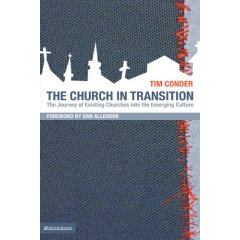
In The Church in Transition, Tim Conder talks about some of the ways that we devalue Scripture and limit its voice. One of them is what he calls moralism.

Moralism reduces the Bible to moral lessons and imperatives, robbing Scripture of its narrative quality. So much of the Bible is the scandalous story of humans asserting their own agendas or trying to accomplish God’s agenda apart from God…they include few moral lessons that can be simply incorporated into our decision-making.

He offers this example, from one of the most clearly theocentric books in the Bible (a theocentric book that never explicitly mentions God):

The story of Esther offers a great example of the damage we can do to the Scriptures if we try to read them simply as a moral directive. During the Jewish nation’s captivity under the Persians, a beautiful Jewish woman named Esther is placed under King Xerxes’ harem and eventually becomes queen. Her status and favor with the king allows her not only to stave off a planned genocide of her people, but also to punish the people who plotted the destruction of Jews. This amazing story graphically portrays the sovereignty of God despite the greed and immorality of humanity.

But if we read it as a morality tale, we might draw the following lessons:

  • Join a harem and things will go better for you and for those around you!
  • If you are physically beautiful, you can rule the world. If not, better luck next time!
  • Manipulation works - ask for favors the right way and you’ll get your way!
  • When you finally get the upper hand, use it as an iron fist and take revenge on those who have threatened you.

He concludes, “Moralism dehumanizes the characters of the Bible, blindly canonizes many of them into sainthood, and directs our attention away from the only hero of the Scriptures - God.”

Wrongly Dividing the Word: The Lordship of Christ

crownBy John MacArthur

Let’s look a little more closely at the dispensationalist tendency to make unwarranted contrasts between related or parallel truths (see yesterday’s post for the background on this). It is important that we delineate carefully between essentially different biblical axioms (2 Tim. 2:15). But it is also possible to go overboard. The unbridled zeal of some dispensationalists for making dichotomies has led to a number of unfortunate impositions on the gospel.

For example, Jesus is both Savior and Lord (Luke 2:11), and no true believer would ever dispute that. “Savior” and “Lord” are separate offices, but we must be careful not to partition them in such a way that we divide Christ (cf. 1 Cor. 1:13). Nevertheless, loud voices from the dispensationalist camp have historically put forth the teaching that it is possible to reject Christ as Lord yet receive Him as Savior.

Indeed, there are those who would have us believe that the norm for salvation is to accept Jesus as Savior without submitting to Him as Lord. They make the incredible claim that any other teaching amounts to a false gospel “because it subtly adds works to the clear and simple condition set forth in the Word of God.”[1] They have tagged the view they oppose “lordship salvation.”

Lordship salvation, defined by one who labels it heresy, is “the view that for salvation a person must trust Jesus Christ as his Savior from sin and must also commit himself to Christ as Lord of his life, submitting to his sovereign authority.”[2] It is astonishing that anyone would characterize that truth as unbiblical or heretical, but a chorus of voices still continues to echo the charge. The implication is that acknowledging Christ’s lordship is a human work. That mistaken notion is backed by volumes of literature that speaks of people “making Jesus Christ Lord of their lives.”[3]

We do not “make” Christ Lord; He is Lord! Those who will not receive Him as Lord are guilty of rejecting Him. “Faith” that rejects His sovereign authority is really unbelief. Conversely, acknowledging His lordship is no more a human work than repentance (cf. 2 Tim. 2:25) or faith itself (cf. Eph. 2:8–9). In fact, surrender to Christ is an important aspect of divinely produced saving faith, not something added to faith.

QuoteThe two clearest statements on the way of salvation in all of Scripture both emphasize Jesus’ lordship: “Believe in the Lord Jesus, and you shall be saved” (Acts 16:31); and “If you confess with your mouth Jesus as Lord, and believe in your heart that God raised Him from the dead, you shall be saved” (Rom. 10:9).[4] Peter’s sermon at Pentecost concluded with this declaration: “Let all the house of Israel know for certain that God has made Him both Lord and Christ—this Jesus whom you crucified” (Acts 2:36, emphasis added). No promise of salvation is ever extended to those who refuse to accede to Christ’s lordship. Thus there is no salvation except “lordship” salvation.[5]
Opponents of lordship salvation have gone to great lengths to make the claim that “Lord” in those verses does not mean “Master” but is a reference to his deity.[6] Even if that contention is granted, it simply affirms that those who come to Christ for salvation must acknowledge that He is God. The implications of that are even more demanding than if “Lord” only meant “Master”!

The fact is, “Lord” does mean “God” in all those verses. More precisely, it means “God who rules,”[7] and that only bolsters the arguments for lordship salvation. No one who comes for salvation with genuine faith, sincerely believing that Jesus is the eternal, almighty, sovereign God, will willfully reject His authority. True faith is not lip service. Our Lord himself pronounced condemnation on those who worshiped Him with their lips but not with their lives (Matt. 15:7–9). He does not become anyone’s Savior until that person receives Him for who He is—Lord of all (Acts 10:36).

A. W. Tozer said:

The Lord will not save those whom He cannot command. He will not divide His offices. You cannot believe on a half-Christ. We take Him for what He is—the anointed Saviour and Lord who is King of kings and Lord of all lords! He would not be Who He is if He saved us and called us and chose us without the understanding that He can also guide and control our lives.[8]

_______

NOTES:

[1] Livingston Blauvelt, Jr., “Does the Bible Teach Lordship Salvation?” Bibliotheca Sacra (January–March 1986), 37.

[2] Ibid.

[3] Ibid., 38.

[4] Some dispensationalists would confine the application of Romans 10:9–10 to unbelieving Jews. It is true that Romans 9–11 deals with the question of Israel’s rejection of the Messiah and the nation’s place in God’s eternal plan. But the soteriological significance of those verses cannot be limited to Israel alone, because of verses 12–13: “There is no distinction between Jew and Greek; for the same Lord is Lord of all, abounding in riches for all who call upon Him; for whoever will call upon the name of the Lord will be saved.”

[5] I do not like the term “lordship salvation.” It was coined by those who want to eliminate the idea of submission to Christ from the call to saving faith, and it implies that Jesus’ lordship is a false addition to the gospel. As we shall see, however, “lordship salvation” is simply biblical and historic evangelical soteriology. I am using the term here (and have done so through the years) only for the sake of argument.

[6] Ibid., 38–41. See also G. Michael Cocoris, Lordship Salvation—Is It Biblical? (Dallas: Redención Viva, 1983), 13–15.

[7] Proper understanding of any biblical term depends on etymology, context, and history. Etymologically, kurios comes from a Greek root that means “rule, dominion, or power.” Contextually, taking Peter’s use of kurios in Acts 2:36, it is important to note that verses 34–35 quote from Psalm 110, a messianic Psalm of rule and dominion (“Rule in the midst of Thine enemies,” Ps. 110:2). Peter was not saying merely that “God has made Him … God”; he was affirming Jesus’ right to rule. Historically, Peter’s sermon addressed the Jews’ role in crucifying their Messiah (v. 23). At the trial of Jesus before Pilate and the Jewish mob, the issue was clearly his kingship, mentioned at least a dozen times in John 18:33–19:22. Clearly, careful historical-grammatical exegesis of Acts 2:36 can lead to only one conclusion: Jesus is the divine King who rules in the midst of both friends and foes. Having thus identified Christ as Lord of all, Peter makes his gospel appeal. Note carefully that Paul preached Jesus in exactly the same way (2 Cor. 4:3–5): Jesus is our sovereign Lord, and we are His servants.

[8] A. W. Tozer, I Call It Heresy! (Harrisburg, Pa.: Christian Publications, 1974), 18–19.

Tuesday, September 26, 2006

Shall We Reason Together? Part Two: The Logic of Alogicality

In The Nick of TimeMy parents used to send me to camp in the summer. That camp had a preoccupation with cabin cleanliness. Every day, the campers from the cleanest cabin were given special prizes and privileges. Naturally, the campers in my cabin wanted to win, so we cleaned the cabin scrupulously every morning.

One morning I was given the job of scrubbing the floor. Bucket and brush in hand, I started at the door where the light was best, and scrubbed my way back into the room. At nine years of age, I had not thought about the consequences of this method, nor did they occur to me until I had scrubbed myself into the far corner of the cabin. That was when I realized that I had no way out of the cabin except to deface the work that I had already done. I tried to think of an alternative, but in the end I had to track across the freshly‐scrubbed floor, turning around to clean up my own mess on the way out.

Alogicality is like that. Those who hold the alogical philosophy scrub themselves into a logical corner. They have to maintain their philosophical position by appealing to the very principles that they reject. Their denial of reason is self‐stultifying and oxymoronic.

What is alogicality? I have given this name to the philosophical position that denigrates the role of reason or logic in theology and morality. Alogicals take the slogan Sola Scriptura to an unwarranted extreme. They deny that we may proclaim “Thus saith the Lord,” unless we have a direct, verbatim Scripture to quote.

I have previously stated that alogicality can be critiqued on several grounds. It is bad thinking, bad handling of Scripture, and bad theology. In this present essay, my objective is to show how alogicality is bad thinking. It is a bad philosophy.

Let’s begin by considering the act of reading. Alogicals seem to assume that reading is simply a matter of running their eyes over the words on a page, upon which meaning somehow (magically?) registers itself in their minds. They seem to believe that the transfer of meaning through the written page is automatic and intuitive.

Nothing could be further from the truth. When we read, we are constantly engaged in a process of drawing inferences. We observe words and phrases, and we infer that one is a subject, another is a predicate, and yet another is an object. We are constantly distinguishing nouns from verbs from modifiers from connectives. We reason that a particular sentence explains something, while another asks a question, and a third issues a command. We reason about the connection of words within a sentence, of sentences within a paragraph, and of paragraphs within a whole work.

If we are skilled in a language, we may draw all of these inferences so rapidly that they appear to be intuitive. When we engage in serious exegesis, however, we take these apparent intuitions and test them through a process of deliberate induction and analysis. Indeed, another name for our exegetical method is the inductive‐analytical method.

This observation is too important to miss. All textual understanding—ALL of it—is the result of induction and analysis. This includes our understanding of the text of Scripture. We have never once understood any biblical proposition without engaging in a process of reasoning.

That being the case, we can never rightly oppose Scripture to reason. We can never suggest that we prefer the plain statements of Scripture to inferences drawn from the text. All of our understanding of Scripture, even of the plainest statements, is already and always a reasoned understanding. Always. Always. Always.

Therefore, to suggest that the statements of Scripture are somehow more authoritative than inferences drawn from those statements is, at best, horribly naïve. It is the position of a juvenile who has never reflected upon what she or he actually does when reading the Bible. When this position is pressed with an air of moral superiority, it becomes colossal arrogance. Alogicals elevate their own inferences to the level of biblical authority by simply refusing to recognize that they are inferences, while simultaneously denying anyone else’s authority to reason from the statements of Scripture.

Alogicality scrubs itself into a corner by constantly employing the very thing it despises. Alogicals reason, analyze, form inductions, and draw inferences all the time. They are constantly doing the very thing to which they object.

Their position is even worse than that, however. The core of the alogical position is that we ought not to treat inferences as if they were authoritative, either for doctrine or for morality. But notice that “ought.” By including that “ought,” alogicals are themselves assuming a moral pose.

They are effectively saying, “It is wrong to impose moral requirements that are merely inferred from Scripture.” In other words, alogicality is not merely a philosophical position. It is a moral position. It issues a moral demand. As with all moral demands, we have a right to ask the alogical, “What is your authority?”

Here is the grave difficulty with alogicality. Alogicals cannot produce a single statement of Scripture that requires their position in so many words. There is no verse in the Bible that says, “It is wrong to impose moral requirements that are merely inferred from Scripture.” In order to sustain their own moral pose, alogicals are forced to draw inferences.

In other words, alogicality is not a biblical position, it is a philosophical one. Its core teaching is nowhere directly stated in the Bible. The core teaching is rather an inference that alogicals presume to draw from their understanding of Sola Scriptura. Alogicals scrub themselves into such a tight corner that their only way out is to trample all over their own central principle.

At the end of the day, alogicals find themselves in an unbecoming position. If they are right, then they are wrong. Their whole position relies upon doing the very thing that they say we must never do.

Of course, there is a darker possibility. For some, alogicality may not even be a bad inference. It may be a brute expression of prejudice. It is possible for an alogical to assert this prejudice without even the pretense of support.

But isn’t there a name for that?

Alogicality is bad thinking. Because it is bad thinking, it is also bad morality. What remains is to show that it is bad exegesis and bad theology.


A TRUE HYMN

George Herbert (1633)

My Joy, my Life, my Crown !
My heart was meaning all the day,
Somewhat it fain would say,
And still it runneth muttʹring up and down
With only this, My Joy, my Life, my Crown.

Yet slight not these few words ;
If truly said, they may take part
Among the best in art :
The fineness which a hymn or psalm affords,
Is, when the soul unto the lines accords.

He who craves all the mind,
And all the soul, and strength, and time,
If the words only rhyme,
Justly complains, that somewhat is behind
To make his verse, or write a hymn in kind.

Whereas if thʹ heart be moved,
Although the verse be somewhat scant,
God doth supply the want.
As when thʹ heart says (sighing to be approved)
O, could I love ! and stops, God writeth, Loved.

Kevin Bauder
—————-

This essay is by Kevin T. Bauder, president of Central Baptist Theological Seminary. Not every one of Central’s professors, students, or alumni necessarily agrees with every opinion that it expresses. In The Nick of Time is also archived here.
Thursday, September 21, 2006

God's Love Letter to You?


by Todd Bolen

I was recently asked about a statement I made previously:

The Bible was not written for you or me. So I was asked, isn’t the Bible God’s love letter to us? Uh, no. Not exactly.

It’s easier to speak in specifics rather than in general terms, so let’s take the book of Samuel as our example. The book of Samuel had an author (or authors) and it had an audience. That is, the person(s) who wrote Samuel wrote it for a reason and for a certain readership. And it wasn’t me (or you). This sounds basic, but it is increasingly important in a world (and church) that doesn’t seem to appreciate context and recognize boundaries. While the book of Samuel may be difficult to nail down exactly who wrote it, when they wrote, and exactly to whom they wrote, I think we can all agree that the audience was a group of Jewish people sometime between 1000-500 B.C. We don’t need to be more specific for our purposes now. So the point is that the original audience cannot be me (I’m not Jewish) and it can’t be you (unless you’re 2500 years old).

But, you ask, isn’t there a way in which Samuel is for us. Yes, indeed. But that way is not to pretend as if that book was written to and for us. Instead, it is to understand the meaning of Samuel as intended by its original author(s) to its original hearers/readers. That, and only that, meaning is what you must seek. You cannot start with “what is Samuel saying to me?” Once you’ve determined what Samuel is saying to its audience, then you can determine what application it has for your life.

So here’s an example. You read the story of David and Goliath (chapter 17). First, determine what it meant when it was written. I’ll save you some time: the answer is that it was written to show David’s military superiority to Saul (not Goliath, Saul), which of course reflects God’s hand upon David. Once you understand the original meaning (and there’s no magic except for careful attention to the context and some knowledge of history, geography, and language), then you can determine how it applies to you today. Valid principles include:
1. God empowers those whom he chooses to do what he wills.
2. God expects his people to embrace the leader he has chosen for them.
3. God can defend his honor in unexpected ways.

These of course lead to proper application:
1. If you are doing the will of God, he will give you the strength you need.
2. Honor those in authority over you.
3. Don’t try to outsmart God.

The problem with the “love letter to me” approach is that you end up making the Bible say things that it does not intend to say. For instance, you can say that God will always allow you to conquer the giants in your life. You can say that God’s servants need to be prepared with extra stones in their pouch. You can say that those who denounce God should have their heads cut off. The problem with all of these applications is that they are not what the writer intended to say (and by the way, I’m not making a significant distinction between the event itself and the recording of that event, but there is a difference and thus it’s easiest and best to speak about the written record). And I think they are all false. Let me say it more strongly: all applications which do not derive from the passage are dangerous! They must be forgotten or denounced, as the case may be. If the statement is true and you know so from another passage, then base it on the other passage and not this one.

If the question is “can I profit from all of the Bible even though it was not written directly to me?”, the answer is a resounding yes. Paul knew that Samuel wasn’t written to him but yet he told Timothy that all Scripture was useful. The key here is in using it as it was originally intended and not as a horoscope.

Tuesday, September 19, 2006

Shall We Reason Together? Part One: The Challenge of Alogicality

TIn The Nick of Timehere once was a man who loved soup. So fond was he of soup that he decided to devote his meals entirely to the concoction. Soup, he reasoned, could supply him with every nutrient that he needed. So he forbade his wife to set anything on the table except soup. “Sola Suppa” was his motto.

At the next meal, however, he received an unpleasant surprise. He arrived at the table to find no utensils, no vessels, nothing but soup—and the table top was awash with it. “What is this?” he exclaimed. “It is Sola Suppa,” replied his wife. You want soup alone, you’ll get soup alone. We must not confuse our food with the implements that we use to eat it. Bowls and spoons cannot nourish us, but without them, we will go hungry. True, spoons are not soup—but equally true, soup is not spoons.

You already know that this parable is not about soup and spoons. It is about revelation and reason. It is about the role that Scripture (as in “Sola Scriptura”) plays in our theology. We claim that Scripture is our sole and final authority in all matters of faith and practice. We moreover claim that Scripture is sufficient as a source of spiritual truth. We insist that the Bible alone is the Word of God, and it neither requires nor permits supplementation.

So exclusive is our devotion to Scripture that some have drawn an illicit inference from it. They have concluded that, since Scripture alone is God’s word, the employment of reason or logic (they will usually say “human reason” or “human logic”) is unnecessary and, perhaps, even harmful.

Not that they often say so in just those words. What they are more likely to do is to disparage some doctrinal or ethical conclusion, sniffing dismissively at inferences drawn through the use of “human logic.” Somehow, reasoning soundly from biblical premises is supposed to be less authoritative than appealing to the straightforward statements of Scripture. This is a philosophical position, but it has no name that I have ever heard. Therefore, I propose to call this philosophy “alogicality.” Alogicals do not intend to be unreasonable or irrational, but they do want to put logic in its place. In their opinion, that place is an inferior one.

They would much rather rely upon the plain statements of revelation than to stake anything upon an inference from those statements, however soundly it may have been drawn. If they do sometimes draw an inference, they will advocate it only in the most tentative terms. They also expect others to do the same.

Why is alogicality so appealing? I think there are three reasons. These reasons stem partly from legitimate concerns for the principle of “Sola Scriptura.” They do not, however, justify the alogical philosophy, though they do explain why some people find it attractive. I would like to discuss these three reasons briefly before going on to say why I think alogicality is a false philosophy.

First, alogicals rightly insist that many—perhaps most—of our Christian beliefs had to be revealed. We never would have discovered most spiritual truths through the use of unaided reason. Were they not specially revealed, we would never have unearthed the doctrines of the Trinity, the incarnation, the hypostatic union, or the way of salvation. These truths are not illogical or unreasonable, but they are supralogical in the sense that logic would never have got us to them. Left to itself, logic is like having a spoon but no soup. To be useful, it has to have something with which to work. For spiritual truth, the most important premises must be supplied by revelation.

Second, alogicals become offended because unbelievers sometimes enlist reason in the effort to sit in judgment over revelation. We know unbelieving thinkers who, because of some supposed logical difficulty, dismiss the entire Bible. Why, however, do we assume that the problem is with logic? Could it not be the case that the unbeliever is actually reasoning badly, and that the proper use of logic would resolve the supposed problem? To reject reason because some people reason badly is like refusing to eat with a spoon because some people dribble. And if you won’t eat with a spoon, you’ll never get to enjoy the soup.

This is probably the place to eliminate a confusion. People use the word reason to refer to different ideas. On the one hand, reason is a synonym for logic, whether deductive or inductive. That is the sense in which I am using the word. On the other hand, Reason (often capitalized) is sometimes understood to mean something like plausibility. In this sense, when people call an idea unreasonable, they mean that it seems far‐fetched and unlikely. Whether or not a thing seems plausible will be influenced by any number of assumptions.

To the natural human, Christian truth is utterly implausible. Natural humans do not possess the categories within which Christianity makes sense. Any attempt to make Christianity seem more plausible by wrapping it in the trappings of a Sophistical system is doomed from the start. This kind of substitution changes the whole meaning of Christian truths by putting them into the wrong categories. This is Paul’s point in 1 Corinthians 2.
In his epistles, Paul has nothing but disdain for Reason. Some have taken this to mean that Paul also rejected the use of reason, and this is a third factor that has made alogical philosophy appeal to some Christians. As we shall see, however, nothing could be further from the truth. Paul held worldly structures of plausibility in great contempt, but he showed nothing but respect for the sound use of logic.

Incidentally, there is no such thing as “human logic,” any more than there is such a thing as human gravity or human mathematics. Humans did not invent logic; they discovered it and systematized its principles. Those principles are simply part of the way things are. They are an aspect of the order that God has worked into His creation. He could not have done otherwise, for He constantly reveals Himself as an orderly thinker. Even for God, contrary propositions cannot both be true, and He never could have created a universe in which they were. Alogicality is a philosophy that wears a patina of humility, but its humility is false. It is the humility of those who refuse to take the responsibility of feeding themselves, as if it were the duty of the cook to put the soup into their mouths for them. In fact, alogicality is a philosophy that promotes irresponsibility. As I shall show, it is bad thinking, it is bad handling of Scripture, and it is bad theology. If we hold children responsible to eat soup with a spoon, then we should hold Christians responsible to draw sound inferences from Scripture.


Barnfloor and Winepress

Gerard Manley Hopkins (1844‐1889)

Thou that on sin’s wages starvest,
Behold we have the joy in Harvest :
For us was gathered the first‐fruits,
For us was lifted from the roots,
Sheaved in cruel bands, bruised sore,
Scourged upon the threshing‐floor ;
Where the upper mill‐stone roof’d His Head,
At morn we found the Heavenly Bread,
And on a thousand Altars laid,
Christ our Sacrifice is made.

Those whose dry plot for moisture gapes,
We shout with them that tread the grapes :
For us the Vine was fenced with thorn,
Five ways the precious branches torn ;
Terrible fruit was on the tree
In the Acre of Gethsemane ;
For us by Calvary’s distress
The wine was racked from the press ;
Now in our Altar vessels stored
Is the sweet Vintage of our Lord.

In Joseph’s garden they threw by
The riv’n Vine, leafless, lifeless, dry :
On Easter morn the Tree was forth,
In forty days reach’d Heaven from earth ;
Soon the whole world is overspread ;
Ye weary, come into the shade.

The field where He has planted us
Shall shake his boughs as Libanus,
When he has sheaved us in His sheaf,
When He has made us bear His leaf. ‐
We scarcely call that Banquet food,
But even our Saviour’s and our blood,
We are so grafted on His Wood.

Kevin Bauder
—————-

This essay is by Kevin T. Bauder, president of Central Baptist Theological Seminary. Not every one of Central’s professors, students, or alumni necessarily agrees with every opinion that it expresses. In The Nick of Time is also archived here.