Monday, June 25, 2007


"All Things To All Men" Never Meant "Be Worldly"
Quoting James White . . .
 | "Whatever is pure". Here we enter into a portion of the secret to Christian contentment that could profitably be addressed by a book-length treatise. We live in a day where we literally wallow in impurity. You cannot drive down a street without seeing billboards that are filthy and impure. You check the distance to the car in front of you and it has a profane and disgusting bumper sticker. You turn on the radio to get news and you are assaulted by impure words and concepts. We are surrounded by that which is unholy and impure. And yet we are called to purity ourselves. John told us, "And everyone who has this hope fixed on Him purifies himself, just as He is pure" Even the objects of our love should be different, for to love the world is to be the enemy of the Father. "But like the Holy One who called you, be holy yourselves also in all your behavior" We wish to be like Christ, and as He is pure, we too desire purity. Or...do we? Truly this is one of the most convicting portions of this text, for to be able to focus upon what is pure, what is holy, and to think upon these things, we must know experientially purity and holiness. And yet, in a day when the church is trying to look as much as possible like the world, where we dress like the world, talk like the world, are entertained by the world, how can we even begin to fulfill this command? For many in church-ianity today, the very idea of being To think upon that which is pure requires us to have a passion for purity, a desire for holiness. And that desire, that passion, has to come from the Holy Spirit Himself. We must pray that He will enlighten our minds to see how the Word defines holiness, and how vital it is to our contentment and peace. We cannot expect the Holy Spirit to not be grieved by our lifestyle when we purposefully choose to revel in that which is unholy. So [will this be] a year where we will strive to be holy, as He is holy, and seek to think upon those things that are pure, to the benefit of our sanctification? Will we be we able to look back a year from now and see progress here? Let us put forth serious effort to focus our minds upon what is true, honest, just, holy and pure. Will we be in danger of looking very unlike the world around us?
|  |
| From: | New Years Admonition: Think on What Is Pure
| |
 holy, separate, and pure, is counter to the real goal of "reaching the world".
The Church Versus the World
 By John MacArthur @http://www.sfpulpit.com
Why do evangelicals try so desperately to court the world’s favor? Churches plan their worship services to cater to the “unchurched.” Christian performers ape every worldly fad in music and entertainment. Preachers are terrified that the offense of the gospel might turn someone against them, so they deliberately omit the parts of the message the world might not approve of.
Evangelicalism seems to have been hijacked by legions of carnal spin-doctors, who are trying their best to convince the world that the church can be just as inclusive, pluralistic, and broad-minded as the most politically-correct worldling.
The quest for the world’s approval is nothing less than spiritual harlotry. In fact, that is precisely the imagery the apostle James used to describe it. He wrote: “Adulterers and adulteresses! Do you not know that friendship with the world is enmity with God? Whoever therefore wants to be a friend of the world makes himself an enemy of God” (James 4:4).
There is and always has been a fundamental, irreconcilable incompatibility between the church and the world. Christian thought is out of harmony with all the world’s philosophies. Genuine faith in Christ entails a denial of every worldly value. Biblical truth contradicts all the world’s religions. Christianity itself is therefore antithetical to virtually everything this world admires.
Jesus told His disciples, “If the world hates you, you know that it hated Me before it hated you. If you were of the world, the world would love its own. Yet because you are not of the world, but I chose you out of the world, therefore the world hates you” (John 15:18-19).
Notice that our Lord considered it a given that the world would despise the church. Far from teaching His disciples to try to win the world’s favor by reinventing the gospel to suit worldly preferences, Jesus expressly warned that the quest for worldly accolades is a characteristic of false prophets: “Woe to you when all men speak well of you, for so did their fathers to the false prophets” (Luke 6:26).
He further explained: “The world . . . hates Me because I testify of it that its works are evil” (John 7:7). In other words, the world’s contempt for Christianity stems from moral, not intellectual, motives: “And this is the condemnation, that the light has come into the world, and men loved darkness rather than light, because their deeds were evil. For everyone practicing evil hates the light and does not come to the light, lest his deeds should be exposed” (John 3:19-20). That is why no matter how dramatically worldly opinion might vary, Christian truth will never be popular with the world.
Yet in virtually every era of church history there have been people in the church who are convinced that the best way to win the world is by catering to worldly tastes. Such an approach has always been to the detriment of the gospel message. The only times the church has made any significant impact on the world are when the people of God have stood firm, refused to compromise, and boldly proclaimed the truth despite the world’s hostility. When Christians have shrunk away from the task of confronting popular worldly delusions with unpopular biblical truths, the church has invariably lost influence and impotently blended into the world. Both Scripture and history attest to that fact.
And the Christian message simply cannot be twisted to conform to the vicissitudes of worldly opinion. Biblical truth is fixed and constant, not subject to change or adaptation. Worldly opinion, on the other hand, is in constant flux. The various fads and philosophies that dominate the world change radically and regularly from generation to generation. The only thing that remains constant is the world’s hatred of Christ and His gospel.
In all likelihood, the world will not long embrace whatever ideology is in vogue this year. If the pattern of history is any indicator, by the time our great grandchildren become adults, worldly opinion will be dominated by a completely new system of belief and a whole different set of values. Tomorrow’s generation will renounce all of today’s fads and philosophies. But one thing will remain unchanged: until the Lord Himself returns and establishes His kingdom on earth, whatever ideology gains popularity in the world will be as hostile to biblical truth as all its predecessors have been.
(Today’s post was adapted from John’s book, Why One Way?)
Bridges on Legalistic Fences
I think my parents' pool hall fence was appropriate. But there is a lesson in my experience for all parents: Don't focus on the fence. If you erect a fence for your children - for example, in regard to certain movies or television programs- be sure to focus on the real issues, not the fence. Take time to explain and re-explain the reason for the fence.
If you decide, as my parents did , that you don't want your children going to the local pool hall, explain why. Distinguish between playing the game itself - which has neither negative nor positive moral value - and the atmosphere you are trying to protect them from.
For all of us, it may be good to have some fences, but we have to work at keeping them as just that - fences, helpful to us but not necessarily applicable to others. we also have to work at guarding our freedom from other people's fences.
Some of the fences in our respective Christian circles have been around a long time. No one quite knows their origin, but by now they are "embedded in concrete". Although it may cause conflict if you violate one, you must guard your freedom. To paraphrase Paul, "Stand firm in your freedom, and don't let anyone bring you into bondage with their fences."
I'm not suggesting you jump over fences just to thumb your nose at the people who hold to them so dearly. We are to "make every effort to do what leads to peace and to mutual edification" (Romans 14:19). Use discretion in embracing or rejecting a particular fence. but don't let other coerce you with man made rules. And ask God to help you see if you are subtly coercing or judging others with your own fences.
The Difference between Self-examination and Introspection
We all agree that we should examine ourselves, but we also agree that introspection and morbidity are bad. But what is the difference between examining ourselves and becoming introspective? I suggest that we cross the line from self-examination to introspection when, in a sense, we do nothing but examine ourselves, and when such self-examination becomes the main and chief end in our life. We are meant to examine ourselves periodically, but if we are always doing it, always, as it were, putting our soul on a plate and dissecting it, that is introspection. And if we are always talking to people about ourselves and our problems and troubles, and if we are forever going to them with that frown upon our face and saying: I am in great difficulty--it probably means that we are all the time centred upon ourselves. That is introspection, and that in turns leads to the condition known as morbidity.D. Martyn Lloyd-Jones, Spiritual Depression: Its Causes and Cures, p. 17.
The Chimeras Are Coming
 For some time now ethicists have warned that the development of real animal-human combinations -- known as chimeras -- was nearing on the horizon. Now, according to some reports, the future has arrived.
As William Saletan reports in The Washington Post:
We've been transplanting baboon hearts, pig valves and other animal parts into people for decades. We've derived stem cells by inserting human genomes into rabbit eggs. We've created mice that have human prostate glands. We've made sheep that have half-human livers. Last week, Britain's Academy of Medical Sciences reported that scientists have created "thousands of examples of transgenic animals" carrying human DNA. According to the report, "the introduction of human gene sequences into mouse cells in vitro is a technique now practiced in virtually every biomedical research institution across the world."
Human stem cell research is driving this latest push, since therapies for use on humans must first be tested on animals. This means far more than the use of a pig valve. This means tampering with combinations at the level of cells, genes, and chromosomes.
Look closely at how Saletan updates the research:
So far, our mixtures are modest. To make humanized animals really creepy, you'd have to do several things. You'd increase the ratio of human to animal DNA. You'd transplant human cells that spread throughout the body. You'd do it early in embryonic development, so the human cells would shape the animals' architecture, not just blend in. You'd grow the embryos to maturity. And you'd start messing with the brain.
We're doing all of these things.
Got your attention? These things are being done now. The British report reveals that "researchers have constructed ever more ambitious transgenic animals" -- and this is just the start.
The scariest part of this research is directed at work done in hope of curing or treating diseases of the human brain. Scientists have already produced humanized mice with symptoms of Alzheimer's disease. Now, scientists at Stanford University propose to put human brain cells in mouse brains in order to replace dying neurons. In reality, that would mean a human/mouse brain.
Saletan reports that ethicists at Stanford at first rejected the proposal, but have since come to approve it, allowing the researchers to produce mice with "some aspects of human consciousness or some human cognitive abilities."
This raises the frightening prospect of a human brain within an animal species. The proposed at Stanford would not reach that point, but granting a mouse brain "some aspects of human consciousness or some human cognitive abilities" should be enough to set off the ethical alarms.
At present, there is no set of firm ethical guidelines to regulate this research.
Writing in 2003, Dr. Nancy L. Jones of The Center for Bioethics and Human Dignity and the Wake Forest University School of Medicine warned:
The creation of animal-human chimeras as a means of deriving human tissue and organs highlights the deeper issues facing our generation: the new biological genomic revolution and the resultant power that may permit scientists to redesign various species and biological life. We must not allow such an ability to outstrip the ethical analysis that must accompany it.
She also considered how Christians should think about the development of transgenic animals (chimeras):
What principles may Christians invoke to guide them in formulating a response to the possibility of such animal-human chimeras? Some concern should certainly be expressed for the experimental animal's suffering; however, Christians do believe that they have been given stewardship over animals and are permitted to use them to benefit humanity. Another concern would be zoonotic transmission of disease, which occurs when pathogens cross the traditional species barriers of disease transmission. When human and animal tissues are intertwined so closely, potential mutations of once species-specific pathogens may gain a unique ability to infect organisms of other species. A more fundamental Christian concern involves violation of the divinely created order. The Bible tells us that God designed procreation so that plants, animals, and humans always reproduce after their own kind or seed. (Gen 1:11-12, 21) In the biblical view, then, species integrity is defined by God, rather than by arbitrary or evolutionary forces. The fusion of animal-human genomes runs counter to the sacredness of human life and man created in the image of God.
Dr. Jones' assertion that "species integrity is defined by God, rather than by arbitrary or evolutionary forces" is crucial to our understanding of this issue. Any effort to violate species integrity -- no matter how noble with respect to medical treatments -- must be seen as suspect in this light.
We need a set of rules and policies in force right now -- before a mouse really does come up and ask for a cookie.
__________________________
SEE ALSO: Nancy L. Jones, "Could Animal-Human Chimeras Be on the Way?," The Center for Bioethics and Human Dignity, January 9, 2003.
Another version of William Saletan's article is available at Slate.com [see here].
Struggling with Euphemisms: How Evangelicals Soften Sin and Sidestep Guilt
A few years ago, I wrote here about how our culture at large tends to marginalize the concept of sin by softening the terminology used to describe it. Sins become “mistakes” or “errors in judgment,” leaving the perpetrator a little less guilty in his or her own eyes.
Sadly, this societal trend has crept into the church as well. If you’re an evangelical Christian, you’ve no doubt heard a phrase like this, “I’m struggling with ____.” Within that blank is any number and manner of sins. These days, it seems, a person doesn’t sin anymore so much as they struggle with sin.
A person who lusts becomes a person who is “struggling with lust.” Someone who is proud becomes someone who is “struggling with pride.” A person who views sexually explicit material becomes one who is “struggling with pornography,” and so on and so forth.
Look closely at what has happened here: uncomfortable with facing head-on the ramifications of saying “I sinned,” the sinner chooses a different route. The guilt of having committed the sin is seemingly alleviated by couching it in the language of struggle.
There are two severe problems with this practice. The first is that Christians should be struggling with sin. It should characterize every Christian that they struggle with pornography, greed, or pride. Since few others seem to fight against these vices, Christians should be on the front lines. Struggling with sin should not be seen as something to get away from.
The second problem is that the soft edge seemingly given by these euphemisms is a lie. Restating the problem of sin doesn’t make it go away. The cross of Christ is the only remedy for sin, and to ease our guilt by wordplay is a fruitless self deception.
“If we confess our sins,” the Scriptures tell us, Christ “is faithful and just to forgive us our sins and to cleanse us from all unrighteousness.” We should do just that — confess it for what it is and accept his forgiveness. The sin should end and the struggle should go on.
Sunday, June 24, 2007
With an Unsaved Spouse 1 Pt. 3:1-7
Sermon Outline
Galatians 3:27-28
1 Corinthians 7:13-14
A) she is to be submissive and faithful 1 Peter 3:1-2
Colossians 3:18
Matthew 5:16
Titus 2:3-5
B) she is to be modest 1 Peter 3: 3-6
Isaiah 3:16-24
Friday, June 22, 2007
Beginning a Conversation about Christ
Finding a starting point for a Christ-sharing conversation is not easy. Maybe you've heard before:
- "So, do you consider yourself a good person? Yes, well I've got some bad news…"
- "Nice to meet you, Stephen. Did you know that there was a guy in the Bible who was stoned to death for his beliefs about Jesus? What do you believe about Jesus?"
- "If you were to die tonight..."
You can follow the Way of the Master method and remind people they are hypocrites, liars, thieves, and adulterers in the first two minutes and bring up the "lake of fire" in the third. I can't resist watching Kirk Cameron because it's, well, just so intense to see Mike Seaver "bring it": see here, here, and here.
Yes it's not subtle, but it gets the point across (watch some of the responses, particularly the last one when crazy lost people "strike back").
Others suggest you meet a felt need and build around people's wants. But, take it too far and soon you're "selling Jesus" as the way to happiness and your best life now, like those irritating people who say their magnetic bracelets can make you live to "143 years young."
Sharing Christ can be a challenge in our culture today. It often seems like we've become the guy at the front of the supermarket peddling a newspaper subscription—the one everyone avoids. There are always challenges that come with the opportunities. But how do you deal with these challenges? Part of it is finding a starting point.
In Acts 17, Paul started with the people's religious views and philosophies. In Acts 13 he started with Jewish history, and in Acts 14 he started with nature. Where we start depends on where we live and who we encounter. Where we go is settled—it's where Christ died and rose victoriously over death.
For decades we have approached people with evangelistic/diagnostic questions such as, "If you were to die today, do you know for sure where you'd spend eternity?" and "If God asked, ‘Why should I let you into heaven?' what would you say?" Useful as these questions are, they may not be the best approach in every situation. That's where it requires spiritual discernment and relational sensitivity on our part. Results from a recent study where I work may give us some useful insights about Americans' thinking and concerns about spiritual matters.
1 Peter 3:9 reminds us to "always be prepared to give an answer to everyone who asks you to give the reason for the hope that you have. But do this with gentleness and respect" (NIV). That implies some questions and answers—questions from people we encounter in culture and answers from God and His Word.
I assumed that the only people asking the "heaven question" were about to go off to war or enter the ER. But the results show, somewhat surprisingly, that many people today wonder about their eternal destiny. One out of every five respondents wonder daily about the certainty of going to heaven; 13 percent think about it weekly; 12 percent monthly; and 9 percent consider it at least once a year. Less than half (44 percent) indicated they never think about eternal destiny (See chart below and download the graphics here).

Another approach (perhaps more common in the Purpose Driven world) is to ask about meaning and purpose—important issues for which the gospel provides answers. We asked people how often they think about how to find more meaning and purpose in life. Almost one-third think about it daily; 17 percent weekly; 13 percent monthly; and 10 percent at least yearly. Only about one of every four of respondents (26 percent) said they never think about meaning or purpose in life.

Regardless of these factors, we must find ways that start where people are and then takes them to where they need to be. Jesus modeled it when He started talking about water but then presented the Samaritan woman with living water (John 4:10). He claimed He was the light of the world as He healed the man who was born blind (John 9:5). And after feeding the 5,000, Jesus cautioned the people about working for food that perishes, encouraging them to seek the food which endures to eternal life (John 6:27). Jesus, as we would assume, mastered the ability to access the immediate environment in order to present himself as their personal Savior.
Yes, scripture shows that we share Christ, starting with people's understanding, interests, and needs. But we cannot and must not end there, for their needs can only really be met (whether they realize it or not) by meeting Jesus.
Many seem to have lost confidence in that gospel. It is easier to tell people to come to church and live a good life, but that is not the gospel. The gospel is about words that can make us uncomfortable: creation, Jesus, sin, repentance, forgiveness, and transformation, to name just a few. Hard words, but harder still to forget them. To share Christ, we have to go beyond formulas that fit on napkins. The Gospel is not a doodle. Isn't God's story of redemption and reconciliation for His creation bigger than what can fit on a napkin? People are searching—but they are searching for something more than fire insurance or "five steps to financial freedom."
For 30 years we've taught people to "bring your friends to church" and have considered that evangelism. Well, there are not as many boomer seekers out there as there were back in those days. We must to share Christ, and that will be mostly done through relationships (sounds like Jesus, right?).
Today, the church is like a bear fed by tourists. It's lost its natural ability. We need to share Christ in meaningful ways without just inviting people to a congregational event. In this (already too long article) I can just suggest one brief idea: let's get that back by starting where people are, listening to them, building a relationship, telling them about Jesus, sharing with them the story of redemption, and bringing them to a bloody cross and an empty tombClasses of Legalists
by Charles Biggs @ http://www.reformationtheology.com
Are you a legalist when you preach, teach or share the gospel?
An excellent book by Prof. Dan Doriani teaches how to "put the truth to work" and to faithfully apply Scripture in preaching (How to balance *rightly* the indicative and the imperative in preaching). In order to avoid the pitfalls of legalistic preaching, he explains four classes of legalism into which many preachers unintentionally find themselves.
The point he makes about "class-four legalists" is that they have the correct teaching, but that they make the correct teaching oppressive without the love of Christ and his fulfillment of the Law as foundational to all of their preaching. This is helpful for preachers, teachers, as well as all Christians when sharing and living the gospel with others.
Prof. Doriani writes:
"Class-one legalists are auto-soterists; they declare what one must do in order to obtain God's favor or salvation. The rich young ruler was a class-one legalist.
Class-two legalists declare what good deeds or spiritual disciplines one must perform to retain God's favor and salvation.
Class-three legalists love the law so much they create new laws, laws not found in Scripture, and require submission to them. The Pharisees, who build fences around the law, were class-three legalists.
Class-four legalists avoid these gross errors, but they so accentuate obedience to the law of God that other ideas shrivel up. They reason, 'God has redeemed us at the cost of his Son's life. Now he demands our service in return. He has given us his Spirit and a new nature and has stated his will. With these resources, we obey his law in gratitude for our redemption. This is our duty to God.' In an important way this is true, but class-four legalists dwell on the law of God until they forget the love of God. Worshiping, delighting in, communing with, and conforming to God are forgotten.
Class-four legalists can preach sermons in which every sentence is true, while the whole is oppressive. It is oppressive to proclaim Christ as the Lawgiver to whom we owe a vast debt, as if we must somehow repay him- - repay God! -- for his gifts to us.
I count myself a member of the legion of recovering class-four legalists. We slide into a 'Just Do It' mentality occasionally, dispensing commands just because they are right.
Psalm 111:1 Praise the LORD! I will praise the LORD with my whole heart, In the assembly of the upright and in the congregation. 2 The works of the LORD are great, Studied by all who have pleasure in them. 3 His work is honorable and glorious, And His righteousness endures forever. 4 He has made His wonderful works to be remembered; The LORD is gracious and full of compassion. 5 He has given food to those who fear Him; He will ever be mindful of His covenant. 6 He has declared to His people the power of His works, In giving them the heritage of the nations. 7 The works of His hands are verity and justice; All His precepts are sure. 8 They stand fast forever and ever, And are done in truth and uprightness. 9 He has sent redemption to His people; He has commanded His covenant forever: Holy and awesome is His name. 10 The fear of the LORD is the beginning of wisdom; A good understanding have all those who do His commandments. His praise endures forever.

A Word about Evidences

Yesterday, we produced a list of ten “reasons” that we believe the Bible is what it claims to be – the Word of God. Today we would like to post a bit of clarification, before going into more detail on each of the ten reasons.
First, the foundational reason any Christian believes is because of the illuminating work of the Holy Spirit in his or her heart (number 10 on our list). While the other nine reasons are helpful, they can amount to nothing more than winning an argument if the work of the Holy Spirit is absent. Only He can open the eyes of the blind, and impart life where there is spiritual death. In the words of John MacArthur:
While there are many solid arguments for the authority of Scripture, none of them are of much use if someone doesn’t want to be convinced. . . . Actually there is only one argument that can prove to us that the Bible is true and authoritative for our lives: the work of the Holy Spirit in our hearts and minds. (Why Believe the Bible, 23)
With that in mind, the reasons we listed yesterday are really confirmations of the truthfulness of Scripture, primarily intended as an encouragement for those who already believe.
Second, if we are to use biblical evidences, we can only give absolute weight to those that come from Scripture. After all, the Bible itself must be our authority, even when it comes to defending the Bible. John Frame underscores this point when he writes:
I would conclude that it is the responsibility of the Christian to regard God’s word as absolutely certain, and to make that word the criterion of all other sources of knowledge. Our certainty of the truth of God comes ultimately, not through rational demonstration or empirical verification, useful as these may often be, but from the authority of God’s own word.
God’s word does testify to itself, often, by means of human testimony and historical evidence: the ‘proofs’ of Acts 1:3, the centurion’s witness in Luke 23:47, the many witnesses to the resurrection of Jesus in 1 Cor. 15:1-11. But we should never forget that these evidences come to us with God’s own authority. (“Certainty”, Online Source)
Though we have not discussed our ten reasons in detail, we believe that each can be ultimately derived from Scripture. Because this is a critical point, we will do our best (in subsequent posts) to make the case for each first from God’s Word, and only second from extrabiblical sources.
Third, and finally, we must remember that the Christian life is a life of faith. This does not mean it is unreasonable (for in fact it is the most reasonable worldview possible), but it does mean that Christianity is much more than reason alone.
Of course, faith (in the general sense of “belief”) is a foundational part of every worldview. When it comes to religion, everyone believes something. The Christian believes in Jesus Christ. The Muslim believes in Allah. The Hindu believes in Brahma. The Buddhist believes in Nirvana. The agnostic believes in the idea that God is unknowable. Even the atheist believes in his own skepticism; he cannot prove God’s nonexistence, yet he believes it nonetheless.
For the believer, the study of Christian evidences is confirming, because it demonstrates that biblical faith is founded on fact. When these facts are examined, the weight of the evidence is very compelling. Irwin H. Linton, a lawyer, argues that the Christian faith “rests on definite, historical facts and events” which, due to the overwhelming evidence that supports them, must “be regarded as proved under the strictest rules of evidence used in the highest American and English courts” (A Lawyer Examines the Bible, 16). In other words, the evidence for Christianity confirms it to be true beyond any reasonable doubt.
But what about other religious beliefs? Where do they fare? John Ankerberg and John Weldon give us the answer:
Other religions . . . can also be tested by examining their claims and looking critically at the facts—but again, one finds that they are invalidated by such a procedure. [In fact] no genuinely historical or objective evidence exists for the foundational claims of Hinduism, Buddhism, Islam, or any other world religion [besides Christianity]” (Fast Facts for Defending Your Faith, 44).
Robert Morey concurs, noting that “there is more than enough evidence on every hand from every department of human experience and knowledge to demonstrate that Christianity is true.” On the other hand, “the faith of the non-Christian is externally and internally groundless” (Introduction to Defending the Faith, 38).
Thus, of all the religions in the world, only Christianity has verifiable evidence to support its claims. As believers, we should find that very encouraging.
Thursday, June 21, 2007
Ten Reasons We Believe the Bible
 By Nathan Busenitz @ http://www.sfpulpit.com
There is no question that the Bible claims to be the Word of God. In fact, over 2,000 times in the Old Testament alone, from the beginning (Gen. 1:3) to the end (Mal. 4:3), the assertion is made that God Himself spoke what is written within its pages.
This theme continues into the New Testament, where the phrase “the Word of God” occurs over 40 times. Without apology or qualification, the Bible declares that it was written under the inspiration of the Holy Spirit (2 Tim. 3:16–17; 2 Pet. 1:21), and that its message is absolutely true (John 17:17; cf. Pss. 19, 119) because its divine Author is incapable of falsehood (cf. Titus 1:3; Heb. 6:18).
But how can we, as Christians, be confident in accepting such claims? After all, there are other religious books that claim to come from God. And there are also many people who adhere to no religious book at all. So what is it about the Bible that compels us to believe its testimony is true?
This is the question that R. A. Torrey asked himself nearly a century ago. It is the question we hope to address in this series. Like Torrey, we have developed a list of ten reasons why we believe the Bible is the Word of God (based in part on his original list). Today we will only mention the ten, with the intention of exploring each of these in subsequent posts.
We believe the Bible is God’s Word because . . .
1. It explains us and our world in a way that perfectly corresponds to reality. In other words, it is the special revelation (Psalm 19:7–11) necessary to truly make sense of general revelation (Psalm 19:1–6; Romans 1, 2).
Ronald Nash: Christian theism is only one of a number of competing conceptual systems. . . . When faced with a choice among competing touchstone propositions of different world-views, we should choose the one that, when applied to the whole of reality, gives us the most coherent picture of the world. (Faith & Reason, 51)
John Gerstner: The Bible answers the questions which nature raises. This seems to be an initial presumption in favor of the Bible’s being the very word of God, namely, that it answers the questions which only God can answer. (Reasons for Faith, 69)
2. It is accurate in the areas in which it can be tested (such as science and history), and therefore credible in areas where it cannot be tested (such as faith) (cf. Psalm 119:160; John 17:17).
William Lane Craig: Sooner or later, however, the core question concerning Scripture’s trustworthiness must be raised – are its historical portions factual? Or to ask the question another way, where the Bible purports to be relating things that happened on this earth at a particular period of its history, is it conveying accurate or reliable information about what was said and done? . . . . It is this historical nature of Christianity which sets it off from many other world religions, particularly the Eastern religions. (Reasonable Faith, 195)
3. It’s supernatural character has been validated by hundreds of fulfilled prophecies (cf. Isaiah 53; Daniel 9:24–27; John 5:39–47; 1 Cor. 15:3–4).
Rubel Shelly: The strongest single evidence of the Bible’s divine origin . . . is predictive prophecy. . . . Everyone one of the scores of Old and New Testament predictive prophecies has been fulfilled to the letter, except for those relating to the second coming of Crhist, the final judgment, and eternity. The fact of the fulfillment of those prior prophecies is conclusive proof to Christians that the remaining ones will come to pass. The Bible itself places great emphasis on predictive prophecy as proof of the integrity of the total system of things revealed therein. (Prepare to Answer, 117-18)
4. It is marked by a clear and consistent message, despite being written by many human authors over a period of 1,500 years (cf. 2 Timothy 3:16; 2 Peter 1:20–21).
F.F. Bruce: The Bible, at first sight, appears to be a collection of literature—mainly Jewish. If we enquire into the circumstances under which the various Biblical documents were written, we find that they were written at intervals over a space of nearly 1400 years. The writers wrote in various lands, from Italy in the west to Mesopotamia and possibly Persia in the east. The writers themselves were a heterogeneous number of people, not only separated from each other by hundreds of years and hundreds of miles, but belonging to the most diverse walks of life. In their ranks we have kings, herdsmen, soldiers, legislators, fishermen, statesmen, courtiers, priests and prophets, a tent-making Rabbi and a Gentile physician, not to speak of others of whom we know nothing apart from the writings they have left us. The writings themselves belong to a great variety of literary types. They include history, law (civil, criminal, ethical, ritual, sanitary), religious poetry, didactic treatises, lyric poetry, parable and allegory, biography, personal correspondence, personal memoirs and diaries, in addition to the distinctively Biblical types of prophecy and apocalyptic.
For all that the Bible is not simply an anthology; there is a unity which binds the whole together. An anthology is compiled by an anthologist, but no anthologist compiled the Bible. (The Books and the Parchments, 88)
5. It is unsurpassed in its literary quality, moral ethic, and social impact as would be expected if God were its Source (cf. Psalm 119:137–144). It likewise possesses an inexhaustible richness (cf. Rom. 11:33–36) which satisfies the thirsty soul (cf. Psalms 1:2-3; 42:1).
A. Rendle Short: Needless to say, if it be true that the Book is divinely inspired, we shall expect to find that it is in quite a different category from all other books whatsoever. We shall be interested to study to what extent the divine inspiration overrules the human element. Ordinary English writers of prose or poetry, Shakespeare, Bunyan, Tennyson, make no such claim as this, nor do their writings exhibit the marks of it. (Why Believe?, 59)
Bernard Ramm: Our logic in this case shall be rather plain. All of the various tributes paid to the Bible are in reality one tribute: the Bible is able perennially to grip profoundly the human soul. Wherein rests this peculiar magnetism of the Bible? Is it in its literary power or beauty? Is it in its dramatic elements? Or, perchance, it is in its human interest values? However, to keep the most significant issue to the front of the real question is this: is the power of the Bible to grip the human soul of divine or human origin? (Protestant Christian Evidences, 224)
6. It changes the lives of individual people, through the power of the Spirit, transforming those who were slaves of sin into sons and daughters of righteousness (cf. Psalm 119:97–104, 130; Eph. 6:18; Heb. 4:12; 1 Pet. 3:1-2).
Josh McDowell: My father’s life was changed right before my eyes [when he trusted Christ]. It was like someone reached down and switched on a light inside him. He touched alcohol only once after that. He got the drink only as far as his lips and that was it—after forty years of drinking! He didn’t need it any more. Fourteen months later, he died form complications of his alcoholism. But in that fourteen-month period over a hundred people in the area around my tiny hometown committed their lives to Jesus Christ because of the change they saw in the town drunk, my dad. (The New Evidence that Demands a Verdict, xxvii)
John Frame: In Scripture we not only find the information needed to reform, to sanctify our lives; we also find there the ability to do so; for the Holy Spirit of God works in and with the word, and he works in saving power. Thus we have an additional motive to return again and again to Scripture. It is there that we find the strength to change, to reform our ideas and life-decisions in obedience to God. The words of Scripture and the Spirit therein work together (not, of course, independently); thus by the Spirit’s work, the words “captivate” us, “grip” us. We find them memorable, penetrating, profoundly true. We find that we cannot avoid taking them into account. (“Rationality and Scripture,” Online Source)
7. It stands alone among other books that claim to come from God, in both its external verifiability and its internal consistency (cf. Isaiah 41:21–23).
John Ankerberg and John Weldon: In conclusion, the fact that Christianity more logically and adequately explains our existence than does any other religion, and that its theological teaching are unique [among world religions], argue in part for biblical Christianity being the true religion. . . . The Bible is the only ancient book with documented scientific and medical prevision. No other ancient book is ever carefully analyzed along scientific lines, but many books have been written on the them of the Bible and modern science. (Fast Facts on Defending Your Faith, 33, 84–85)
8. It continues to victoriously withstand the attacks of its critics. Despite attempts to undermine its message, the Bible has stood the test of time.
Norman Geisler: While many have doubted the accuracy of the Bible, time and continued research have consistently demonstrated that the Word of God is better informed than its critics. In fact, while thousands of finds from the ancient world support in broad outline and often in detail the biblical picture, not one incontrovertible find has ever contradicted the Bible. (Baker Encyclopedia of Christian Apologetics)
9. It was confirmed as the Word of God by Jesus Christ. As Christians, insofar as we believe in Jesus Christ, we must also believe that the Bible is the Word of God.
R.C. Sproul: According to Jesus, the writings of Scripture are more than generally reliable. They are the veritable words of God, unable to be broken. He not only taught that they were verbally inspired, he taught that “until heaven and earth pass away, not an iota, not a dot, will pass from the Law until all is accomplished” (Matt. 5:18; cf. Luke 16:17; 24:25-27; John 10:35; 13:18; 17:12). (Defending Your Faith, 181)
John Frame: To be committed to Jesus Christ is to honor his word, above all other words. Van Til, together with all orthodox believers, held that the word of Christ, the word of God, is to be found in the Holy Scriptures, indeed that the Bible is the word of God. (“Antithesis and the Doctrine of Scripture,” Online Source)
10. It is made certain by the internal testimony of the Holy Spirit in the life of the believer (cf. John 10:14–16; 1 Cor. 2:10–16).
William Lane Craig: Reason can be used to defend our faith by formulating arguments for the existence of God or by refuting objections. But though the arguments so developed serve to confirm the truth of our fatih, they are not properly the basis of our faith, for that is supplied by the witness of the Holy Spirit Himself. (Hard Questions, Real Answers, 37-38)
R. A. Torrey: The Holy Spirit sets His seal in the soul of every believer to the Divine authority of the Bible. It is possible to get to a place where we need no argument to prove that the Bible is God’s Word. Christ says, “My sheep know my voice,” and God’s children know His voice, and I know that the voice that speaks to me from the pages of that Book is the voice of my Father. You will sometimes meet a pious old lady, who tells you that she knows that the Bible is God’s Word, and when you ask her for a reason for believing that it is God’s Word she can give you none, She simply says: ”I know it is God’s Word.” You say: “That is mere superstition.” Not at all. She is one of Christ’s sheep, and recognizes her Shepherd’s voice from every other voice. She is one of God’s children, and knows the voice which speaks to her from the Bible is the voice of God. (“Ten Reasons I Believe the Bible is the Word of God”)
One Hundred Million Victims: The Utopian Nightmare
|
|

Wednesday, June 20, 2007
Humour: Nursery catacombs idea flops

From Larknews @ http://www.larknews.com
ARVADA, Colo. — Fountain of Life church’s new children’s ministry coordinator was supposed to freshen up the kids ministry to compete with the nearby mega-church’s PlayLand-style children’s area. But turning the church basement into the Catacombs Kids Club flopped with children and parents.
"We wanted kids to step into the lives of first-century Christians in a mysterious, cool environment," says Katie Mendoza, 23, a recent Bible school graduate who had staked her short career on the idea. "With Pirates of the Caribbean being so popular, we thought dungeons would be fun."
But when the Catacombs Kids Club was unveiled, kids began to cry and begged to go to "big church" with their parents.
 |
The Secret
Mel Lawrence, senior pastor of Elmbrook Church in Brookfield, Wisconsin, has written an excellent little critique of "The Secret" edited by Rhonda Byrne. It can be found here on the Christianity Today website. For those of you who have not heard of "The Secret," it is a book that flew off the shelves after being recommended by none other than Oprah, whose blessing almost guarantees a buying frenzy among the blissfully ignorant. The book claims that the secret of success (what else) is universally accessible in everything from ancient Babylonian religion to Buddhism to Albert Einstein. What is the secret you ask? Basically that thoughts are magnetic and when released into the universe they return to us bringing what we desire attached to them. It is the law of attraction in action so if we think about wealth we will become wealthy, if we think about health we will be healthy, and so on ad nauseam.
But is this really "the secret" or just a whopping lie? Isn't this the sort of thing that the "ruler of this world" has been telling foolish human beings since the beginning of time? Surely this is nothing more than the old demonic deception that you are at the centre of the universe and it revolves around you. Never mind living for God and his glory, never mind that the logical implication of the secret is that you are responsible for your poverty, your sickness, your lack of fulfillment or whatever else is not going the way you would like. It is the message that you are sovereign and you can get what you want if you only know how to manipulate the powers of the universe. Good grief! Are we really this dumb after all these years!
Lawrence quotes Professor Robert Thompson of Syracuse University who says: "The Secret promises this heaven on Earth in one fell swoop by simply desiring something, by simply wanting it. It's amazing how we really are a nation of, at best, great optimists, at worst, real suckers." That sums it up perfectly especially if we add that we are a nation of rebellious sinners who listen to the so-called wisdom of this world rather than the wisdom of God that is found in Jesus Christ.
The really sad thing is that many "Christians" will read the book and think it is wonderful. They will not see that it is a radical departure from the word of God and they will not quickly identify the erroneous reasoning. Following Jesus is never easy, and some of the most devoted Christians have suffered the loss of all things including life itself, not because they did not know the law of attraction but because they followed him who is the way, the truth and the life. Although considered fools by this world and unlikely to gain the approbation of television's egomaniacs, false prophets and the foolish crowds who hang on their every word, in the end it will be revealed to all that those who followed the Lamb wherever he goes knew what really matters.
The Role of the Church in Youth Discipleship
By Matthew Hoskinson @ http://www.sharperiron.org
Note: See his other articles on youth ministry: The Primacy of Parents in Youth Discipleship and The Centrality of God in Youth Discipleship.
That trampled mass of red, white, and blue underneath King James (the basketball player, not the 1611) is what remains of the Detroit Pistons. As a lifelong fan of the team, I watched in stunned amazement as the Cleveland Cavaliers pulled off a six-game sweep. Nothing left but the crying. And the fingerpointing.
 As one might assume, the blame quickly landed on the coach, Flip Saunders, and calls for his dismissal were heard even before the final buzzer sounded. After all, isn’t he the one who is primarily responsible for the success of this team? And if the team didn’t succeed, shouldn’t he be fired? If you ask their star player, Chauncey Billups, the answer is no. According to an AP report, Billups said, “I don’t think it was all his fault. Players not playing great, had a lot to do with it.” Just because one person is primarily responsible does not mean that no one else is.
My previous article asserted that parents are primarily responsible for the discipleship of their children. From Deuteronomy 6 to Ephesians 6, this parental responsibility has been the plan. An exception clearly exists for children of unbelieving parents since an unregenerate person cannot disciple a child of God. But in most of our congregations, that status accounts for the minority of our churches’ youth. The believing parents in our congregations must take an active role in “tell[ing] the coming generation the glorious deeds of the Lord” (Ps. 78:4, ESV).
Two questions immediately surface when one considers the parents’ responsibility. On one hand, if parents are thus responsible, is the church absolved? Perhaps it would be satisfactory for pastors merely to exhort parents to disciple the next generation. And if the youth turn out bad, then the parents are to blame. On the other hand, if parents are thus responsible, is the church expendable? Perhaps parents would best be served not by having their children participate in the discipleship avenues of the church but by keeping all proactive discipleship in the family and (as one article puts it) letting family time trump church time.
The answer to both questions is no. The church is neither absolved nor expendable. Instead, God’s design is for the church to have an active role in instructing the coming generations. While parents are primarily responsible for the discipleship of their children, the church has a secondary—but no less necessary—role in that task.
A key text that must drive our thinking is Ephesians 4:7-16. At the time of his ascension, Christ “gave gifts to men” (v. eight). Paul identifies these gifts not in the way we typically think of spiritual gifts, that is, as gracious endowments for particular acts of service. Other passages affirm that truth, but in this passage the apostle identifies the gifts as people: “apostles, prophets, evangelists, shepherds and teachers” (v. 11). Their job is “to equip the saints for the work of the ministry” (v. 12a). That task of equipping includes many aspects: leading them to give to God by the entirety of their lives the glory due His name, training them in the Word and sound doctrine, teaching them to take advantage of every opportunity to testify to the gospel of Christ for the ongoing spread of His fame—and the list goes on and on. One aspect that is patently in view is discipling people to become disciple-makers within the body. Notice how the saints are not only the ones who work the ministry (v. 12a) but also the ones who receive the benefits of that ministry (vv. 12b-14). By thus discipling one another (“speaking the truth in love” to one another, v. 15a), the body causes the body to grow (v. 16).
Two conclusions emerge from this passage. First, pastors have a responsibility to equip parents to be effective disciple-makers at home. As parents, they have been charged with the primary role of shepherding their children into mature believers. As saints, they have been placed under the caring oversight of shepherds who are seeking their growth in Christ. The opportunity pastors have to shape the next generation, therefore, is great. Seizing that opportunity requires careful thought, but the fruit of that labor will last a lifetime. Second, the church—by that I mean the people of the church—has a responsibility to everyone else in the congregation. The dozens of “one another” passages testify to our obligation (e.g., John 13:34; Rom. 12:16; 15:7; etc.). God expects believers to live out their union with Christ in the context of other people (their “neighbors,” Luke 10:29-37). And this opportunity to disciple one another transcends generational lines. Not only are parents to disciple their children (Eph. 6:1-4); the older are to mentor the younger (Tit. 2:1-8). All adults in the congregation, then, ought to sense some measure of responsibility toward the coming generations.
God plans for the church to have a significant role in the lives of its young people. While the church is not primarily responsible, one cannot deny that each assembly bears a corporate responsibility to the next generation—secondary, to be sure, but no less necessary. What difference does this make in the church’s practice? Some implications for church leaders and parents follow.
Implications for Church Leadership: The Church Is Not Absolved
1. Church leaders must put philosophy ahead of practice. Far too many churches are merely satisfied that they have a children’s program. It may include good elements—Sunday school, Frontline clubs, VBS, a week at a Christian camp—but the critical philosophical question hasn’t been seriously answered: “Why are we doing this?” If the underlying reasons for our children’s ministries are no more than that they are a longstanding tradition (“We’ve always done such-and-such.”), that they are a break for the parents (“It keeps the kids busy.”), or that their curriculum has a sharp appearance (“The visuals are dazzling.”), then we ought to admit that our practice does not have much to stand on. We must take the time to write down and implement a biblically saturated philosophy for reaching the next generation. In the end, that might mean that some elements remain. But we cannot be afraid to pull the trigger on something that is philosophically vacuous. If it doesn’t square with a biblically saturated philosophy of ministry, it should be lopped off.
2. Pastors should work to connect all aspects of youth discipleship to one another, grounding it in the church’s philosophy. The list of activities that fall under the category of “children’s ministries” can be lengthy, even for a smaller congregation. Too often, those activities are dictated by the weekly calendar (i.e., “We need something Sunday morning, Sunday night, and Wednesday night.”) rather than by a solid philosophy of youth discipleship. The result is a potpourri of programs that have neither synchronic nor diachronic integration with the others. By synchronic, I mean that the programs for one particular age are not integrated. A third-grader has one series going on in Sunday school, another one (or two) in children’s church, and yet one more during a midweek club. By diachronic, I mean that the programs do not connect from one age level to the next as a child grows. The result is an approach that is choppy rather than seamless, overlapping rather than contiguous, fragmentary rather than thorough. Instead, we should work toward having all aspects of youth discipleship connected not only to our core philosophy but also to one another so everything would be integrated. This process may take years of thought and labor, but its rewards will be far-reaching.
Some churches may wish to consider doing what my church did years ago when we expanded one assistant pastor’s oversight. No longer was there a youth pastor who oversaw the teenagers alone; we replaced that position with a Pastor of Youth and Young Adults, whose responsibility stretched from nursery through college. While I still invest roughly two-thirds of my time in senior-high students, I oversee all aspects of youth and young adult discipleship. Having one person responsible to the elders for coordinating all those pieces has simplified the process of integrating them into a cohesive whole.
3. Pastors ought to address parenting early and often. One of my professors opened his freshman Bible class every fall by stating the same two assumptions: “I assume that you know nothing, and I assume that you can learn anything.” This mindset ought to govern pastors as they look into the happy faces of new parents. Surely they know more than nothing. But shepherds cannot assume that parents have even a rudimentary understanding of what the Bible says concerning parenthood, love, authority, discipline, and so forth. And because we live in an age when—thanks to the Internet—anyone can read anyone’s thoughts on anything, we must be even more intentional in communicating a Christocentric approach to parenting for the glory of God. This approach might include offering parenting classes on Tuesday nights or intentionally partnering empty-nesters with young parents in mentoring relationships. But at the very least, pastors ought to give regular consideration to how to make direct application to parents in the preaching of the Word.
4. Pastors must give parents the tools they need to disciple their children. It is not enough for shepherds to exhort their flocks to parent for the glory of God. We should find every possible way to supplement the instruction on Sunday with practical helps for Monday through Saturday. This was an important factor when the curriculum development team from my church was selecting our Sunday school curriculum. Our children take home summaries of this week’s lesson with follow-up ideas for parents to use during the week—all on the back of their coloring sheet. Another way we try to give parents tools is through our weekly catechism handout we call “A Heritage of Truth.” The questions and answers are provided by Kids4Truth. We then offer a hymn that corresponds to that week’s truth, a biblical study for families to do together, and some discussion questions. Our goal is to promote the intentional theological education of our children; our prayer is that God will so use it to that end.
5. Youth pastors ought to seek to turn the hearts of teenagers to their parents. It is tempting for men in my position to try to replace a teenager’s parents. A young person’s burgeoning independence, frequent disagreements with his parents, and spontaneous respect for a younger adult may give the Adversary an opportunity in the heart of a youth pastor who desperately wants to be liked, appreciated, and heard. This insidious combination can result in a youth pastor’s either trying to be more for a teenager than God intends him to be (at best) or seeking to become God to that young person (at worst). What youth pastors must understand and communicate is that the same God who commanded, “Honor your father and mother” (Ex. 20:12), is the same God who sovereignly ordained the parent(s) each teenager has. The young people in my youth group have imperfect parents who make sinful choices, who do not understand God perfectly, and who need to be shepherded. And the same is true of their youth pastor! But long after they graduate and move on, their relationships with their parents will continue on—in God’s providence just as He planned. So I must devote the time I have with them now to shepherding teenagers and their parents, to turning the hearts of the former to the latter, and to directing the hearts of both to the Father through the Son by the Spirit.
Implications for Parents: The Church Is Not Expendable
1. Submit to your leaders. God has done such an extraordinary work by uniting diverse families into one body that the angels stand in awe at His variegated wisdom (Eph. 3:10). By His design, we are united together by His Spirit (4:3) under the authority of elders who are qualified to serve (1 Tim. 3:1-7) and who exercise oversight of the flock (1 Pet. 5:1-3). This is why the author of Hebrews exhorts us, “Obey your leaders and submit to them, for they are keeping watch over your souls, as those who will have to give an account” (13:17a). All of us are called to bend the knee to our God-given authorities as a glad reflection of our submission to our Great Sovereign. This submission means hearing our pastors’ Word-filled exhortations with regard to our families—and then heeding them. When an elder confronts us fathers about one of our children, we must pay close attention since he is carrying out the shepherding ministry of the Good Shepherd Himself. The primacy of my role in the discipleship of my children does not liberate me to make the church a disposable appendage to my family. God has called the church to be actively engaged in the life of my family and vice versa. I fail to fulfill my role as a disciple-making father if I abandon the church Christ purchased with his own blood (Acts 20:28).
2. Seek accountability. Parents should not merely wait for their leaders to pursue them. We ought to seek out relationships within the church that will enable us to carry out our God-given responsibilities. Younger parents ought to identify older parents whom they respect, and older parents should go after younger parents. Spend generous amounts of time together. Walk through life together. Build a mentoring relationship. Christ has united you both to Himself, so you are united to one another. Live out that union with transparency, humility, and gratitude for the mercy we all rely on every minute.
3. Practice your ecclesiology. If the church is a group of people who are united by their common confession of faith in Christ, then those people ought to be a priority for your family. One empty nester recently told me that he and his wife had to make the hard decision to keep their children from participating in a soccer league after they had been in it for years. The reason: at a certain age, Sunday practices and games became mandatory. They recognized that they had an opportunity to teach their children a valuable, lifelong lesson: the people of God are a priority to us because they are a priority to God.
God designed the roles of parents and of the church to complement one another as they work together for the next generation. May He so work by His grace that our children might “set their hope in God and not forget the works of God but keep his commandments” (Ps. 78:7).
 Matthew Hoskinson is the pastor of youth and young adults at Heritage Bible Church (Greer, SC). He holds a Ph.D. in Theology from Bob Jones University (Greenville, SC). He and his wife, Kimberly, have three beautifu
Laboring after Assurance > 3

From http://spurgeon.wordpress.com
Part 3: The means of assurance
Scripture calls all believers to draw near to God “with a true heart in full assurance of faith” (Heb. 10:22). We draw near to God, not only in the confidence the Cross has purchased, but in God-given assurance that we are indeed God’s children. So today we answer the important question: What means has God given to pursue the full assurance of faith?
A great summary answer is found in the Canons of Dort, a Reformed doctrinal statement written in 1619 to confront the rising influences of the teachings of a man named Jacob Arminius. Most importantly for our interests, they addressed the means to, and importance of, the assurance of salvation in the heart of the Christian. The authors write,
“This assurance, however, is not produced by any peculiar revelation contrary to, or independent of the Word of God; but springs from faith in God’s promises, which he has most abundantly revealed in his Word for our comfort; from the testimony of the Holy Spirit, witnessing with our spirit, that we are children and heirs of God; and lastly, from a serious and holy desire to preserve a good conscience, and to perform good works. And if the elect of God were deprived of this solid comfort, that they shall finally obtain the victory, and of this infallible pledge or earnest of eternal glory, they would be of all men the most miserable” (5.10).
According to the long and rich Reformed tradition we enjoy, the full assurance of the Christian flows through three means: (1) God’s promises in the Gospel; (2) The testimony of the Holy Spirit to our spirits; (3) In fruitfulness displayed in the Christian life. Having a full assurance of the faith is important, and if there was no way to gain this assurance, the elect would live the Christian life in a miserable condition of insecurity. Rather, these means of assurance are intended for our comfort and further fruitfulness in the advancement of the Gospel (as we will see later from John Owen).
This threefold distinction in our personal assurance of faith is solidly Biblical. Compare the Council of Dort with Hebrews 10:19-25 and Romans 8:15-17. We will look at Hebrews next time and Romans a little later today.
With this introduction, lets look a bit closer at each of the three means given in Scripture for our pursuit of assurance.
1. God’s promises in the Gospel
The authors of the Canon of Dort were careful to begin their statement on assurance firmly grounded in the revealed Word of God and the promises of God. And this is always where personal assurance must begin.
A misunderstanding of the Gospel promises will choke out any solid assurance from the soul. Full assurance of faith requires a full assurance of our Savior (Heb. 10:19-22). We must know that salvation comes by faith alone and grace alone through the righteous Blood of Jesus Christ alone. No level of self-righteousness will appease God’s wrath for my sin. I cannot please God by being better than others, going to church, or saying prayers and following religious ceremonies. The first (and most critical) key to solid assurance is holding an accurate understanding of the Gospel that pushes out all good works as a meriting the favor of God.
Legalism is thinking that God is less or more pleased with me based upon my obedience, rather than understanding God’s pleasure in me comes from the purchased righteousness of His Son alone (see our post on legalism). If we think legalistically about our relationship with God, our failures to live perfectly to His standard will be a swinging sledgehammer to any foundation of assurance.
But having a degree in systematic theology is not enough. These biblical promises in the Gospel must be personally applied to the soul. And this personal application of the Gospel is not without struggle. We are tempted towards self-righteousness, instead of hoping in the biblical promises of salvation in the Gospel.
“Our primary ground of assurance is the promises of God. These promises must be applied to our hearts and worked out in our lives, however. This often involves profound spiritual struggle. Bunyan spoke of pulling at one end of God’s promises while the devil was pulling at the other end. He could not apply God’s promises to himself, but the Holy Spirit confirmed them in him. When this happens, promises reap fruit in our lives and cause us to relish the Spirit’s witness with our spirit that we are sons of God” (Beeke, Quest, 283).
2. The manifest witness of the Holy Spirit
One of the most obvious means God has ordained for the assurance of His children is the direct testimony of the Holy Spirit in our hearts. Paul details this in Romans,
Romans 8:15-17 … “15 For you did not receive the spirit of slavery to fall back into fear, but you have received the Spirit of adoption as sons, by whom we cry, “Abba! Father!” 16 The Spirit himself bears witness with our spirit that we are children of God, 17 and if children, then heirs — heirs of God and fellow heirs with Christ, provided we suffer with him in order that we may also be glorified with him.”
One of my favorite Patristic preachers, John Chrysostom (349-407), once said on this point, “What doubt is left here? If a man, or an angel should make a promise, perhaps some might doubt, but if the supreme Essence, the Spirit of God, who causes us to pray, makes a promise to those praying, bestows the promise, giving the testimony to us within, what room is there for doubt?” (On Romans, homily 14). Amen! There is a powerful confirmation in the Soul of the Child of God that is infallible. In fact the Reformers called this “infallible” assurance.
So what does this infallible assurance look like?
First, this is intensely personal and private. This is not an assurance that can be given from anyone but the Holy Spirit Himself in the soul of the believer. Clearly from the history of Christians over the centuries we can see that this inner testimony of the Spirit does not automatically come at the moment of salvation. Martyn Lloyd-Jones says for some it can be an overwhelming sensation that may cause one to physically tremble, a one-time experience that will never be forgotten. For others this assurance comes in waves as the Spirit testifies to their spirits over the years. There is little way to say exactly how this assurance flows to God’s children, but it’s clear that it does and it’s a powerful experience that leaves our spirits with rock-solid assurance.
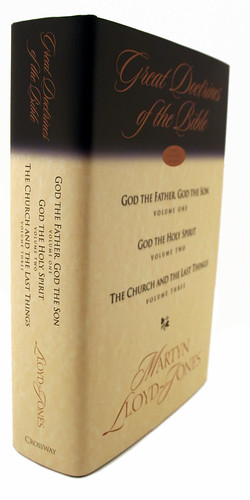
This is an experience where “Christ manifests Himself to us and we know Him with a kind of inner intuition, over and above all that we believe about Him by faith. He is made real to us” (Lloyd-Jones, Doctrines, 2:162).
As one who is a continuist (like Lloyd-Jones), my faith dovetails nicely with this testimony of the Spirit as I seek the continued filling of the Holy Spirit (Eph. 5:18). I pray for a greater capacity to experience more of the Spirit and an opportunity to pursue more of the Spirit as He manifests Himself to me and confirms my assurance in Christ. For me, the filling of the Spirit is not only for the building of the church but also for personal assurance as I pursue Him. Surely Jesus also had assurance in mind when called us to pray for more and more of the Spirit. “If you then, who are evil, know how to give good gifts to your children, how much more will the heavenly Father give the Holy Spirit to those who ask him!” (Luke 11:13).
The Spirit that gives unshakable assurance is a “good gift” that we should pursue and pray for and experience in our own souls.
3. Personal godliness
An assurance that rests in the objective claims of the Gospel and the testimony of the Spirit in the soul is an incomplete assurance. We must also find assurance in our lives. Is God at work in me? Am I changing? Am I becoming more like Christ? Am I growing more obedient? Do I hate sin? Am I gaining victory over sin?
If we don’t ask these hard questions, we will pursue a lopsided assurance and downplay the hard passages of Scripture. References like 1 John 2:3 — “And by this we know that we have come to know him, if we keep his commandments” – are intended for our comfort and assurance, not our condemnation. But until we view personal godliness within our pursuit of assurance, passages like this one and many, many others will haunt us. This was not their intent. 1 John was written so we would have confidence in our position as God’s children (see 5:13).
Laboring after full assurance
I am fully aware that some will pursue assurance with 1 and 2, at the neglect of 3; or will pursue assurance in 3, and neglect 1 and 2. A full assurance of the faith rests in a balance of all three means. In his lectures on systematic theology, Lloyd-Jones says,
“How, then, is one to obtain this assurance? Here are the rules taught in Scripture: first make certain of your belief. If you have not got assurance, make certain that you are really not relying upon yourself in any respect for salvation. Be sure that you see all your righteousness as filthy rags and know that if you lived a thousand years you would never fit yourself to stand before God. Make certain that you are relying only upon the finished work of Christ upon the Cross, that you are solely dependent upon His righteousness. Apply the word of Scripture to yourself, get to know it, read it. Take these scriptures that I have been quoting; stand on them; apply them to yourself. Say, ‘I have been crucified with Christ, I have died with Christ. The Scripture says it; I believe it and I stand on it.’ Live the life. Yield yourself to be led of the Spirit. Seek His face. If you ask Him to fulfill His promise and to manifest Himself to you, He has pledged to do it” (Doctrines, 2:162-163).
Conclusion
Personal assurance of the faith is not some vague hope in the back of the Christian mind. A full assurance is the pursuit of the Christian, and should be experienced in the soul! We are called to “feel” our personal assurance.
The bottom line is that God calls His children to pursue a full assurance of our faith. We are called to diligently and carefully and humbly pursue this assurance. Remember what John Owen said? “It is the duty of every believer to labor after an assurance of a personal interest in forgiveness, and to be diligent in the cherishing and preservation of it when it is attained.”
Owen knew this full assurance was not easily attained but a laborious pursuit of Gospel promises, diligent honesty and self-examination and patience upon the testifying work of God. The Westminster Confession of Faith (1647) reminds us,
“This infallible assurance doth not so belong to the essence of faith, but that a true believer may wait long, and conflict with many difficulties, before he be partaker of it: yet, being enabled by the Spirit to know the things which are freely given him of God, he may, without extraordinary revelation in the right use of ordinary means, attain thereunto. And therefore it is the duty of every one to give all diligence to make his calling and election sure, that thereby his heart may be enlarged in peace and joy in the Holy Ghost, in love and thankfulness to God, and in strength and cheerfulness in the duties of obedience, the proper fruits of this assurance; so far is it from inclining men to looseness” (18.3).
In this laboring after full assurance, we are coming closer to the heart of the Puritan life and the life of the Psalmists.